Get Full Government Meeting Transcripts, Videos, & Alerts Forever!
Get email alerts on the Family Court Custody topic
No spam. Unsubscribe anytime.
Judge orders neutral evaluation, pauses school transfer while parents contest home‑school vs. public‑school plan
Summary
In a contested custody dispute, a Cumberland Circuit Court judge instructed the guardian ad litem to arrange a neutral evaluation for a 9‑year‑old who expressed a desire to attend public school; the judge asked both parents to refrain from influencing the child and scheduled follow‑up to review the evaluator's report.
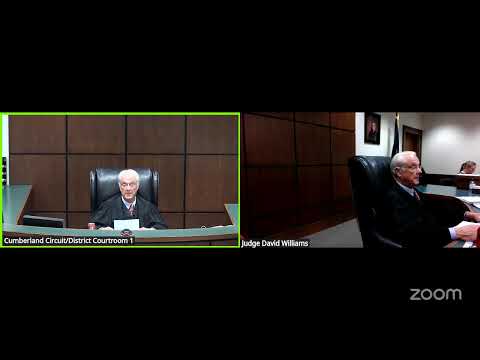
A Cumberland Circuit Court judge ordered a neutral evaluation and scheduled follow‑up after hearing arguments in a custody dispute over whether a 9‑year‑old pupil should remain homeschooled or start attending the public school system.
One parent petitioned to enroll the child in public school; the other parent and the guardian ad litem raised concerns that the younger child appeared to lack a full understanding of what public school would mean and might be influenced by discussions with the father's household. The guardian ad litem told the court the child expressed interest primarily in arts and crafts and social aspects of school and "does not fully understand" the broader change involved in switching to public school.
The judge emphasized that both parents should avoid influencing the child's decision and asked the guardian ad litem to identify a neutral professional — such as a child psychologist or counselor experienced with transitions from homeschooling to public school — to interview the child and report back. The judge asked the parties to consider whether a transition during the second semester (January) would be preferable and suggested the evaluator could test readiness and outline accommodations or a phased entrance.
Why it matters: The dispute touches on decisionmaking authority for schooling and on how family courts weigh a child's expressed preferences against professional assessment and parental influence. The court favored a neutral assessment to inform whether a move to public school would be in the child's best interest and to reduce the risk of abrupt social or academic disruption.
The judge directed the guardian ad litem to propose evaluators acceptable to both parties and to seek a short, focused interview and written recommendation. The court also asked the parties to maintain the status quo while the evaluation is arranged and to avoid discussing the issue with the child in a way that might be construed as coaching.
Speakers attributed here include counsel and the guardian ad litem as reflected in the court record.