
College Station ISD considers limited out-of-district transfer policy to boost enrollment and revenue
Get AI-powered insights, summaries, and transcripts
Subscribe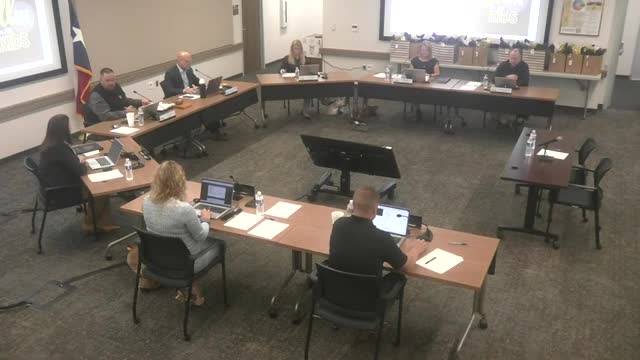
Summary
Board workshop discussion explored a proposal to allow controlled out‑of‑district transfers (K–6 initially), application criteria, annual renewal, lottery for high school placement and staffing and special‑education constraints; no policy change was adopted—board asked for feedback.
College Station Independent School District administrators presented a proposal during an Oct. 21 board workshop to permit limited out‑of‑district student transfers to address falling enrollment and related funding shortfalls. The briefing sought trustee feedback; no vote was taken.
The superintendent’s presentation framed the proposal as a targeted alternative to “open enrollment,” intended to add students under application criteria and capacity limits. The presentation noted the district is about 300 students under budgeted enrollment this year — a shortfall district staff estimated at “a little over $2,000,000.” The superintendent told trustees she was seeking direction rather than a vote: “My recommendation … is your opinion. We're not taking a vote on this. It's feedback from each one of you on taking out of district transfers.”
Why it matters: additional students would bring state funding to the district and could reduce budget pressure, but transfers raise capacity, staffing and equity questions and can affect special‑education services and transportation obligations.
Key elements of the draft approach
- Eligibility and application: the district would not adopt open enrollment; instead it would advertise an application window and set threshold criteria (examples presented included minimum grades, discipline and attendance standards) and a staff review process to place applicants on a defined feeder track rather than allow free school choice.
- Grade span and roll‑out: administrators recommended starting with transfers through sixth grade (K–6) to allow the district a few years to manage pathways into high school. If transfers to high school were allowed, the presentation proposed a straight lottery for high‑school assignments to preserve equity and avoid program‑driven clustering.
- Renewal and revocation: transfers would be subject to annual reapplication. The draft policy language discussed revocation for attendance or discipline concerns (the presenter said removal should be based on discipline and attendance, not grades) and referenced adding teeth to the district-of-innovation language to permit removal when students do not meet expectations.
Capacity, staffing and special education
Trustees and administrators raised questions about classroom capacity and staffing needs. The superintendent said the district could likely start with “3 to 400” transfer students depending on grade distribution and campus space; administrators emphasized new hires would be required rather than simply increasing class sizes.
Special education was repeatedly discussed. Trustees asked whether special‑education students would be eligible; presenters said there would be no blanket exclusion for special education, but that district capacity and staffing for specific programs would be evaluated and could be a disqualifying factor if appropriate services could not be provided. The superintendent noted that in a previous district she ran a similar transfer program for six years and revoked only two transfers, but she warned that staffing constraints would drive acceptance decisions.
Transportation and legal limits
The presentation noted statutory limits on transportation for special‑education and McKinney‑Vento obligations and emphasized that some transportation requirements apply only in‑district. Administrators said specific transportation and program exceptions would be addressed in the application and operational plan.
Next steps and board feedback
Administrators proposed drafting policy language for November, running a marketing and application window in December–January and notifying applicants by February so staffing and contracts could be set prior to May. Trustees generally supported exploring the approach cautiously, with phased implementation and further analysis of special‑education and staffing impacts.
Ending
The board provided feedback and asked administrators to return with a refined policy and more data; no formal action was taken at the Oct. 21 workshop.