Get Full Government Meeting Transcripts, Videos, & Alerts Forever!
Get email alerts on the Public Comment And Advocacy topic
No spam. Unsubscribe anytime.
Guest speaker questions role of education associations and lobbying; board responds
Summary
A member of the public criticized education associations’ lobbying and their influence on policy, and board members responded that the Associated School Boards of South Dakota and other organizations advocate for public education rather than a partisan agenda.
During the open forum, Florence Thompson (who identified herself as president of South Dakota Parents Involved in Education and a retired school psychologist) criticized education associations’ lobbying activities and said she believes lobbyists are “grooming” boards and advocating positions she described as liberal. Thompson said she was concerned about association positions on access to sex-segregated spaces and the use of dues-funded advocacy.
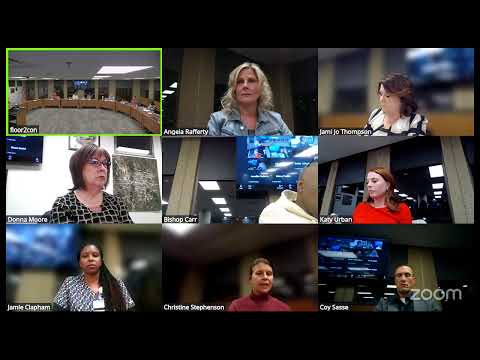
Board members responded during the meeting. Christine Stephenson and other trustees told Thompson that, in their experience, the Associated School Boards of South Dakota (ASBSD) and similar groups advocate on behalf of public education rather than pushing a partisan agenda. Trustees said the district also engages its own lobbyists to represent the district’s specific priorities in Pierre and that district representatives instruct lobbyists on issues important to the Rapid City Area Schools. Trustees noted they sometimes disagree with other districts or the state board on particular stances and emphasized they act to support the district’s interests.
No policy changes were made as a result of the open forum comment. The board affirmed the district’s practice of participating in state-level associations and retaining lobbyists to advocate for district-specific priorities.