Finance committee reviews 2026 draft budget, reallocations and proposed capital list
Loading...
Summary
Committee members reviewed the 2026 budget draft with an emphasis on capital projects, revenue adjustments (including higher impact fee forecasts and a proposed transfer from the former water fund) and proposed staff and permit positions to recapture contract work.
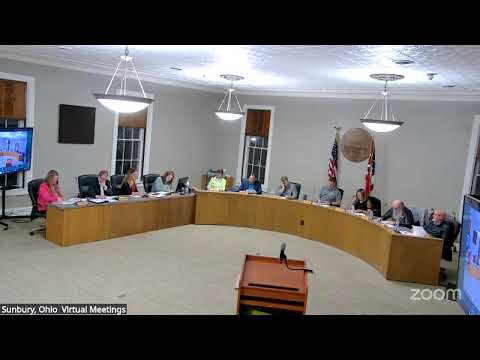
Sunbury City’s finance committee reviewed a second draft of the proposed 2026 budget on Oct. 15, 2025, focusing on capital items, revised revenue estimates and several staffing changes intended to increase in‑house capacity.
Staff said the consolidated budget overview lists every fund and newly added funds (two TIF funds, a mayor’s court special project fund and a special revenue fund). On revenues, staff raised the projected income‑tax receipts to $6.4 million (up from $6.2 million in the prior draft), increased fines/licenses/permits by about $150,000 (largely stormwater fee revenue), and noted a potential transfer of roughly $41,000 from the former water fund into the general fund (staff said they would verify whether council action is required to complete that transfer).
Staff said they increased projected impact‑fee receipts after consultation with the city’s development reviewer: police impact fees $290,000; municipal fees $833,000; roads $683,000; and parks and recreation $346,000. Staff also noted a $250,000 potential Ohio Public Works Commission (OPWC) grant for street projects and said impact fees are driving a forecast of about $2.1 million in impact‑fee revenues next year.
On the expense side, the draft reallocates portions of mayor’s court wages and benefits (to more accurately track mayor’s court expenses that had been shown in the police department line), adds one patrol officer (bringing sworn patrol positions from nine to ten), and adds a planning/engineering inspector position (budgeted at roughly $100,000 for wages and benefits). Staff said the inspector role will recapture fees the city currently pays to outside contractors and should be largely fee‑supported.
The capital projects list (packet page 36) covers items across departments: police equipment ($90,000 for an unmarked car, cameras, body cameras and radios); administration items (elevator and City Hall improvements, fiber backbone, school zone flashing lights); parks projects including the J. R. Smith Park loan/financing; and multiple street, stormwater and sewer projects. Staff noted many service‑department equipment replacements and said certain police and signal improvements are contingent on securing grants.
Committee members discussed leasing as an option for service vehicles and police vehicles; staff said leasing had been investigated in prior conversations but availability and up‑fitting needs made purchase or other options preferable in some cases. Staff also described a plan to create new line‑items going forward (engineering review fees, stormwater fee revenue, rental revenue for town hall) to improve tracking.
No final budget vote was taken at the meeting; staff invited committee feedback ahead of council readings.