
Parents urge district to improve special‑education placements, transportation and environment
Get AI-powered insights, summaries, and transcripts
Subscribe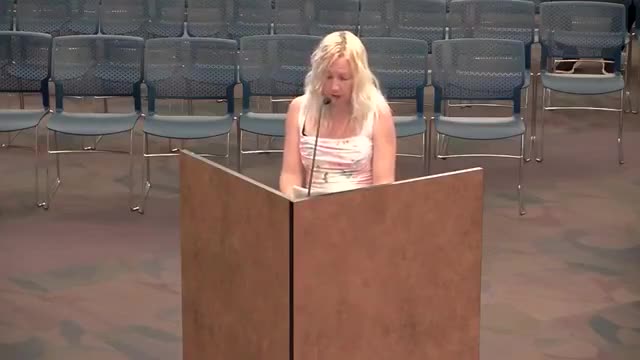
Summary
Parents and family members said special‑needs students are not getting adequate placement, raised concerns about environment, transport costs and staff training; one parent said she removed her children from district schools and is paying for out‑of‑district services and long travel distances.
Multiple parents and family members used the Oct. 22 call to the public to urge the Maricopa Unified School District to improve services and school environments for students with special needs.
Darla Haish described long, repeated attempts to secure placements and transportation for her children and said she removed four of her children from district schools and now uses private services. "This does not include transportation. I am driving 200 miles a day, spending $2,000 a month on gas because the school itself wants $637 a day, yes, a day, for only transportation," Haish said. She said the family now relies on education savings accounts that are paying "$32,000 a year per child."
Haish said school environment factors — class size, noise, lighting, crowds and bullying — materially affected her children’s ability to stay in district schools and that she had repeatedly requested help since 2022. "You are saying you are going to make it your priority to put [special needs students] at the top of your list and help them with all their education and anything they need. However, that is not enough," she said.
Lisa Haish, Darla’s mother, said her grandson had been hospitalized and experienced severe anxiety in district settings before transferring to a specialized autism school. "He had 2 heart attacks. He's had heart surgery. He's been inpatient at a behavior hospital because of the severe anxiety," she said, adding that the child has done better since moving to a specialized placement.
What the board said and next steps Meeting organizers reminded speakers that board members generally may not discuss items not on the agenda during the call to the public (A.R.S. §38‑431.01(O)(1)) and that staff responses at the meeting are limited to directing staff to study the matter, responding to criticism or placing an item on a future agenda. Board members did not announce immediate policy or staffing changes in response to these comments.
The speakers asked the district to examine classroom environment, ensure appropriate placements and address transportation barriers for families of special‑needs students; the district did not announce follow‑up actions at the meeting.