
Lyon County utilities reports studies and construction updates; Silver Springs sludge dewatering estimated at about $1 million
Get AI-powered insights, summaries, and transcripts
Subscribe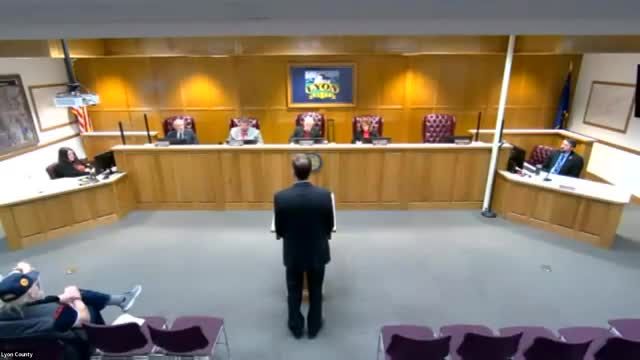
Summary
Utilities staff reported multiple ongoing studies (Silver Springs effluent disposal and sludge dewatering, two lift-station condition assessments), design work on Rosepeak water-main replacement and Dayton sewer phase 2, and Rolling A wastewater plant phase 4 construction nearing completion but with recent performance issues at two reactors.
Lyon County utilities engineer Kishore Panda briefed the Board of County Commissioners on Oct. 16 about ongoing capital projects, condition-assessment studies and construction progress across the county's water and wastewater systems.
Panda reported four active engineering studies: an effluent-disposal study and sludge-dewatering evaluation in Silver Springs, and separate condition assessments for Lift Station 1 (near the Carson River) and the Industrial Lift Station north of Highway 50. He said the Silver Springs sludge-dewatering contractor option would cost in the "about a million dollar or above" range for dewatering both ponds; Panda described an alternative continuous dewatering method (geosynthetic dewatering or bagging) as more cost-effective long term but said it would require additional land that the plant currently lacks.
On capital projects, Panda said an EPA-funded Rosepeak water-main replacement is in design with a 30% design milestone expected by March; the project has an estimated $2.5 million in EPA funding consideration and a total footprint of roughly 6,800 linear feet of pipeline. He said the Highway 50/Dayton Valley Road sewer replacement (phase 2) is being re-bid after a prior lone bid exceeded estimates, with bids to open in November and construction anticipated in 2026.
Rolling A wastewater plant expansion is under construction; Panda said the overall program is about 80—85% complete and that two biological reactors brought online recently showed performance problems during a five-day observation period. The contractor is working with the manufacturer to investigate and resolve the reactor issues; staff expects to stabilize operations within weeks if resolved.
Panda also said the county will pursue grant funding (capital improvement grant) for Silver Springs filter rehabilitation (estimated $972,000) and expects a state board decision in November.
Why it matters: The update identifies near-term capital needs, multi-million-dollar projects, and operational risks that could affect service reliability and rates. Commissioners asked about alternatives for sludge disposal and possible cost-sharing or hauling options to avoid a million-dollar capital expenditure.
The board did not take formal action beyond receiving the update; staff was directed to continue studies and pursue grants and procurement as described.