
Ashland High Environmental Action Club proposes storm‑drain art and bottle‑cap mural; committee supportive
Get AI-powered insights, summaries, and transcripts
Subscribe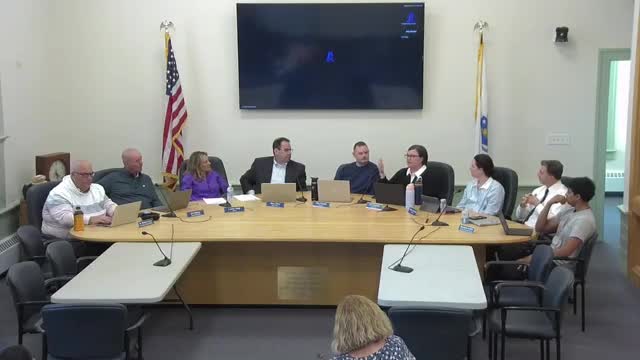
Summary
High‑school Environmental Action Club students presented two projects — a storm‑drain pavement painting near parent pick‑up and a plastic bottle‑cap mural in a school hallway; committee members offered logistical suggestions, and the students said they are coordinating with the town stormwater advisory committee.
Members of the Ashland High School Environmental Action Club presented two sustainability‑related proposals Oct. 22: (1) a storm‑drain pavement painting on the driveway behind the high school to remind drivers and pedestrians that drains carry runoff to local waterways; and (2) a large mural made from collected plastic bottle caps to be sited in a hallway and assembled using recycled materials.
Students detailed a proposed primary event date of Saturday, Nov. 8 (with Nov. 9 as a rain date) and said they would use paint brands already approved for student parking‑spot painting and that the local Stormwater Advisory Committee had suggested and supported the project. Club leaders said they planned to source paint personally and were discussing donations; members also proposed a year‑long bottle‑cap collection to build a mural in late January or early February 2026.
Committee members and school staff suggested several outreach and logistical supports: coordinating with art teachers and other clubs for volunteers, using the town newsletter and WACA community television for outreach, contacting seniors for leftover paint donations from parking‑spot projects, scheduling the project to avoid sports conflicts, and using the project as a teachable moment to bring the concept to other schools. The students said they had spoken with Miss Sankar, the stormwater advisory committee, and other school officials and estimated about 15–20 club members could assist on the painting day.
School leaders did not record a formal vote; committee members encouraged the students to continue coordination with facilities and to return with final logistics and a plan for shared materials. Staff indicated the painting would be treated as a freestanding, non‑permanent application and that approved paint brands for parking‑spot projects would be acceptable.