
Ashland middle school principal reports schedule changes aimed at reading, STEM and targeted supports
Get AI-powered insights, summaries, and transcripts
Subscribe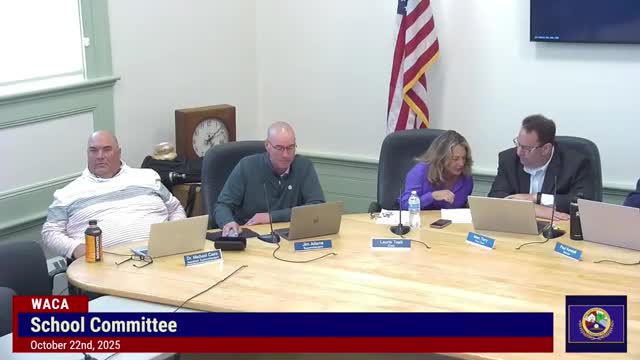
Summary
Mendez (Ashland Middle School) has restructured 'discovery' time into discrete reading, writing, engineering and Spanish team blocks to improve literacy and science exposure; staff reported early signs of classroom gains and better targeted special education and Title I service delivery.
At the Oct. 22 School Committee meeting, the Ashland Middle School presenter described a reworking of the school day designed to address reading and science proficiency gaps and to improve targeted academic interventions.
The presenter — introduced as Miss LaChapelle — summarized the changes as dividing the prior ‘‘discovery’’ block so students still have five core classes and additional blocks for unified arts or wellness. Sixth grade now has separate reading and writing classes; seventh grade added an engineering course to the core; eighth grade moved Spanish onto the team so it functions as a core class. Those shifts allow schools to schedule Title I, English learner and special‑education interventions in leveled groups rather than compressing all support into a single block.
The presenter said early classroom observations and teacher reports show ‘‘a double dose’’ effect in reading and writing instruction, allowing deeper engagement with plot, character and grammar. She named two teachers leading the new engineering curriculum — Chloe Dignacco and Caitlin Gentile — and described hands‑on projects such as designing and building dog houses that emphasize project‑based learning and critical thinking.
On special education, staff told committee members the changes have improved compliance and grouping for services, though logistics remain to be refined where inclusion teachers are content‑based rather than team‑based. The presenter also said unified‑arts classes now meet more often (wellness from about 60 to 90 meetings a year; unified arts from 30 to 45), and band is now offered year‑round for all grades. She described active experimentation with a ‘‘flex block’’ for targeted catch‑up or intervention time, and said data teams will use MCAS and diagnostic data starting immediately to evaluate curriculum impacts.
Committee members asked about measures of success and staffing implications; the presenter said reading‑writing separations should show gains in i‑Ready diagnostics by mid‑year and that staffing is adequate for the current enrollments, though intervention supports may need more staffing if demand rises. The committee asked to see follow‑up data and scheduled no formal vote; the presentation functioned as an informational report and early request for continued monitoring.
Speakers and commenters repeatedly framed the changes as responses to district assessment data and to observed inconsistencies in prior uses of the discovery block. Several committee members praised the initiative and asked for continued updates tied to quantitative measures.