Get Full Government Meeting Transcripts, Videos, & Alerts Forever!
Get email alerts on the Special Education topic
No spam. Unsubscribe anytime.
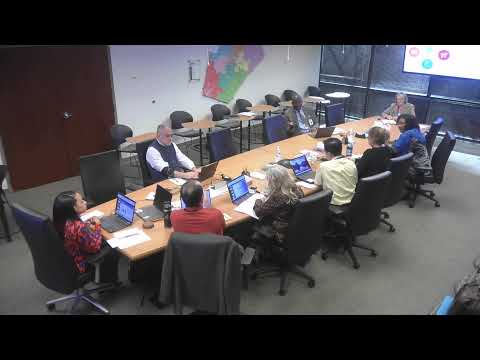
Wake County Schools details regional reorganization of special education; officials cite 90‑day delays and federal/state funding uncertainty
Summary
Wake County Schools staff told the Student Achievement Committee they will shift special education services to a regional model aimed at increasing school‑level support, while addressing indicator 11 90‑day evaluation delays and a state‑identified disproportionality that requires a 15% set‑aside of IDEA funds.
Wake County Schools staff on Wednesday presented a plan to reorganize special education services into a regional model aimed at increasing school‑level support, reduce disproportionality and speed evaluations that now meet the federal 90‑day timeline only about half the time.
Dr. Alward, a Wake County Schools special education services staff member, told the Student Achievement Committee, “We believe that all children have the capacity to grow and achieve.” She said the reorganization will place coordinating teachers in fewer schools so they can provide more intensive training, progress monitoring and classroom coaching for teachers and administrators.
The reorganization is intended to align special education work with the district’s learning model, officials said. Staff described multidisciplinary regional teams — including behavior specialists and content specialists — supervised by senior administrators, and said the model mirrors regional structures used elsewhere in district academics and student support.
Why this matters: Officials said two data priorities drove the redesign. First, indicator 11 — the federal measure of how often the special‑education eligibility and service process is completed within 90 days of referral — is being met in roughly 50% of cases. That delay is particularly consequential for students in kindergarten through second grade, staff said. Second, the district was recently identified by the state as disproportionate for certain classifications and suspensions; the state has provisionally required the district to reserve 15% of its IDEA (Individuals with Disabilities Education Act) grant money to address the issue.
Staff described concrete next steps and a timeline. Training of special education (SES) staff began in September, leadership teams are meeting now to assign coordinating teachers to schools, and a “soft launch” of the regional model is planned for February. Staff said they plan to begin the new regional model in earnest on July 1. The presentation also noted the district will contract for additional board‑certified behavior analysts (BCBAs) and registered behavior technicians (RBTs) with some of the reserved IDEA funds to improve functional behavior assessment and reduce long suspensions.
Officials said they will deploy a tracking document to schools to map the 90‑day process step by step — referral date, consent for evaluation, testing date and eligibility decision — so schools can identify where delays occur. Staff also said the policy and special education teams have been sending monthly reports pulled from the district’s ECAPS/ECATS system that list students approaching or exceeding the 90‑day timeline; the new tracker is intended to make that data more actionable both at schools and in central services.
Committee members pressed staff about funding risks and enforcement changes at the federal level. A committee member asked about a recent reduction at the U.S. Department of Education’s Office of Special Education Programs (OSEP). Staff characterized the reduction as an administrative trimming of federal oversight capacity that could reduce federal support and complaint‑processing resources but said they do not currently expect it to reduce IDEA grant funding to districts. Staff also warned that the district’s ability to secure some competitive grants could depend on the state budget process.
Board members raised additional concerns the presentation and discussion sought to address: recruiting and retaining special education teachers, principal and administrator experience with special education oversight, how the district will involve regular education teachers in the IEP and MTSS (multi‑tiered system of supports) process, and how families will be notified when students are reassigned as schools, staff or coordinating teachers change. Staff said principals and assistant principals will receive targeted professional development in January and that the district plans parent engagement meetings in the spring to explain reassignment and service changes ahead of the February soft launch.
Several committee members asked about accountability when the 90‑day timeline is missed. Staff said when a district misses the 90‑day timeline and a child is later found eligible, the district must consider compensatory services and examine the degree of harm from the delay; staff added that the new tracking tools should help clarify which delays are within school control and which are driven by factors such as missed consent or illness.
What was decided: The committee received the update and discussed next steps; staff said they will (1) distribute tracking documents to schools, (2) continue coordinated professional development for central services and school administrators, (3) finalize school assignments to principals in January, (4) begin a soft launch in February, and (5) implement the regional model July 1. Staff also said they will contract for additional BCBAs and RBTs as part of the disproportionality plan required by the state and that they will not immediately refill a director position as part of the reorganization.
Committee action at the start of the meeting: The committee approved the minutes from the Sept. 16 meeting by voice vote.
Staff and board members said they expect the changes to be gradual and emphasized the district must monitor data over multiple years before concluding the reorganization has reduced disproportionality. Staff cautioned the disproportionality determination relies on lagging data from the 2023–24 school year and that measurable changes will likely require at least two years of monitoring.