Get Full Government Meeting Transcripts, Videos, & Alerts Forever!
Get email alerts on the Street Maintenance Utility topic
No spam. Unsubscribe anytime.
Copperas Cove council workshop backs continuing street-maintenance utility; council sets $10 baseline and narrows nonresidential fees
Summary
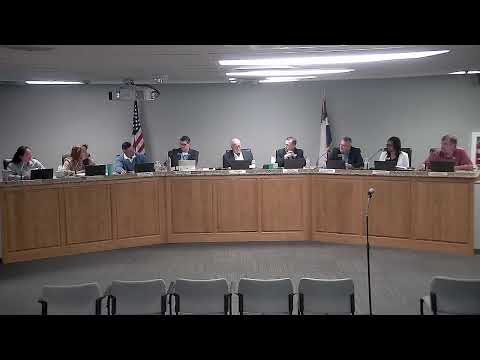
Copperas Cove City Council members at a workshop session Oct. 7 directed staff to continue developing a proposed street maintenance utility and fee structure to raise recurring funds for repairing and maintaining the city's roads.
Copperas Cove City Council members at a workshop session Oct. 7 directed staff to continue developing a proposed street maintenance utility and fee structure to raise recurring funds for repairing and maintaining the city's roads. The council agreed to keep a $10 monthly single-family-equivalent (SFE) fee as the residential baseline for now, asked staff to alter the nonresidential schedule toward a proportional "Option 1" structure (with additional adjustments to recognize bypass trips), and asked staff to draft exemptions for school and county taxing entities, qualified nonprofits and a temporary exemption for new businesses.
Councilors said the city needs a stable funding source to arrest the long-term deterioration of pavement. Scott Osborne, assistant city manager and director of public works, told the council the citywide pavement condition index (PCI) averaged about 60 in 2022 and had already fallen toward 58 by mid-2025; without additional recurring investment many streets will continue to decline and eventually require more costly reconstruction. Osborne said staff estimates roughly $4.6 million a year would be needed to reverse the long-term decline and approach a 70 PCI target referenced in earlier studies; the city's current recurring funding includes an existing quarter-cent sales-tax allocation of about $1.3 million.
Why it matters: Council members repeatedly framed the matter as a trade-off between near-term affordability and long-term cost. Staff presented public-engagement results (seven September town halls with about 298 attendees and targeted business outreach plus roughly 13,000 emails), which showed affordability concerns, especially among small businesses and residents on fixed incomes. Osborne said every $1 reduction in the SFE baseline reduces projected annual revenue by roughly $278,500.
What council decided and directed staff to do
- Proceed with development of the street maintenance utility program and draft ordinance language based on council direction at the workshop. Osborne summarized the results and said staff would produce a revised ordinance and fee schedule to return to council for consideration on Oct. 21.
- Residential baseline: the council agreed to keep the residential SFE at $10 per month for now, while reserving the right to revisit that figure as other rate elements are finalized and modeled. Council members also discussed phased approaches and annual reviews but kept $10 as the working baseline.
- Nonresidential fees: staff proposed two alternatives. Council did not reach unanimous agreement but a majority supported staff's Option 1 (a tiered structure that spreads a top-tier cap benefit proportionally through the bands) combined with "bypass" trip reductions for certain uses; that approach would lower many nonresidential accounts compared to the initial draft. Osborne estimated the Option 1 adjustments (before bypass reductions) would lower projected net nonresidential revenue by about $1.2 million annually (reducing a draft $3.0 million to about $1.85 million); applying the bypass trip reductions to selected accounts would reduce revenue another roughly $144,000 annually.
- Exemptions and special handling: council asked staff to draft exemption language for the Copperas Cove Independent School District (CCISD) and county taxing entities, and to propose a standard process for nonprofit exemptions backed by documentation (for example proof of 501(c)(3) status). Council also agreed a temporary new-business exemption was appropriate; council directed staff to draft that as a two-year exemption period for qualifying new businesses (the council discussed one- and two-year options and settled on two years in the workshop direction).
- Appeals and account-level adjustments: staff will include an administrative appeals process to allow businesses to seek recalculation where the land-use category, unit variables, or trip-generation assumptions do not reflect the specific operation (for example, an independent coffee shop with lower trip generation than a national chain).
- Program evaluation and reporting: council directed staff to provide an annual progress report timed to the budget/planning calendar (spring) and to include a periodic ordinance review on a multi-year cadence; council settled on a three-year ordinance review cycle with annual reports on revenues, expenditures, and accomplishments. Osborne said staff can continue to track PCI and report annual PCI changes, plus an itemized list of projects completed with utility funds.
- Implementation timing: staff will revise the draft ordinance and fee schedule and present a finalized draft for council consideration on Oct. 21. If adopted in October, staff plans to begin assessment/collections in January 2026 at the reduced, council-directed rates and to begin design of the first package of rehabilitation projects by June 2026.
Discussion highlights and public engagement
Osborne reviewed the engagement metrics: seven town halls (three business-focused and four residential-focused) with about 298 participants, five civic-club briefings, individualized meetings with businesses and stakeholders, and roughly 13,000 emails distributed to property- and utility-account contacts. The City's Chamber of Commerce also conducted a business survey and provided results to council. The top public concerns were (1) small-business affordability and the risk that high nonresidential rates would force closures, and (2) residents on fixed incomes worried about the $10 monthly charge.
Councilors emphasized that the proposed utility is not an exclusive solution but a major recurring revenue source that, combined with the existing sales-tax allocation and possible future bonding, would increase the city's capacity to maintain streets. Several councilors said they preferred a phased approach to help residents and businesses adapt; staff said the presented $10 scenario plus the existing sales-tax allocation would materially increase capacity compared with current funding but would not, on its own, reach the study's 10-year target for raising PCI to 70.
Quotable
"The big concern we heard repeatedly is affordability for small businesses," Osborne said during the presentation. "Every dollar reduction of the SFE fee equates to a decrease of approximately $278,500 annually."
"We need to move forward," Council Member Jack Smith said. "I don't want to pay this fee, but I understand it's a necessity."
Next steps and staff responsibilities
Staff will: revise the draft ordinance and fee schedule to reflect council direction; provide refined nonresidential band calculations that include bypass trip reductions and the proposed exemption language; publish the finalized draft for the Oct. 21 council meeting; and, if council adopts the ordinance, begin assessments in January 2026 and package the first rehabilitation projects for design in June 2026.
Ending
Councilors agreed the street network requires a sustained, predictable funding source. The workshop produced specific direction to staff to keep the $10 SFE baseline for now, adopt a modified nonresidential structure (Option 1 with bypass adjustments), prepare exemption language for CCISD, county properties and qualifying nonprofits, and to present a finalized ordinance on Oct. 21 for formal consideration.