Get Full Government Meeting Transcripts, Videos, & Alerts Forever!
Get email alerts on the Municipal Budget topic
No spam. Unsubscribe anytime.
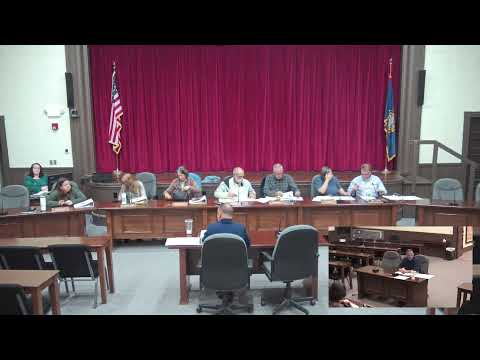
Alton Town ballot and budget committee approves multiple 2026 department budgets, limits fireworks funding
Summary
On Oct. 22 the Alton Town Ballot and Budget Committee reviewed 2026 departmental budgets and approved a slate of mostly level-funded requests, with select increases tied to wage adjustments and a $176,386 assessing budget. The committee kept fireworks funding for Fourth of July but not Old Home Weekend.
ALTON TOWN — The Alton Town Ballot and Budget Committee on Oct. 22 reviewed department budgets for fiscal 2026 and approved multiple line-item budgets, with officials again flagging wage pressures carried forward from two years of default and the potential tax-rate effects of a townwide revaluation.
The most prominent vote was approval of the assessing budget, proposed by the board of selectmen at $176,386 for 2026. The committee also approved audio-visual equipment maintenance ($2,000), conservation ($24,060), emergency management ($11,003), the Skillman Museum budget ($8,444), the household hazardous-waste program ($27,568), a $1 placeholder for interest on tax-anticipation notes, patriotic purposes (including Fourth of July fireworks) at $23,690, street lights at $33,500 and the town’s general welfare appropriation (amount discussed but not specified in the meeting record). Minutes and several routine items were also approved.
Why it matters: committee members and staff repeatedly said wage increases are driving many line-item changes and that the town remains constrained by prior defaults. Those budget choices affect services, hiring and, ultimately, the town’s tax rate.
Town finance staff framed the broader fiscal picture and several constraints. “Most of the increases you're gonna see are wage increases,” said Ryan, a town staff member presenting the budgets, noting that after two years of default the town is “paying wages that we do not have covered” and absorbing those costs by leaving positions unfilled or reducing services.
The assessing budget includes pay adjustments for the assessor and assessing secretary and a rise in contracted services to cover a town revaluation. The presenter told the committee the revaluation-specific costs would be placed on a separate warrant article; he said the warrant will include roughly $110,000 for the revaluation work. He also said contracted work for the town revaluation was expected from an outside firm (Whitley Consulting) and that tax-map updates would continue on a rolling basis as subdivisions create new lots.
Committee members pressed on several operational impacts that have resulted from constrained staffing and limited pay: the presenter said one school resource officer position has remained vacant because the police department was $40,000 over in wages earlier this year, and he said highway has remained short-staffed, including a long-open mechanic position. He said the fund balance is “just shy of $6,000,000,” a sum he said the town intends to consider using, in part, to smooth tax-rate impacts tied to the revaluation.
On conservation and environmental programs, the committee approved a modest increase for lake monitoring and easement maintenance, and the presenter said some testing costs for lake sampling have risen to about $500 per sample. He confirmed half‑moon lake sampling is a joint effort with neighboring towns and noted the town recently joined the Lakes Region household hazardous-waste program run by the Lakes Region Planning Commission after a long-time shared program with Wolfeboro ended when that program’s long-time director died.
Emergency management’s budget stayed level at $11,003 with a $10,000 contingency line intended for immediate response purchases during disasters, and the presenter described how the town has used such funds in recent flooding and long-duration incidents.
Patriotic purposes drew extended discussion about fireworks. The board of selectmen proposed funding Fourth of July fireworks only. The selectmen’s proposal reduced previous combined funding for Old Home Weekend and the Fourth to concentrate on Fourth of July, and the committee approved $23,690 for patriotic purposes. The presenter said the higher cost for a Fourth of July display is driven by market demand and limited vendor availability: “That’s the extra 10,000 because it's on the fourth and not in August,” he said, explaining July 4 slots command higher prices and fewer companies will bid.
What the votes mean: for most line items the committee approved the selectmen’s proposals or level-funded requests, while flagging follow-up steps. Committee members asked staff to bring updated expenditure reports where invoices were still outstanding (conservation contracted services, household-hazardous-waste rollover costs), and staff committed to providing updated figures at the next meeting.
The meeting produced no ordinance or policy changes; it was strictly a review and approval of department budgets and routine business. Several members encouraged broader outreach to taxpayers about the budget and said the selectmen are likely to propose using some fund-balance dollars to smooth immediate tax impacts tied to the revaluation. The committee set a follow-up meeting for one week later to continue budget review.
Ending note: committee members emphasized the town’s difficulty filling specialized positions and the operational consequences of prolonged default-level budgets: unfilled posts, deferred services and higher contracted-service costs in some areas. Staff and selectmen said they will provide more detailed, updated expenditure reports at the next meeting so the committee can revisit any budgets where outstanding invoices or pending charges could change the recommended amounts.