
Families and providers urge committee to allow medically necessary ABA services in schools
Get AI-powered insights, summaries, and transcripts
Subscribe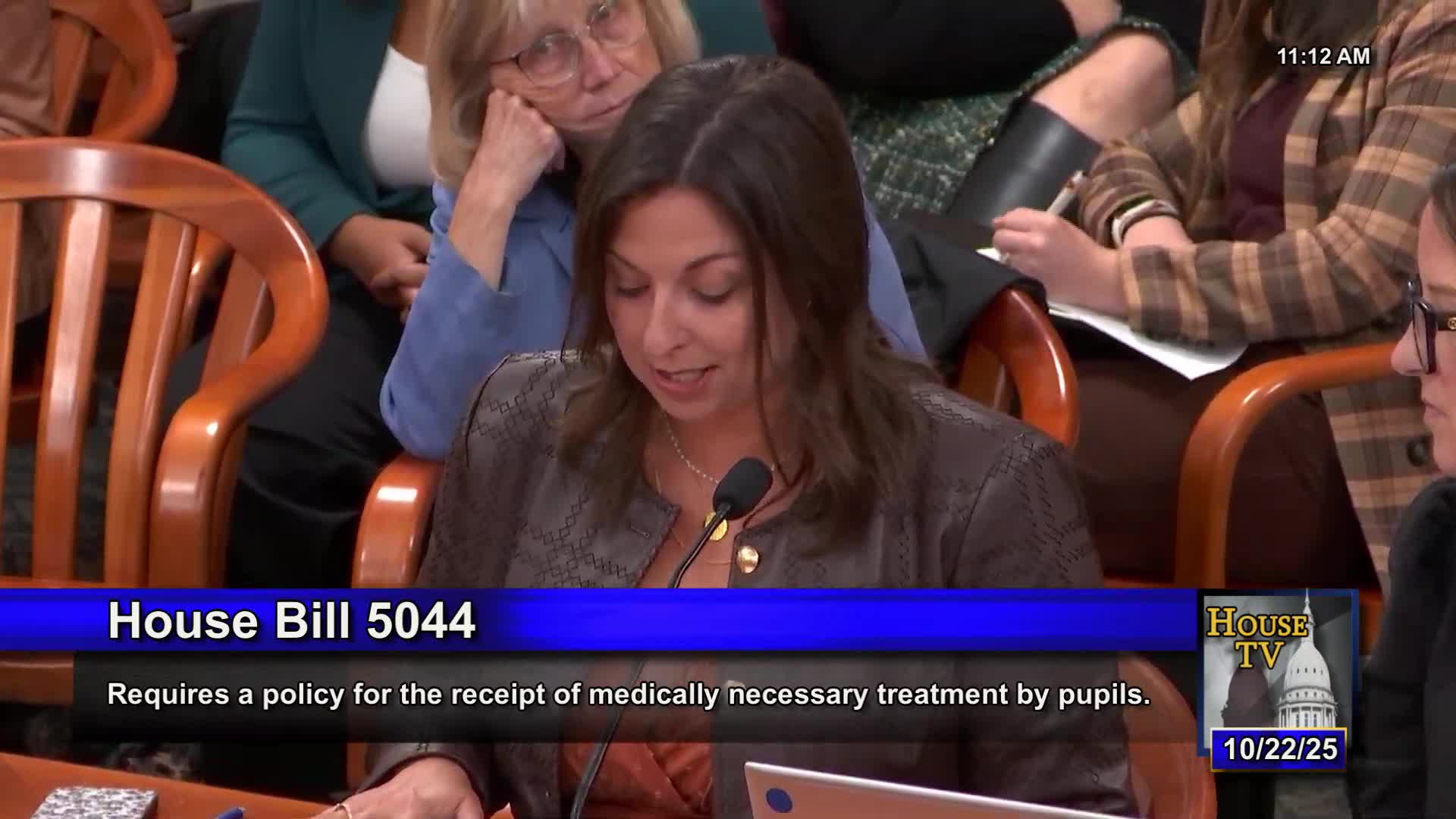
Summary
The House Education and Workforce Committee heard testimony on House Bill 50‑44, which would require school districts to adopt transparent policies allowing medically necessary applied behavior analysis (ABA) services to be provided in school settings and establish a 30‑day timeline to formalize accommodations after a parental request.
The House Education and Workforce Committee heard extensive testimony on House Bill 50‑44, sponsored by Representative Wenzel, which would require school districts to adopt clear policies allowing medically necessary applied behavior analysis (ABA) treatment to be delivered in school settings and set a 30‑day timeline for a team meeting after a parent requests accommodation.
Representative Wenzel said the bill is "about ensuring that a student's right to an education is never compromised by their medical needs," and described the measure as creating a consistent, transparent process so families and schools can coordinate medically prescribed therapies during the school day. The sponsor told the committee the bill would require districts to meet with the student, parent and the student's designated health‑care representative within 30 days to formalize how treatment will be provided.
Multiple board‑certified behavior analysts and parent advocates testified in favor. Kristen Weir, chief program officer for therapy services at Logan Center, described multiple cases in which early and coordinated in‑school support improved student integration: "When we do have that opportunity to partner and collaborate with educators and support children in their transition from treatment to a school setting, it has been remarkable." Maggie Moore, executive director of Hope Network Centers for Autism and a parent, described her son's progress with coordinated therapy and said families who rely on Medicaid or public schools often cannot access the same in‑school transitions available in other states.
Several speakers described traumatic outcomes when services were not allowed. Angela Cater, a board‑certified behavior analyst and mother, told the committee her non‑verbal son repeatedly returned from school saying, "no more blue room," and said she learned he had been placed in seclusion against his will; she called the bill a way to prevent harm and keep students in school. The Autism Alliance of Michigan and other statewide organizations urged passage, saying ABA is a medically recognized standard of care for many autistic students and that allowing it in schools would promote inclusion and reduce exclusionary discipline.
Witnesses and the sponsor said the bill would be budget‑neutral because medically necessary services paid by insurance would not be charged to school aid funds. Opponents, recorded in written cards and statements read into the record, included Macomb ISD and other intermediate‑level administrators and the Michigan Department of Education, which expressed concerns. Committee members asked about the bill's limits: Representative Weiss raised the question of how the bill defines "fundamental alteration" or "undue burden" when a school could deny a request on those grounds; witnesses said federal statutes and existing individualized team decision processes would guide those determinations and that policy implementation guidance would likely be needed.
The committee did not take a final vote on HB 50‑44 at the meeting; testimony was recorded from dozens of in‑person and electronic supporters and opponents for the record.