Get Full Government Meeting Transcripts, Videos, & Alerts Forever!
Get email alerts on the Municipal Finance Opeb topic
No spam. Unsubscribe anytime.
Cathedral City staff present draft IRC Section 115 trust investment policy; council asks for clarifications on roles and reporting
Summary
City staff reviewed a proposed investment policy for the city’s IRC section 115 trust (OPEB funds), describing the move from CalPERS to Schuster Advisory Group and proposing a balanced 50/50 equity‑to‑fixed allocation; council members asked staff to clarify role definitions, reporting cadence and allowable asset classes.
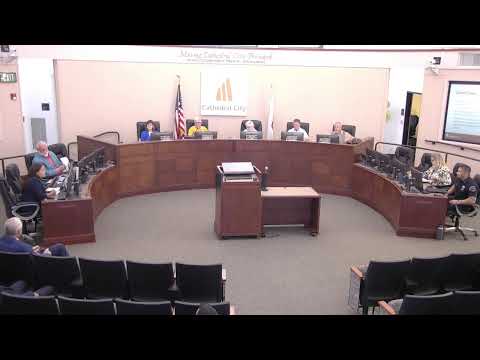
City staff on Tuesday presented a draft investment policy for the city’s Internal Revenue Code section 115 trust that holds Other Post‑Employment Benefits (OPEB) assets, and council members requested edits clarifying responsibilities, reporting and permissible investments.
Kevin (staff presenter) summarized the city's decision, approved by council in June, to transfer roughly $14 million previously invested in CalPERS' CERBT pool into a city‑managed IRC 115 trust now overseen by Schuster Advisory Group with Charles Schwab Trust Bank as custodian. "It ensures compliance with fiduciary duty, risk management, and the funding goal," Kevin said, describing the policy as a "sister" to the city’s treasury investment policy.
Staff reported the transferred funds had grown to more than $16 million while in CalPERS. The draft policy as presented uses a balanced, moderate tolerance allocation; staff said the working target is roughly 50% equities, 48% fixed income (bonds) and 2% cash. Kevin described the approach as intended to reduce unfunded OPEB liabilities over time while keeping an acceptable risk profile.
Council members pressed staff on several points they asked to see revised in the policy. Members requested clearer definitions of terms (for example, naming "the city of Cathedral City" rather than drafting generic roles such as "employer/plan sponsor"), explicit identification of the plan custodian and investment advisor, and removal or clearer limits on alternative or real asset investments if the council prefers to shy away from them. One council member asked why alternatives appear in a list of permitted holdings when the middle‑of‑the‑road strategy would not use them; staff agreed to amend the policy language.
Councilmembers also asked for a formal reporting cadence and engagement with the elected city treasurer, Greg Jackson. Staff said Schuster will manage day‑to‑day investment discretion and provide quarterly reports; the treasurer and the city manager will be involved in review, and staff committed to adding reporting requirements to the policy. Staff and the treasurer already have access to account data, Kevin said, and semiannual or quarterly reviews with Schuster are planned.
On performance expectations, staff indicated Schuster's historical performance versus CalPERS suggested a projected improvement in returns in the 2 to 5 percentage point range depending on the period measured. Staff emphasized the city retains the option to return to CalPERS if desired. Councilmember Carnivale asked about downside risk; Kevin replied that the balanced approach reduces volatility compared with a more aggressive allocation but does not eliminate the possibility of loss.
No formal vote was taken at the study session. Staff said they would revise the draft policy to incorporate council feedback (definitions, reporting cadence and specific permitted investments) and return it for council consideration at a future meeting, with a target date discussed of November 12 and a backup of December 10 if further edits are needed.