Get Full Government Meeting Transcripts, Videos, & Alerts Forever!
Get email alerts on the Property Tax Reform topic
No spam. Unsubscribe anytime.
State representatives discuss House Bill 335, inside millage and potential impact on Trumbull County revenue
Summary
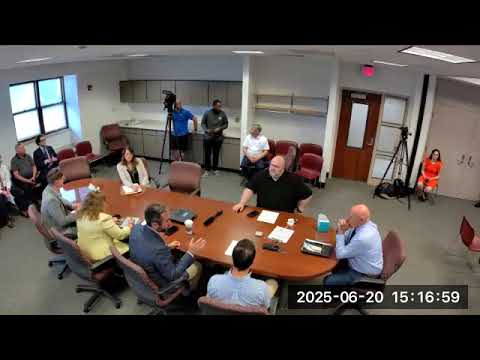
At a special Trumbull County meeting June 20, state representatives and county commissioners discussed House Bill 335 and related property-tax reforms, options for offsetting revenue losses and the county’s ability to decline reassessment-related increases for 2026.
Trumbull County commissioners met with their state legislative delegation on June 20 to review pending state property-tax proposals, how the changes in House Bill 335 could affect county finances and short-term options for limiting increases tied to property reappraisals.
The core policy discussion centered on the “inside millage” — a longstanding portion of property tax applied to all parcels across Ohio — and provisions in House Bill 335 that would change how that revenue is calculated or distributed. State representatives said parts of the bill aim to separate increases in property value from automatic increases in property-tax bills and to give voters and local officials more control over how revenue is collected and replaced.
Why it matters: Trumbull County officials reported receiving about $8,800,000 a year from the county’s portion of the inside millage; that figure was about $6,500,000 in 2020, a difference county officials said has effectively raised tax bills by roughly $2,300,000 annually since the last revaluation cycle. Commissioners and the delegation discussed the fiscal trade-offs involved in any change: reducing inside millage would lower some property owners’ bills but would also require replacement revenues (for example, by local levies, sales taxes or other mechanisms) if services are to be maintained.
Discussion highlights - House Bill 335 and related bills: State representatives described several strands of reform in play at the legislature, including limits on school levies and budget-commission changes (bills mentioned included House Bill 335 and separate provisions cited as House Bill 309 and other budget-commission language). The representatives said parts of the property-tax reforms might be folded into the biennial budget; other parts would require separate votes and negotiations. - Inside millage revenue: County officials noted the inside millage funds county operations and transfers (for example, veterans services and other programs). Representatives explained that counties and other taxing entities can, in many cases, choose to forego the revenue increase that follows a revaluation by reducing their tax rates and thereby hold revenue at previous levels. - Options and trade-offs: Legislators and commissioners discussed options to replace property-tax revenue, including voluntary local sales-tax increases, targeted levies and regional solutions. Representatives warned that shifting revenue sources can change who bears the tax burden (for example, renters pay property taxes indirectly via rent; sales taxes fall more heavily on purchasers and visitors). - Timing and choices for 2026: County officials were told they could, if they chose, decline to accept the revenue increase tied to the next revaluation (discussed as payable in 2027, based on values that would be reported in 2026). Representatives cited examples of other counties that had reduced or declined revaluation-related increases and urged the commissioners to include options in their planning.
Commissioners emphasized concern about county budgets already being tight and the practical effect of reducing revenue in 2026. Legislators acknowledged the fiscal pressure and repeatedly framed the bills as attempts to give voters and local officials more choices about how services are funded.
Ending The group agreed to continue the dialogue as the budget and bill negotiations proceed in Columbus. Representatives urged county staff and the newly hired grant/consulting team to prepare prioritized capital and operating plans to present during the next stages of the budget process.