Get Full Government Meeting Transcripts, Videos, & Alerts Forever!
Get email alerts on the Arpa Funding topic
No spam. Unsubscribe anytime.
Trumbull County commissioners address public questions over ARPA spending, urge clearer online access
Summary
County officials reviewed the record of American Rescue Plan Act (ARPA) expenditures and web postings after public reports questioned transparency; auditors and staff said records exist but some pages are not mobile-friendly and offered to provide more accessible exports and follow-up detail.
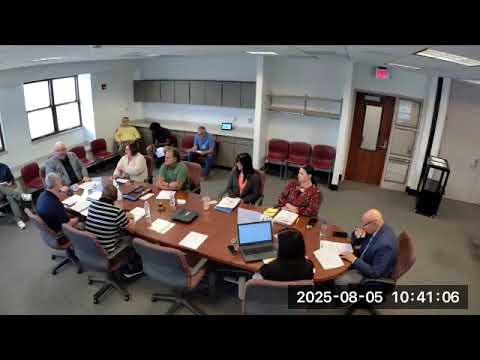
Trumbull County commissioners and county staff spent a substantial portion of their meeting addressing public concerns about how the county spent ARPA money and how those expenditures are presented online.
County Auditor Martha Yoder and planning staff told commissioners that project approvals, MOUs and a color‑coded spreadsheet tracking ARPA awards already exist on the county website but that some users were unable to view the full file on phones. "When you actually go to the website from a PC or a computer can you bring it up for us?" a commissioner said; Yoder said, "But I think 90% of the world's looking at phones right now," and agreed to ask IT to make the material easier to view on mobile devices.
Why it matters: Citizens have circulated claims that ARPA decisions were made in private. County officials repeatedly told the meeting that every ARPA approval was taken in public session and recorded in the journal; staff said the remaining problem was making archival documents easier to access on phones and adding clearer download links.
County officials described the scope and accounting approach. Yoder and Julie Green of the planning office said the county received about $38 million in ARPA funding overall and that the board had adopted the Treasury revenue‑replacement standard that made up to $10 million eligible, which affected classification and reporting. Green said the county had color‑coded the spreadsheet to indicate completed county projects, incomplete projects and grants, and that staff can provide line‑item lists (addresses, contractors, amounts) on request.
Several department leaders and the auditor said the ARPA program required many procedural steps — public hearings, legal review, MOUs and procurement steps — and that guidance from the U.S. Treasury changed multiple times, complicating records. "Every single step of the process was done by journal action by the board of commissioners," Green said. Auditor Yoder and planning staff offered to sit down with commissioners and to add dates and downloadable PDFs to the portal so the public can review where money was committed and why.
Staff emphasized that some summaries currently on the website were made for desktop users and may not render fully on phones; the auditor and IT staff committed to fixing mobile accessibility and to providing clearer downloadable reports. They also said that, where projects remain partially documented online, underlying applications and journal entries exist as records and can be provided for public review.
Ending: Commissioners directed staff to improve the accessibility of ARPA records and to prepare a clearer, downloadable accounting for public review; no formal vote on ARPA projects was taken during this segment.