Get Full Government Meeting Transcripts, Videos, & Alerts Forever!
Get email alerts on the Dam And Land Conservation topic
No spam. Unsubscribe anytime.
Land trust, community foundation seek support to buy Colberg Dam property and resolve dam liability
Summary
Western Reserve Land Conservancy and the Trumbull County Community Foundation told Trumbull County officials they have a purchase agreement for the Colberg/Colbert Lake property and need township and county resolution support to apply for grant funding to study and address the dam by a mid-September deadline.
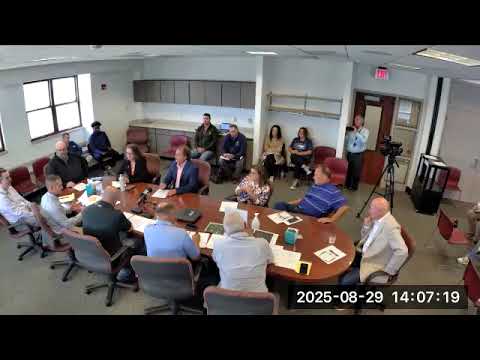
Western Reserve Land Conservancy and the Trumbull County Community Foundation told Trumbull County officials on an emergency special meeting that they have a purchase-and-sale agreement for the Colberg Dam property and are seeking resolution support from Brookfield and Hubbard townships and the county so they can apply for grant funding to study and fix — or, if necessary, remove — the dam.
The organizations presented the plan on behalf of a prospective acquisition during the meeting, saying ownership transfer is the first step to addressing a state-ordered consent decree and the site’s lingering liability. "We can't do any of that until the property is under control of somebody that cares about saving the dam," said Alex Jacob, Western Reserve Land Conservancy.
The land trust said the property totals about 356 acres, of which the lake surface is roughly 57 acres. Western Reserve said it would buy and hold the land and donate roughly 15 acres around the dam to the Community Foundation, which, together with Western Reserve, would seek public and private funds. Jacob said the group has a purchase-and-sale agreement in hand and expects the earliest closing to be in 2026 if the funding and grant steps succeed.
Why it matters: the Ohio Department of Natural Resources (ODNR) has required the current owner to remediate or breach the dam under an active consent order, and the owner has been granted an extension while interested buyers and funders pursue remediation options. "They give us an extension until 2026," Hubbard Township Trustee Jason Tedrow said, referring to communications with state officials. Meeting participants said the extension appeared to be tied to progress on grant applications and feasibility work.
What the groups are seeking: Western Reserve and the Community Foundation asked the townships and county to provide a resolution or letter of support needed to be eligible for Clean Ohio or other grant programs. Jacob said the Clean Ohio rules require support from at least one of the two affected townships; he asked the bodies to provide language the grant requires and said he would share the relevant Ohio Revised Code language and application language with legal counsel. "We actually only need legally 1 out of 2 townships," Jacob said, but the groups are seeking support from both townships and the county.
Legal and liability concerns: Trumbull County legal counsel and several township trustees pressed for precise, limited language in any resolution so that local governments would not inadvertently assume indemnities or funding obligations. Bill Danso of the Trumbull County Prosecutor's Office cautioned that "public entities can't indemnify others. They can't take on financial obligations without certifying that the funds are available," and said his office needed to review any draft language before the townships or county adopt it. Danso also noted a pending court consent order and warned that its scope and phrasing would bear on how support language should be written.
Funding and timeline: Western Reserve and the Community Foundation said they are pursuing a FEMA feasibility grant and other public and private sources, and that a feasibility study alone could cost "a couple hundred thousand dollars," according to the land trust. The presenters asked for quick action: the nonprofit team said it planned to submit an application by Sept. 12 and asked the townships to consider resolutions or letters at their next meetings (several trustees referenced meetings on Sept. 9 and Sept. 10). Jacob said he would provide the draft resolution language and the applicable ORC language by the next Tuesday for the prosecutor's office to review.
Operations and future ownership: Western Reserve said it would manage the property if the purchase closes, with the goal of holding the land until a suitable local partner — such as a township, park district or other nonprofit — is prepared to accept ownership. "We intend to own the land for a few years until a suitable local partner is prepared to take ownership," Jacob said. Western Reserve representatives described the organization as the owner/operator in the near term, with staff and land-management experience; they said the land trust owns about 7,000 acres regionally and employs staff to manage owned lands.
Other details and community concerns: Trustees asked about policing, maintenance and whether the property would remain open to the public. Jacob said Clean Ohio requirements and grant commitments would be used to secure public access commitments in the grant and that the land trust would work with local residents on programming and stewardship. The presenters said the owners had considered a partial demolition plan in the absence of a purchase and that the current owner had an approved plan with the state for removal of spillways if remediation did not occur.
Next steps: Western Reserve and the Community Foundation will share the grant application language and a draft resolution with the prosecutor's office by the coming Tuesday, townships indicated they would consider resolutions at meetings in early September, and the nonprofits planned to submit their grant application on or near Sept. 12. No township or county formally approved a resolution during the meeting.
Votes at the end of the meeting were ministerial: an adjournment motion passed unanimously by the three commissioners present.