Get Full Government Meeting Transcripts, Videos, & Alerts Forever!
Get email alerts on the Mosquito Lake Study topic
No spam. Unsubscribe anytime.
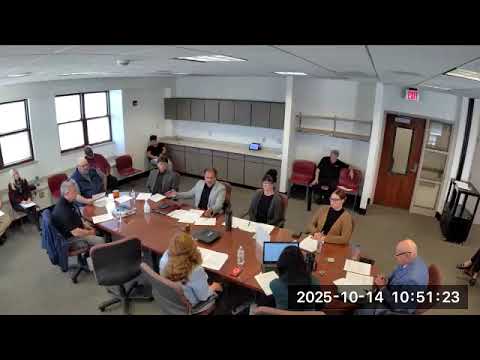
Youngstown State researcher seeks county backing for Mosquito Lake nutrient study
Summary
Dr. Shreyesh Sharma of Youngstown State University presented a proposal to study nutrient sources and internal loading that drive harmful algal blooms at Mosquito Lake and asked Trumbull County to help recruit local partners and provide a short letter of support for a grant application due Oct. 23.
Dr. Shreyesh Sharma, a civil-engineering professor at Youngstown State University, asked the Trumbull County commissioners to help marshal local support for a two-year research proposal to study nutrient sources and internal loading that drive harmful algal blooms at Mosquito Lake.
Sharma told the commissioners he plans to submit the application to an Ohio competitive program (proposal deadline stated in the presentation) and said he was not asking Trumbull County for operating funds but for partners and letters of support. "We have tons of data" from other lakes but "we do not have much knowledge" specific to Mosquito Lake’s internal loading dynamics, he said, adding that a calibrated hydrodynamic and water‑quality model could identify whether nutrients come from upstream agriculture, failing septic systems, stormwater or internal sediment release.
Commission members and other speakers described the lake as an economic and public‑water resource for the county and urged connecting Sharma with local stakeholders. Nick Coggins, chair of the county planning commission and TID, said county planning has contacts and will help. A commissioner asked staff to draft a short county resolution or letter of support; county staff said the clerk would prepare a letter on county letterhead for signatures.
Karen Yauber of Greenwater Services introduced a complementary treatment technology — an ozone‑infused nanobubble process her firm uses to reduce algal toxins in scaled applications — and said researchers and applicators can be partners rather than competitors. Commissioners and other speakers urged linking Sharma to the existing Mosquito Lake coalition, local township officials, ODNR contacts and the Army Corps outreach list to broaden support.
Sharma said a funded project would likely begin in early 2026 and run about two years; he described the study design as field monitoring plus process and watershed modeling to evaluate scenarios such as best‑management practices on upland land, and the likely effect of reducing external nutrient loads versus addressing internal sediment release. He said the resulting analysis would be used to prioritize interventions and to support future funding requests if the study shows infrastructure (for example sewer connections) or agricultural practices need change.
The board asked staff to circulate Sharma’s contact information and the county’s stakeholder list and to prepare the draft letter of support for commissioner signatures before Sharma's application deadline.