Get Full Government Meeting Transcripts, Videos, & Alerts Forever!
Get email alerts on the Youth Services topic
No spam. Unsubscribe anytime.
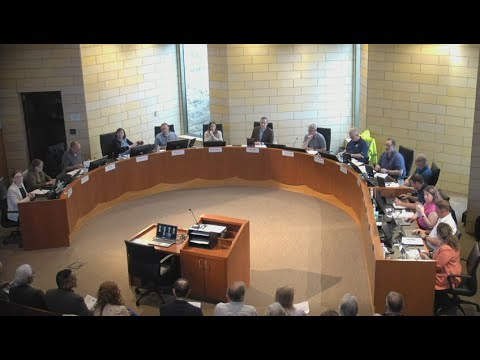
Montgomery board approves Wayside Cross youth center after divided debate
Summary
The Montgomery Village Board voted 4-2 on May 27 to approve Ordinance 21-33, granting a text amendment, special use and two variances to allow Wayside Cross Ministries to build a proposed 12,500-square-foot youth activity center at 1233 Douglas Avenue.
The Montgomery Village Board voted 4-2 on May 27 to approve Ordinance 21-33, granting a text amendment, special use and two variances to allow Wayside Cross Ministries (doing business as Urban Youth Ministries) to build a proposed 12,500-square-foot youth activity center on a subdivided parcel at 1233 Douglas Avenue, the site of Saint Olaf Lutheran Church.
The measure followed a contentious public comment period and a split Planning & Zoning Commission recommendation (3-2). The board also separately approved vacating a portion of Elliott Avenue adjacent to the property by a 5-1 vote; staff said that vacation had to occur before final zoning action.
Supporters, including church leaders and longtime volunteers, described years of programming operated out of Saint Olaf’s basement and told trustees the new facility would expand tutoring, instructional sports and summer camps. “Our goal is to empower young boys and girls age 5 to 17 to discover and achieve their God‑given potential,” said James Glucos, identified in the meeting as executive director of West Hill/West Side Cross Ministries, which oversees Urban Youth Ministries. Dan Britton, president of the Saint Olaf Church council, said the church has hosted Wayside’s urban youth program for more than a decade and supported building space so programs could serve more children.
Other residents urged the board to deny the zoning change. Several commenters raised past incidents involving individuals affiliated with the ministry and questioned whether a new, permanent facility belongs in a residential R‑1 district. One resident asked trustees to “say no to the Wayside Cross project” and cited prior legal and public‑relations episodes involving the organization. Several speakers asked for clearer limits on hours, staffing and operations.
Staff and petitioners told the board the proposal had been revised to reduce some previous concerns. Planning staff said the petitioner withdrew an earlier request to rezone the site B‑1 and instead sought a text amendment to the R‑1 code to allow “club, lodge or hall” language to include after‑school programs and summer camps (explicitly excluding day‑care centers). The petition calls for subdividing the church property so Saint Olaf would retain one lot and the new youth center would sit on the other. The petitioner requested two variances: relief for the irregular L‑shaped lot configuration and reduced landscaping along a portion of the north property line where no improvements are proposed.
Staff recited conditions attached to the approval: the facility must operate only as described in a letter of intent dated Feb. 26, 2025; programming will be limited to youth under age 18; activities will end by 7 p.m. Monday–Saturday and there will be no programming on Sundays; no drug‑rehabilitation services will be allowed; and the property owner must address any insufficient parking by either arranging an agreement with the adjacent church property or adding parking to the subject site in accordance with code. Petitioners and staff told trustees the proposed use expects an average of about 35 daily participants during the school year after‑school program, and about 70 participants daily during the seven‑week summer program. Administrative and cleaning staff may be on site earlier than program hours, the application states.
During the board discussion some trustees said they were troubled by the idea of adding “club, lodge or hall” as an allowed special use in R‑1 because it could create a precedent for other residential properties. A trustee warned the change might invite future applicants seeking to operate a hall or banquet facility in residential districts. Staff and other trustees countered that the petition was tied to this particular property and that the special‑use process requires findings of fact and site‑specific review.
The vote on Ordinance 21‑33 was 4 in favor, 2 opposed. Earlier in the meeting the board approved by separate vote vacating part of Elliott Avenue (required for the proposed subdivision) by a 5‑1 margin.
Supporters emphasized program safeguards. Robin Stirkle, who identified herself as a Wayside Cross representative, told the board that “we do background check fingerprinting for everybody that works at our facility, especially those who work with children,” and said coaches and staff are fingerprinted and screened. The petitioners played recorded testimonials from alumni, police and park officials describing youth programs and partnerships with Fox Valley Park District.
What happens next: staff said the village must record the Elliott Avenue vacation and finalize the subdivision and final site plans, including required landscape and parking changes, before permits can be issued. Trustees waived first‑reading notice on the vacating ordinance earlier in the meeting and moved the zoning ordinance forward with the required votes.
A final point of procedure: the Planning & Zoning Commission’s split vote (3‑2) meant the board received the report rather than a straightforward recommendation; trustees considered the full record and then took action.
The board’s action does not change any state or federal requirements related to criminal records or any background checks beyond the village’s land‑use approvals. The village’s zoning approval controls land use and permitted activities at this site; enforcement of background checks and other operating standards would rely on the organization and applicable licensing or other legal requirements.
Ending Trustees said the decision was difficult and the board repeatedly framed the matter as a zoning and land‑use determination rather than a referendum on the ministry’s history. Petitioners said they will work with staff to meet the conditions laid out by the board and finalize site plans before construction and occupancy permits are issued.