Get Full Government Meeting Transcripts, Videos, & Alerts Forever!
Get email alerts on the Public Finance topic
No spam. Unsubscribe anytime.
Radcliff council debates 2025 property tax options; directs staff to draft ordinance matching last year's rate
Summary
City staff presented three options for the 2025 real property tax rate (computed/compensating 0.126; match last year 0.129; 4% increase 0.131). After discussion of revenue estimates and public impact, the council asked staff to prepare an ordinance adopting the 0.129 rate for the next meeting.
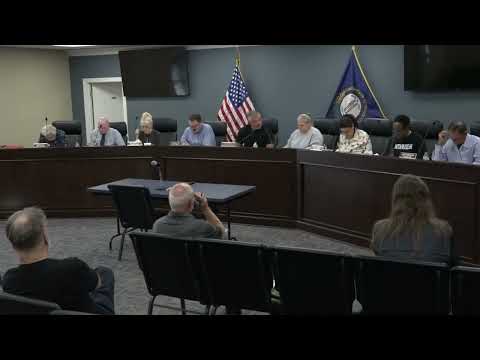
Radcliff Sept. 8, 2025 City staff and councilors spent the work-session portion of a Sept. 8 special meeting discussing possible property tax rates for fiscal 2025 and directed staff to prepare an ordinance that would match last year's adopted rate (0.129 per $100 of assessed value).
City staff presented three principal options: adopt the computed (compensating) rate of 0.126 per $100 of assessed value; keep last year's adopted rate at 0.129; or adopt a full 4% increase under state provisions (described in the meeting as triggering a public hearing and the possibility of a taxpayer referendum) to 0.131. Staff said the computed/compensating rate is intended to preserve the same total real-property tax revenue as the prior year given changes in assessed value.
Tim Pike (city staff) explained the compensating-rate concept: "The compensating rate gets you roughly the same amount of money that you got last year on your land taxes." Staff presented Chance's memo showing that taxable real-property assessments increased by about $73.8 million from the prior year (compared with a $249.6 million increase two years earlier). Based on staff estimates cited during the meeting, adopting the computed 0.126 rate would generate roughly $50,511 over the baseline used for the budget; adopting the 0.131 (4% adopted) rate would generate about $125,000 more than last year's receipts.
Council members discussed how the different rates would affect typical households and businesses. Staff calculated examples: on a $300,000 home the current rate in the packet produced about $387 annually; moving to 0.131 would increase that bill by about $6 per year, staff said. For a $500,000 home staff estimated roughly a $10 annual difference. Councilors also emphasized the political sensitivity of any perceived tax increase and the need to explain how additional revenue would be used.
After discussion the council directed staff to draft an ordinance adopting a 0.129 tax rate (the rate the city adopted last year) so that an ordinance can be finalized and presented at the next meeting. The mayor asked staff to prepare the ordinance language and return it for formal action; council members agreed to that instruction by consensus.
What happens next: staff (Chance and others) will prepare ordinance language reflecting the 0.129 adopted rate for council consideration at a subsequent meeting and will include the required public-notice items for the tax roll timetable.