Lifetime Citizen Portal Access — AI Briefings, Alerts & Unlimited Follows
House Rules Committee backs short-term funding bill after hours of debate over health care, NIH cuts and security funding
Loading...
Summary
The House Rules Committee approved a closed rule to bring H.R. 5371, a seven‑week continuing resolution extending government funding through Nov. 21, to the floor after hours of debate about looming health-care premium increases, Medicaid and NIH funding cuts, and added security funding for officials.
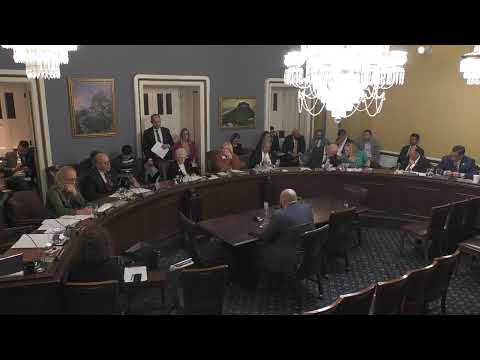
The House Rules Committee on Wednesday approved a closed rule to bring H.R. 5371, the Continuing Appropriations and Extensions Act of 2026, to the House floor by a recorded vote (9 yeas, 3 nays). The short-term measure, described by sponsors as a clean extension of current funding levels, would keep most federal programs funded through Nov. 21 and provide supplemental security funding for members of Congress, executive-branch officials and Supreme Court justices.
Supporters, led by Rep. Tom Cole, the chairman of the Appropriations Committee, said the seven‑week CR was intended to keep the government open while appropriators finish work on individual spending bills. "This legislation keeps the government open. It's that simple," Cole told the Rules members during the hearing. He said the CR preserves current fiscal-year 2025 funding levels and includes a limited increase for security across branches of government so negotiators can continue conferring on three appropriations bills already moving through each chamber.
Opponents argued the CR fails to address an immediate health-care crisis tied to the scheduled expiration of enhanced Affordable Care Act premium tax credits and large Medicaid cuts in earlier legislation. "This isn't a warning light. This is a 5 alarm fire," said Ranking Member James McGovern, warning that millions of Americans could see steep premium increases if Congress does not act to extend the credits before insurers set 2026 rates.
Ranking Member of the Appropriations Committee Rep. Rosa DeLauro likewise criticized the CR as partisan and insufficient, saying it leaves out a requested $600 million WIC (Women, Infants and Children) anomaly and does not protect appropriations from administrative impoundments. DeLauro and other Democrats detailed amounts they say the administration has withheld or rescinded — figures they tied to research and community programs they said are at risk if appropriations are not enforced.
Committee members pressed the Appropriations leadership on how the CR treats health programs and whether separate negotiations on tax, health and Medicaid changes should be linked to short-term funding. Cole and other supporters said those policy changes fall outside the Appropriations Committee's jurisdiction and urged keeping the CR limited to funding so conference negotiations can proceed.
The hearing also included questions about a pilot security program for members and a separate amendment proposal by Rep. Jared Moskowitz to allocate $250,000 per member from Members' Representational Allowances for member security. That proposal drew a lengthy floor‑level discussion but was not adopted in committee. Lawmakers said security needs vary by district and that additional work among the Capitol Police, House Administration and appropriators would be needed to craft a permanent approach.
Votes at a glance
- Committee motion to report the rule for H.R. 5371 (closed rule, includes immediate floor consideration for H.Res. 719): Passed by recorded vote, 9 yeas, 3 nays (clerk reported 9 yeas, 3 nays). The rule provides one hour of general debate on the CR controlled equally by the chair and ranking member of Appropriations, waives points of order, and includes a separate closed rule for H.Res. 719 honoring Charlie Kirk.
- McGovern amendment to the rule (strike tariff-blocking language and change dates): Failed on voice vote/record (committee recorded results reported earlier in the hearing; the amendment was not adopted).
- Scanlon amendment to the rule (to make in order an amendment extending enhanced ACA premium tax credits and related Medicaid fixes): Not adopted in committee (record shows the amendment failed in recorded/voice vote).
What it does and what remains unsettled
H.R. 5371 would maintain current funding levels through Nov. 21 (the bill text provided to the committee describes a short-term extension with limited anomalies). It includes supplemental security funding for three branches, and the rules package makes the Kirk resolution in order under a closed rule. The committee record and witnesses make clear that the CR does not itself change the enhanced premium tax credits or Medicaid policy; those items would require separate action by Ways and Means and other jurisdictions. Democrats asked for explicit language preventing administrative impoundment of previously appropriated funds; committee supporters said that is a separate negotiation and not part of this short extension.
Why it matters
The committee's action sends H.R. 5371 to the House floor with a closed rule, narrowing the amendments that can be offered there and prioritizing quick passage to avoid a government shutdown at the end of the fiscal year. Lawmakers warned that the timing matters for insurance marketplaces: open enrollment and insurer rate‑setting will occur in the weeks after the CR's date, and Democrats said a delay could trigger large premium increases for people receiving ACA marketplace tax credits.
Ending
With the rule adopted, the House is scheduled to consider the continuing resolution and the Kirk resolution under the terms the Rules Committee approved. The CR's supporters emphasized that the measure's purpose was to buy negotiators time to resolve outstanding appropriations packages; opponents said the short extension is insufficient and urged lawmakers to address pending health-care and public-health funding concerns before voters begin receiving 2026 premium notices.