Get Full Government Meeting Transcripts, Videos, & Alerts Forever!
Get email alerts on the Employee Compensation topic
No spam. Unsubscribe anytime.
Gardner City committee begins drafting nonunion pay ordinance, flags labor board filing
Summary
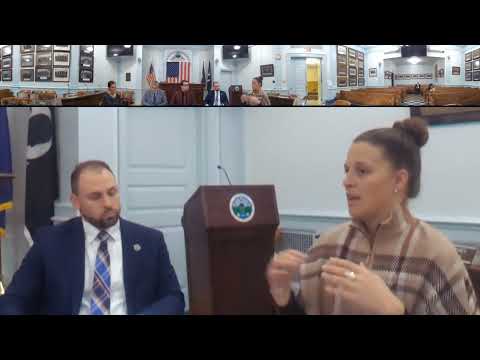
Gardner City’s Ad hoc Compensation Proposal Committee opened work Oct. 20 on a proposed ordinance to set pay for nonunion employees, but the city solicitor warned that a pending Department of Labor Relations filing limits what the committee may discuss and that some department-head positions are off-limits.
Gardner City’s Ad hoc Compensation Proposal Committee opened work Oct. 20 on a proposed ordinance to set pay for nonunion employees, but the city solicitor warned that a pending Department of Labor Relations filing limits what the committee may discuss and that some department-head positions are off-limits.
The meeting began with City Solicitor Benny Pusateri II reading a written opinion advising the mayor and committee that “if a unit is established, the terms and conditions of employment will have to be determined through the collective bargaining process and not by unilateral action by the city.” Pusateri said the opinion—and a filing submitted to the Department of Labor Relations by several department heads—exclude certain department-head positions from the committee’s review.
The solicitor’s opinion was the immediate context for the committee’s discussion, which centered on three practical tasks: establishing an affordability cap for any compensation package, creating a clear list of positions the committee may consider, and designing a pay structure (grades, steps, longevity and related allowances) that the council could explain to constituents.
“I think affordability needs to be addressed really clearly, and I think we should start with defining that because I think it’s the foundation of this whole process,” said Councilor Kuzinski. Kuzinski asked for detailed revenue projections and asked staff to show how any pay changes would be paid for without cutting services or raising taxes.
A committee member reported that $250,000 has been set aside in the city’s reserve account as the amount available for this fiscal year; the member said longer-term cost projections will be needed because changes would permanently affect future budgets. The transcript records the committee chair noting the reserve figure and offering to obtain five- and 10-year projections and staffing analyses from finance and department heads.
Committee members pressed for better data and transparency. They asked for: (1) a clear list of positions that are eligible for the ordinance given the Department of Labor Relations filing; (2) the source math and assumptions behind prior proposals and any new affordability number the committee adopts; (3) a complete accounting of base pay versus pay additions (longevity stipends, clothing allowances, educational incentives and other nonbase compensation); and (4) job descriptions to confirm whether posted duties still match current responsibilities.
Members debated how to structure pay increases. Several supported a job-based grading system with explicit steps, percentages and time between increases to reduce subjectivity. One committee member noted survey results from other municipalities showing most use annual step progressions and separate cost-of-living adjustments (COLAs) on top of graded salary structures. The committee also discussed whether to tie step progression to years in position, years of service or performance reviews; several members said performance-based increases can introduce budget uncertainty and that longevity-based steps provide clearer budgeting.
The committee agreed to collect comparative pay grids from other municipalities, complete revenue projections, the eligibility list of positions the committee may discuss, and a clear breakdown of base pay versus additional pay elements for the next meeting. The chair said staff will compile the questions and data requests and include them in the next meeting packet.
There were no final votes on an ordinance at the Oct. 20 meeting. The only formal action recorded was a motion to adjourn, which the committee approved. Councilor Hedlund made the motion to adjourn; Councilor Krasinski seconded it.
Next steps: the committee scheduled follow-up work to develop (1) an affordability cap with supporting projections; (2) an eligible-position list consistent with the solicitor’s opinion and the Department of Labor Relations filing; and (3) a draft grade-and-step pay matrix for committee review and public posting before any council vote.
Adjournment: Motion to adjourn carried by voice vote.