Get Full Government Meeting Transcripts, Videos, & Alerts Forever!
Get email alerts on the Board Governance topic
No spam. Unsubscribe anytime.
Board endorses pilot to deepen policy reviews at policy-committee level, avoids adding general-agenda items
Summary
Trustees discussed increasing board engagement with district policies and agreed to a small pilot within the policy committee to review a limited set of policies with a consistent set of governance questions rather than adding regular full-board policy agenda items.
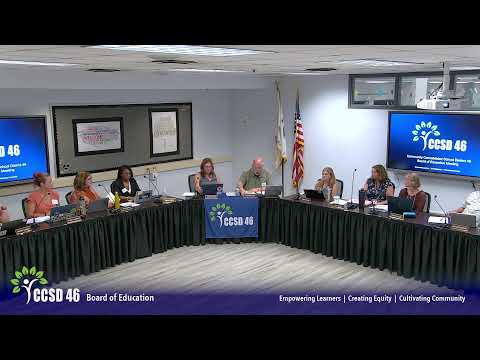
The Grayslake CCSD 46 Board of Education on Wednesday discussed expanding its review of district policies and agreed to a limited pilot at the policy-committee level rather than adding recurring full-board policy items.
The discussion followed policy-committee work reviewing five-year updates and several specific policies. Board members and administrators debated whether the full board should add dedicated policy-review items to regular meeting agendas or whether deeper review should be kept within the policy committee to avoid additional staff workload.
Superintendent Dr. D. Glickman and other trustees emphasized the difference between governance (board) responsibilities and implementation (staff) responsibilities. Board member Christy (surname not given) proposed a checklist-based approach that would let trustees consider policy relevance, timeliness and alignment with district goals without increasing staff lift. Several members urged a small pilot first, using the policy committee to test an approach and limit added staff work.
The consensus reached at the meeting: the policy committee will pilot the approach by adding a few governance-focused questions to its next policy packet and will report back. Trustees also suggested new board members review Section 2 (board processes) as part of onboarding.
Why it matters: Clear roles and a repeatable process for policy review can help trustees monitor whether district policies continue to produce the results the board expects while limiting additional administrative burden.