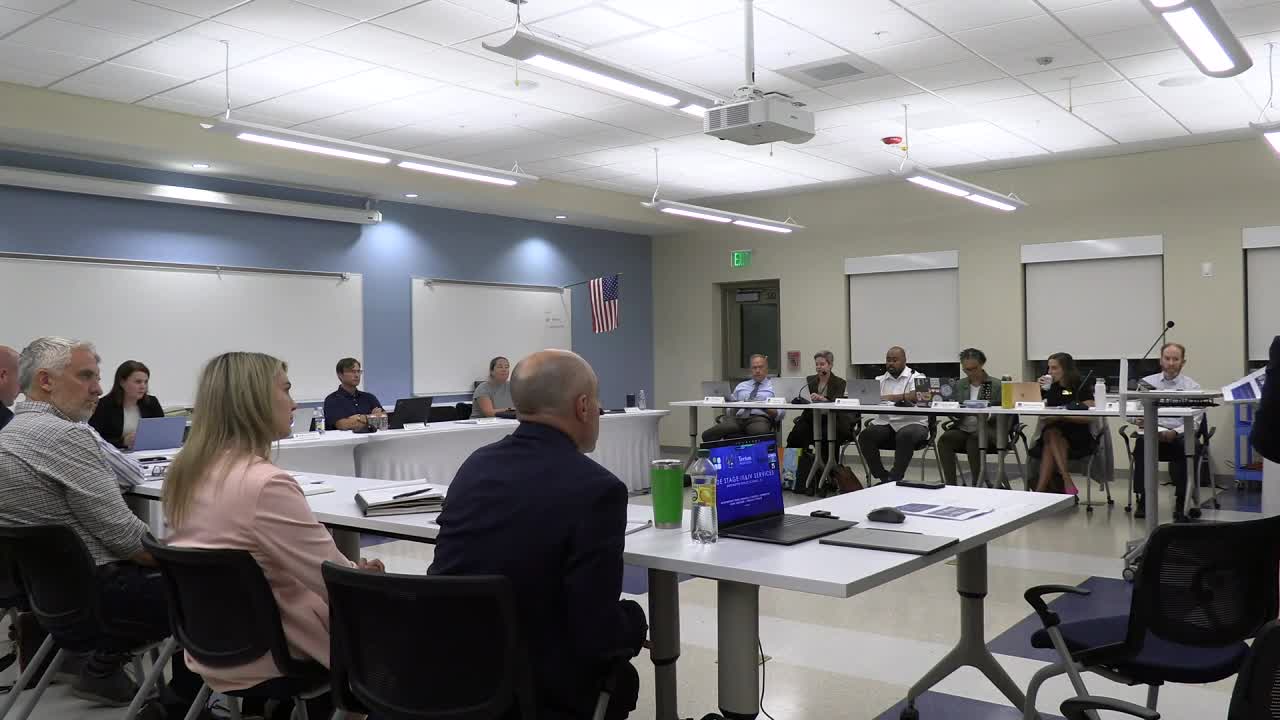
Barrington officials hear updated designs, budgets and timeline for four-school construction program
Loading...
Summary
Design and project-management teams presented schematic and design-development progress for additions and renovations at four Barrington schools, described budget contingencies and a phased schedule that targets early construction work this summer and staged occupancy through 2028.
Design and construction teams for Barrington’s school building program briefed the town council and the school committee on the project’s design-development progress, budget structure and schedule, saying some site and early-release construction could begin this summer and that full program sequencing will continue through 2028.
The presentation by Left Field Project (owner’s project manager) and Tekton Architects covered the four-school program approved in the district’s 2023 referendum and the subsequent stage‑2 approval. Chris Field, project executive with Left Field Project, said the stage‑2 submission “was approved at $250,000,000.” Justin Hopkins, associate principal and senior project manager at Tekton Architects, walked councilors through how the work will move from schematic design to design development and then to construction documentation and bidding.
Project managers said the program combines additions and renovations at the high school and three elementary schools to create neighborhood pre-K–5 schools and to close Hampton Meadows as a standalone upper elementary. The presenters described the overall cost structure: hard costs, standard contingencies, soft costs such as furniture and technology, and an unallocated owner’s contingency. Chris Field noted, “We also currently have a $10,000,000 of owners contingency on the project. I should mention that is cash. That is unallocated.”
Officials outlined near-term sequencing: after design-development pricing reconciliation and required approvals from the Rhode Island Department of Education (RIDE), the team plans early‑release packages for long‑lead equipment and switchgear that would allow some procurement and site work to start while the final construction documents are completed. Field said the team expects to start some construction “over April break with new electrical services being run into the new schools” if permits and approvals are secured, and to begin earthwork and traffic/entrance work that summer.
Presenters said the projects are being managed as four standalone budgets with contingencies, and that the district’s memorandum of agreement with the state (RIDE) drives the reimbursement assumptions and program eligibility. The teams described a reconciliation process that compares multiple independent cost estimates to manage the design and keep the program near budget targets as the design is refined.
The presentation closed with a high‑level schedule showing staggered construction and target milestones through 2028, and an invitation to continue community engagement and technical reviews with local permitting authorities.
For now, committee members and staff emphasized that many details — including final permit timing, specific early‑release package scopes and classroom phasing plans — will be refined during the next round of design development and RIDE threshold reviews.