Get Full Government Meeting Transcripts, Videos, & Alerts Forever!
Get email alerts on the Roads Infrastructure topic
No spam. Unsubscribe anytime.
Hart County commissioners debate road-study bids and revive plan to hire public works director
Summary
Commissioners reviewed multiple bids for a comprehensive road study, debated scope and cost, and agreed to have county staff break down proposals; several commissioners urged hiring a public works director to manage road planning and keep data current.
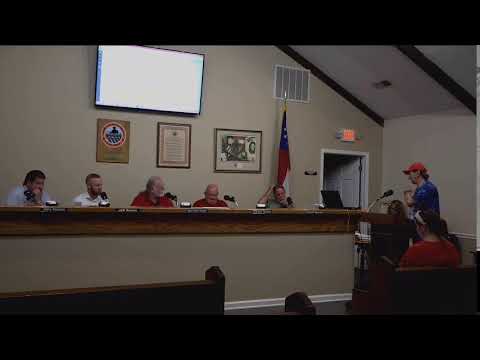
Hart County commissioners on Aug. 26 discussed competing bids for a proposed countywide road study and whether the county should instead hire a public works director to maintain and update road data in-house.
The discussion began after staff read excerpts from several bid proposals. One firm’s full-scope estimate approached the mid six figures; another firm offered an $85,000 package for a pavement-condition assessment and an interactive deliverable similar to what Madison County purchased, according to the bids read into the record. Commissioners pressed for clarity on what each bid included and whether ongoing updates were part of the price.
Why it matters: Commissioners repeatedly said the county’s last comprehensive road plan dates to 2014. Constituents have asked how roads are selected and why priorities change. Several commissioners said decisions made without recent data amount to subjective judgment rather than an evidence-based plan.
Several commissioners recommended doing additional homework: contacting Madison County to confirm its scope and vendor, splitting the study into components (basic graded map first, then safety/intersection work), and asking bidders to itemize recurring costs and whether they would maintain the dataset. County staff agreed to “break them down and email it” to the board so commissioners could compare line items and bring firm definitions back to bidders.
A recurring theme was staffing. Multiple commissioners said a public works director—vacant since 2016 in Hart County—could produce and maintain the road inventory and reduce long-term consultant costs. One commissioner said the county had saved hundreds of thousands of dollars by not hiring a director but now needed in-house capacity as growth and road issues accelerate. Another commissioner said a consultant can advise, but decisions remain the board’s responsibility.
Commissioners discussed specific technical issues raised by bidders and staff: up to 15 intersections identified for study, up to five concept layouts, pavement coring if needed (not included in some estimates), and the need for a deliverable map that allows taxpayers to view each road’s condition and rank.
Next steps: The board asked the county administrator to compile a clear, written scope that defines the minimal deliverable the county needs (an updated, color-coded map and graded, itemized list of roads) and to return to the board with a breakdown of the bids. Commissioners also agreed to research neighboring counties’ contracts and vendors and to include public-works staffing options in future budgets.
Ending: Commissioners did not vote to hire a consultant at the meeting. They agreed to request clarifications from bidders and to consider creating a public works director position or an alternate staffing model to maintain a living road inventory moving forward.