Get Full Government Meeting Transcripts, Videos, & Alerts Forever!
Get email alerts on the Substitute Teachers topic
No spam. Unsubscribe anytime.
Recalibration team urges 10 substitute days and higher pay; committee asks for consistency check with teacher salary calculations
Summary
Presenters recommended increasing substitute teacher coverage to 10 days per year (from 8.75) and aligning substitute pay toward a per‑day value of the average teacher salary; committee members asked staff to ensure internal consistency with salary calculations and requested cost updates.
The recalibration team recommended increasing state funding to provide 10 substitute teacher days per certified teacher per year (the current model uses 8.75 days) and suggested funding substitutes at a rate nearer the value of a teacher’s daily pay rather than the model’s current proxied amount.
Doctor Pikes told the committee the model currently funds substitutes at a per‑day proxy of $118.26 (plus Social Security and benefits, totaling approximately $127.31 under the model). The consultant said the weighted statewide average teacher salary in the model is roughly $63,461, which converts to about $320 per day on a 200‑day basis; he and committee members noted that paying substitutes closer to that daily rate would substantially increase costs.
Pikes estimated that merely increasing substitute days from 8.75 to 10 (at the model’s current per‑day proxy) would cost about $1,200,000. He said the committee would receive a cost estimate for raising substitute pay to a daily value tied to the updated average teacher salary once the committee’s salary recommendation is finalized.
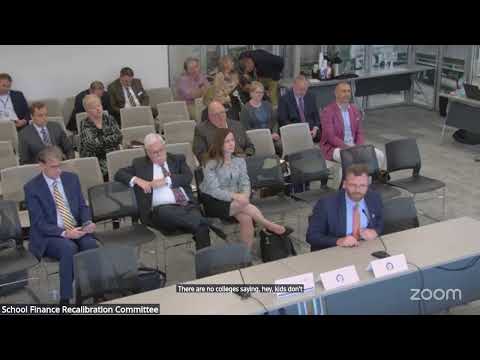
Committee members stressed internal consistency: Representative Diamond asked whether substitute use has increased or remained stable; the recalibration team said district accounting does not consistently translate substitute expenditures to days used and staff would review available WDE data. Representative Kelly and others pointed out recruitment concerns — several members characterized substitute supply as declining in parts of the state and said raising pay might enlarge the pool. “Our substitute teachers are becoming more and more important,” Doctor Pikes said, and he agreed to provide updated cost figures when the committee’s teacher‑salary inputs are finalized.