Get Full Government Meeting Transcripts, Videos, & Alerts Forever!
Get email alerts on the Legislative Process Tools topic
No spam. Unsubscribe anytime.
JFAC staff introduce SharePoint, hearing schedule and new LSO impact‑review team
Summary
Legislative budget staff demonstrated SharePoint and the session record, outlined a daily workgroup rhythm and introduced a new Legislative Services Office impact‑review team and McClure Center fellows to support JFAC's budget work.
JFAC staff introduce SharePoint, hearing schedule and new LSO impact‑review team
Legislative Services Office budget staff demonstrated a new SharePoint workflow and session‑record resources to the Joint Finance‑Appropriation Committee on Jan. 8 and introduced analysts and a newly created impact‑review team intended to provide rapid research, evidence searches and analytical support during the budget process.
Why it matters: committee members will rely on the shared document repository, analyst assignments and work‑group structure to complete detailed review of hundreds of agency budgets over the next two months.
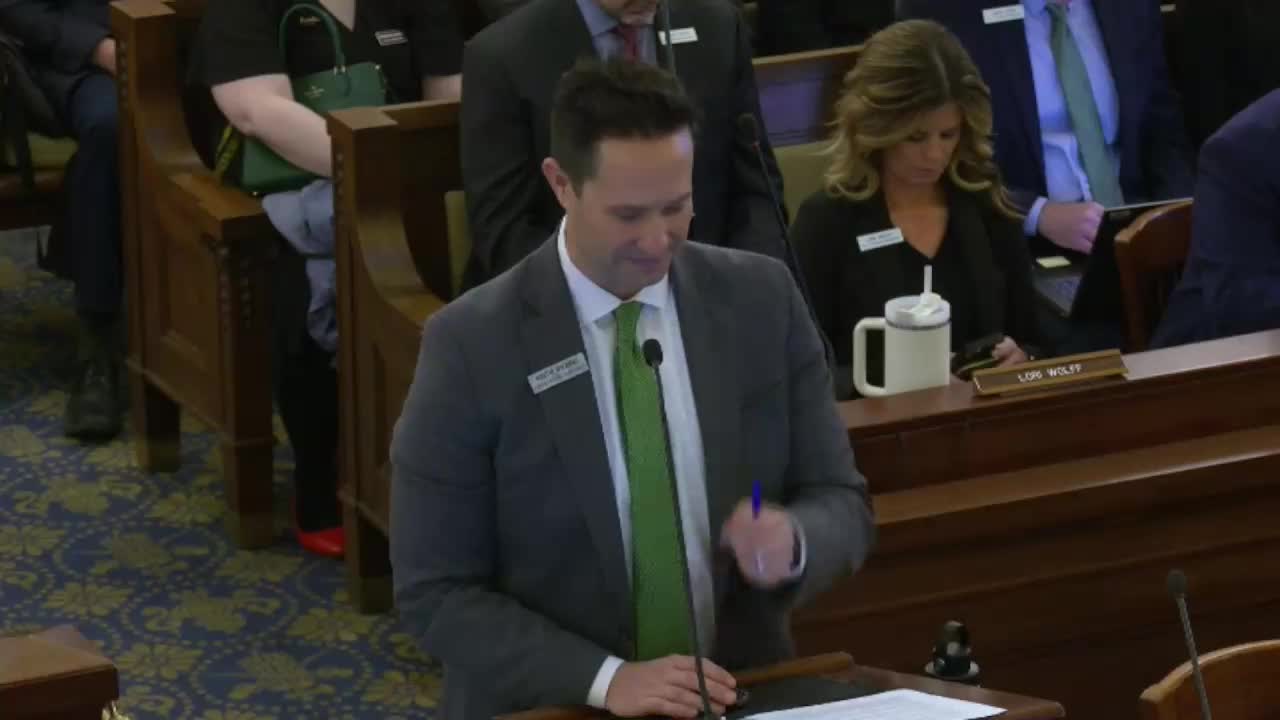
Keith Bybee, Division Manager of the Budget and Policy Analysis Team, walked members through SharePoint features and best practices for using the legislative budget book and downloading agency slide decks. “Think of SharePoint as that same mechanism, the kind of repository for you to check each morning,” Bybee told the committee, demonstrating how to download files to avoid read‑only mode and how a new naming convention groups analyst and agency materials (analyst presentation = A, agency = B) to reduce duplicate downloads.
Bybee and staff also outlined the JFAC hearing schedule and work‑group process: the committee will meet each morning (roughly 8:00–9:30 a.m.) for plenary JFAC business, and then members will move into assigned work groups starting about 9:30 a.m. to dive into agency detail; program‑maintenance budgets are scheduled to be set Friday, Jan. 17. Bybee said the schedule groups agencies so that members hear presentations, then return the following week to set enhancement budgets for that agency group. He emphasized the naming convention for the budget book, the availability of iPads/Surface devices for markup, and that printed copies of the legislative budget book (about 850 pages) can be provided on request.
Staff introductions: Bybee introduced the budget and policy analysis team members who will support JFAC work groups and agency hearings, including deputy manager Jared Tetreault (public‑school support), data systems coordinator Shane Winslow (audio/video and IT support), principal analyst Janet Jessup (natural resources), Frances Lippitt (capital budgets/CEC), Alex Williamson (health and welfare), Brooke Dupree (transportation, commerce, labor), Tamara Figueredo (office coordinator) and newer analysts Kevin Campbell (secondary education), Noah Peterson (public safety), Kellen McGurkin (general government) and Chris Lahoset (statewide elected officials and public‑defender areas). Bybee noted analysts also serve as the primary points of contact for members’ questions in their assigned areas.
New LSO impact team and McClure Center fellows: Paul Headley of the Legislative Services Office introduced an LSO impact‑review team intended to provide short, rapid answers and deeper research products for members. Headley described the team’s capability as flexible — from an email response to a one‑page summary to deeper research — and said the team would support questions about evidence and program effectiveness. He introduced impact team members Casey Hartwig (policy analyst with a JD), Alex Penny (audit/evaluation experience from West Virginia), and Alex Hatfield (IT analysis, GIS capability). Headley also introduced two research fellows on loan from the University of Idaho McClure Center (Ellen Upton and Kalyn), noting they will support performance‑measurement and evaluation work.
Headley told members, “As I've looked at performance measures, performance budgeting, recently and over the years, there's 1 theme that kinda continues to rise to the top and that's evidence.” He said the impact team will help identify whether a proposed program has evidence of effectiveness "in other jurisdictions" or in Idaho and where to find that research.
What members were told to do next: staff urged members to download and organize the budget book, identify their work‑group assignments and contact their analyst so the analyst can begin agency outreach. Bybee and staff offered individualized follow‑up to ensure each member is set up with SharePoint access and device tools.
Ending: committee members left with instructions on accessing the session record on legislature.idaho.gov, a printed option for the legislative budget book, and a schedule of upcoming hearings and work groups that will structure the next 6–10 weeks of JFAC work.