Get Full Government Meeting Transcripts, Videos, & Alerts Forever!
Get email alerts on the Public Safety Health topic
No spam. Unsubscribe anytime.
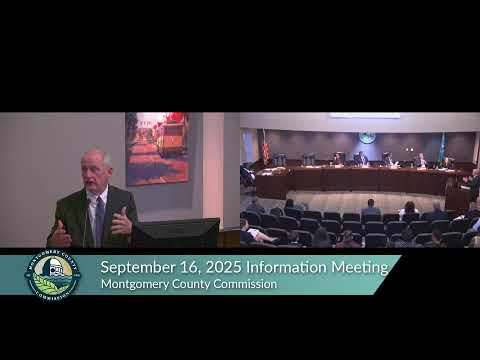
Montgomery County commissioners discuss using opioid settlement funds to equip patrol cars with AEDs
Summary
County officials discussed a proposal from the sheriff’s office to use a portion of opioid settlement funds to buy automated external defibrillators for patrol vehicles; commissioners asked for documentation that the purchases meet settlement criteria.
The Montgomery County Commission discussed a sheriff’s office proposal to use opioid settlement funds to purchase automated external defibrillators (AEDs) for patrol vehicles.
The sheriff’s office presented the request during the meeting’s agenda item on possible uses for opioid settlement money. “The sheriff is requesting that we use opioid settlement money to purchase AEDs for the patrol vehicles,” Chief Murphy said. He added that counsel for the public examiners and the attorney general had provided letters indicating the funds can be used for non-opioid incidents and that agencies would only be required to replace consumable items used in response, such as electrode pads.
Why it matters: Commissioners pressed the sheriff’s office to show the proposal fits the settlement’s allowable categories. One commissioner noted that past allocations to the district attorney’s office had required careful review and that the county must ensure any use satisfies the settlement’s education, prevention and treatment criteria.
Chief Murphy described operational reasons for the request. He told commissioners that deputies often arrive before emergency medical services and that modern AEDs “actually tell the deputy what to do” and “even coach them through the compressions and the respiratory.” He added that the sheriff’s office currently has some AEDs but not in all vehicles.
Commissioner questions focused on documentation and scope. A commissioner asked whether the sheriff’s office had a written proposal or budget for the allocation; Chief Murphy replied the current request is “strictly operational at this time” and that no other items were being requested from the opioid funds. Another commissioner asked for a dollar amount; the sheriff’s representative said the purchase would be “a portion of the opioid state” funds and characterized the amount as “very small” relative to the total.
No formal vote or appropriation occurred at the meeting; commissioners asked staff to provide the written justification and supporting documentation needed to demonstrate the purchases meet the settlement’s allowable uses before placing the item on a future agenda.
The discussion concluded with commissioners thanking the sheriff’s staff; the item was flagged for a future agenda once staff provides the requested documentation.