Get Full Government Meeting Transcripts, Videos, & Alerts Forever!
Get email alerts on the County Budget topic
No spam. Unsubscribe anytime.
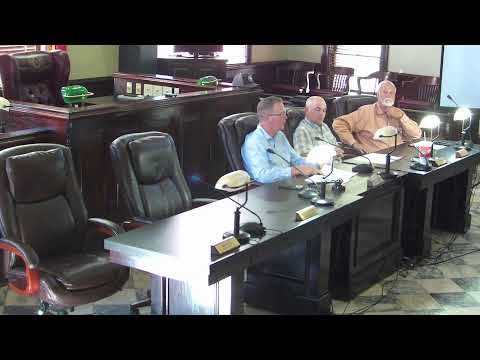
Erath County holds budget workshop; officials weigh two jail positions, records storage and new state mandates
Summary
At a Sept. 3 special session in Steamboat, Erath County officials opened a public hearing on the 2025–26 budget and discussed adding two jail positions to handle increasing records workload, reclassifying a CRP role, payroll certification adjustments and costs tied to new state mailing requirements.
Erath County Commissioners Court opened a public hearing on the 2025–26 budget and then moved into a budget workshop Sept. 3 in Steamboat, where elected officials and department heads discussed adding two jail positions to handle an expanding records workload, reclassifying a county rural program position and estimate changes for payroll and certification pay.
The discussion matter-of-factly centered on staffing and administrative costs. County staff described an expanding volume of inmate records—“probably in the inmates section alone, we have over 10,000 files”—and said new state laws that took effect Sept. 1 will increase paperwork. Court members asked staff to quantify payroll and software costs and returned repeatedly to how personnel changes would fit in the proposed budget.
The county discussed adding two licensed jailer positions whose primary duties would remain as jailers but which would also assist the records unit and the records sergeant with mandated paperwork and electronic-records conversion. County staff said some retention schedules require files to be kept up to 75 years, and existing storage space that was expanded four or five years ago is now full.
Officials gave cost estimates for adding staff. The court noted an estimate of about $80,000 in salary and benefits per added position and said two positions would total roughly $160,000 in the proposed budget. Staff did not present a final, adopted funding source for the positions; the court directed staff to continue refining the numbers and return with specifics.
Other personnel items discussed included converting an existing CRP (conservation/rural program) position from a nonexempt to an exempt salary classification so the incumbent could spend more time on administrative tasks. The community paramedic role and a plan to move certain critical-care responsibilities to a response vehicle were also described as changes that could reduce some overnight operational burdens on that position.
The court also reviewed a proposed adjustment to certification-based pay steps (intermediate, advanced and master levels) rather than longevity pay. County staff said one estimate placed the full cost if every eligible employee took the next certification step at about $67,000; staff characterized a more realistic total cost at roughly $30,000. The court instructed staff to continue modeling that option in the payroll figures.
Separately, court members raised a recently effective state requirement that could force taxing entities to mail an additional notice to taxpayers. One elected official said bills enacted Sept. 1 could require an extra mailer that would add “another $50,000 plus” in expense for the county; the court asked staff to quantify that impact and report back.
No formal votes were taken during the workshop. The court said it would continue to refine payroll, software and benefits estimates and keep department heads informed as the proposed budget moves toward adoption.
The public hearing portion for the budget was opened and closed during the special session; no members of the public spoke during the hearing portion. The court recessed without taking action on items that required executive session. A subsequent agenda item on the burn ban produced no change after the county fire marshal reported conditions were still acceptable.
The court scheduled continued budget work and signaled staff should return with updated cost estimates, funding-source proposals and any required budget adjustments before final adoption.