Get Full Government Meeting Transcripts, Videos, & Alerts Forever!
Get email alerts on the Student Harassment Bullying Policy topic
No spam. Unsubscribe anytime.
Port Washington committee reviews student harassment policy; asks for clearer appeals, reporting and data provisions
Summary
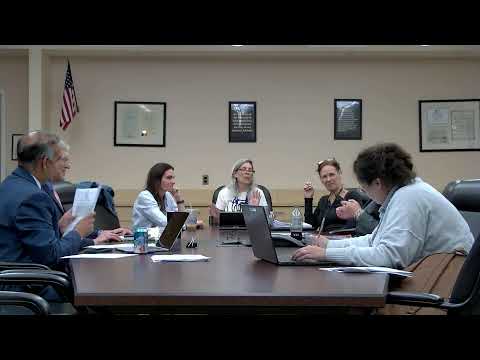
Port Washington Union Free School District policy committee reviewed revisions to policy 0115 on student harassment and bullying and directed legal counsel to revise language clarifying appeals, reporting and evaluation measures before returning the draft to the committee.
Port Washington Union Free School District policy committee members spent most of their meeting reviewing proposed revisions to policy 0115 (previously numbered 5025), the district’s student harassment, bullying and discrimination policy.
Committee members and district counsel discussed several substantive edits they said are needed before the policy returns to the committee, including (1) changing language that currently describes a “board hearing” on appeals to make clear the board will generally review appeals on paper; (2) aligning the list of protected characteristics with the district’s Code of Character, Culture and Conduct; (3) clarifying how anonymous web reporting is routed to elementary schools; and (4) specifying what district-level data the board will use to evaluate the policy’s effectiveness.
The committee emphasized that a district‑level review should be available to parties unhappy with a building investigation, but members and counsel agreed the board’s role should be a “review” rather than an evidentiary hearing in most cases. Mara Harvey, outside legal counsel with BSK, recommended language that would require the superintendent to forward written materials and allow families to submit additional documentation and statements, and said the board should “consider such appeal on paper” except in rare circumstances. The committee asked counsel to draft that wording for a future meeting.
Members asked that the policy explicitly cross‑reference the district’s Code of Character, Culture and Conduct and the state reporting the district already files (referred to in the meeting as the SSEC report). Administrators told the committee they already provide annual SSEC information and suspension summaries (January and July) and that those reports and the student information system data will be available to the board to assess trends.
Committee members flagged the policy’s definitions section as disruptive to the document’s flow and asked that the district either move detailed definitions to the end of the policy (or an exhibit) or label them clearly as a glossary while keeping them available for reference. Counsel said having the statutory definitions available in the policy can be useful for readers and recommended placing them so they remain accessible without interrupting the policy narrative.
On reporting, administrators and trustees noted that the district’s anonymous “report it” tool is available on the district website but is promoted primarily in secondary schools. The committee asked staff to either change practice or soften policy language so the policy accurately reflects how anonymous reporting is implemented for elementary families. Administrators said anonymous reports are received centrally and forwarded to the building where the alleged incident occurred, but acknowledged the tool is not promoted equally across elementary sites.
The committee also discussed consequences, training and law‑enforcement involvement. Members asked whether policy should require contacting police when conduct “rises to the level of criminal conduct.” Counsel and administrators recommended retaining district discretion, with legal counsel review in borderline cases; the committee proposed wording to say the district retains discretion to engage law enforcement when conduct appears criminal. Trustees also asked staff to confirm that annual training (the district uses a platform called GCN among other trainings) and the professional development committee’s role are explicitly reflected in the regulation.
Mara Harvey said she would edit the draft regulation to reflect the committee’s direction and return the revised policy and regulation for further review. Committee members agreed the changes were largely editorial and procedural; the policy was not adopted at the meeting and will be brought back after counsel updates.
Votes and formal actions at the meeting included a nomination and approval of a committee chair and approval of the school calendar; the policy revisions will be returned for further committee review rather than a formal vote at this meeting.