Get Full Government Meeting Transcripts, Videos, & Alerts Forever!
Get email alerts on the Local Taxes topic
No spam. Unsubscribe anytime.
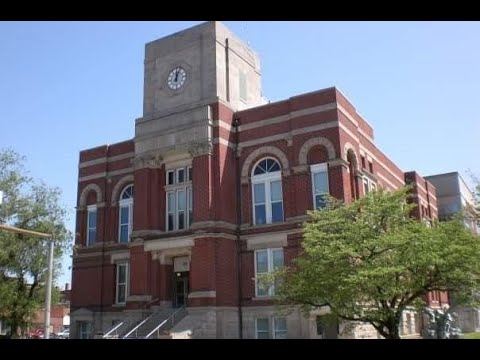
Greene County council rejects hospital tax increase, approves lower courthouse and higher jail levies and adopts corrected ordinance
Summary
The Greene County Council voted down a proposed 0.1% local income tax for Greene County General Hospital but approved a 0.1% courthouse (judicial) tax and a 0.3% correctional facility tax, then adopted an ordinance with those corrections.
The Greene County Council on an administratively corrected ordinance on local income tax rates rejected a proposed 0.1% local income tax for Greene County General Hospital but approved a 0.1% tax for the county courthouse and increased the correctional-facility tax from 0.2% to 0.3%. The council then adopted an ordinance incorporating the corrected rate figures.
Council members debated how the levies could be spent and whether the county had a legal obligation under state law. Nathan (county staff) cited IC 16-22-14-7 when describing the appropriation process and said that funds levied under the chapter “must be appropriated as any other county funds are appropriated and may be used only for qualified expenses.” He said the county’s appropriation process would determine what uses are permitted.
The debate included concerns about directing tax revenue to a single private hospital. One council member noted the county had given Greene County General Hospital a $350,000 interest-free loan and questioned whether raising a tax that would effectively flow back to the hospital was appropriate. Other council members said the loan and the prior real-estate arrangement had not applied pressure to the county general fund and that providing a new tax credit could be unnecessary.
After roll-call voting on the separate proposed rates, the motion to adopt a 0.1% hospital local income tax failed (resulting in a 3–3 split in the roll call and therefore not carrying). A separate motion to adopt a 0.15% judicial (courthouse) rate initially resulted in a tie and did not carry; council member Randall then moved to adopt a 0.1% judicial rate, the motion was seconded, and that 0.1% rate carried. The council approved raising the correctional-facility rate from 0.2% to 0.3% after a motion and roll-call vote.
With those specific changes specified, the council voted to adopt the ordinance reflecting the corrections. The clerk committed to making corrections to the ordinance text to match the council’s votes before final signatures.
The council and staff also noted that state legislation under consideration (referred to in the meeting as “Senate Bill 1” and “SCA 1”) could alter assessment or depreciation rules for renewable-energy and other facilities; Geronimo Power representatives referenced similar legislative uncertainty when discussing their proposed project (see separate article). Council members said the adopted local rates would be effective at dates specified in the draft ordinance (the hospital proposal had been written to take effect Jan. 1, 2026, and to expire Jan. 1, 2028, but it was not adopted).
Votes at a glance - Acute-care hospital local income tax (0.1% proposed): motion by Brent; second by Karen; roll-call resulted in 3 yes, 3 no; outcome: failed (did not carry). - Judicial/courthouse local income tax: initial motion for 0.15% failed (tie); subsequent motion to adopt 0.1% moved by Randall, seconded by Brian; outcome: approved. - County correctional facility local income tax: motion by Randall, seconded (recorded second); roll-call resulted in majority approval; outcome: approved (raised from 0.2% to 0.3%). - Final ordinance (with corrections reflecting the above rates) — motion to adopt ordinance with corrections: adopted by council vote; clerk to correct text and present for signatures.
Council members emphasized that the appropriation process, and statutory limits, would govern how any levied funds could be spent and that the council could revisit the issue if state law changes. The hospital-related proposal included an expiration in 2028 in the draft, but because it failed, no hospital tax levy was added to the ordinance.
Implementation notes: staff said the ordinance text on the printed front page contained a maximum-rate reference that needed to be corrected to reflect the specific rates the council approved; staff committed to making the administrative corrections and obtaining signatures.