Get Full Government Meeting Transcripts, Videos, & Alerts Forever!
Get email alerts on the Daycare Licensing Hb243 topic
No spam. Unsubscribe anytime.
Panel advances House Bill 243 after hours of testimony on daycare licensing, preemption and ratios
Summary
The House Health and Welfare Committee voted 11–4 to advance House Bill 243, a comprehensive rewrite of daycare licensing that removes statutory child‑to‑staff ratios and preempts local licensing schemes.
The House Health and Welfare Committee voted 11–4 to send House Bill 243, a broad rewrite of Idaho’s daycare licensing rules, to the House floor with a “do pass” recommendation after more than two hours of testimony from sponsors, providers, child-advocacy groups and local government officials.
Sponsor remarks and bill summary
Representative Barbara Ehart (District 33), the bill sponsor, said the proposal is “essentially a revision of our current daycare policies” and described many of its goals as reducing duplicative regulation and returning flexibility to small, in‑home providers. Ehart said the bill is intended to “reduce unnecessary regulatory burden” and to allow more parents and entrepreneurs to operate home-based care without facing multiple, overlapping local and state requirements.
Kate Haas, a policy representative who said she appeared on behalf of Wonder School, walked the committee through the bill’s main provisions. Haas summarized several changes that drew the most attention:
- Preemption: the bill repeals Idaho Code section 39‑11‑108 (referenced in testimony as the preemption section) to remove local authority to impose more stringent child‑care licensing rules than the state. Haas said that, under current law, only a small number of municipalities exercise such local schemes and that this repeal would create a “full preemption” so that child‑care licensing standards would be consistent statewide.
- Ratios and supervision: the bill removes fixed child‑to‑staff ratios from statute and replaces them with a requirement that providers adopt and adhere to a written ratio policy that “ensures the health, safety, and welfare of every child.” Haas said the change is intended to allow providers to use judgment based on age and need and that “for young children…it is within sight or hearing and available to immediately render assistance.” She also said the bill preserves federal subsidy ratio requirements for providers who accept federal funds and creates a rule‑making process to set statutory ratios for that subset during the summer.
- Background checks, licensing period and technical cleanups: Haas and the sponsor said the bill does not remove existing background‑check requirements for providers, clarifies that licenses are valid for two years (unless suspended or revoked), streamlines application abandonment rules (6‑month window to complete an application) and allows the department to contract with public health districts for inspections.
Testimony for and against
Proponents said expanding flexibility would allow more small, home‑based daycares to open or remain in business. Representative Rob Furnas and other proponents described personal, community examples of trusted home providers and said states such as Utah had raised in‑home thresholds in recent years. Nicholas Kleinworth, policy director at the Idaho Freedom Foundation, urged deregulation and argued subsidies and funding alone would not solve Idaho’s reported shortage of childcare seats.
Opponents warned the bill would reduce safety protections for infants and young children. Christine Tiddens, executive director of Idaho Voices for Children, told the committee removing statutory ratios and relaxing supervision definitions “opens the doors to operators and bad actors who cut corners,” and said research links poor ratios to higher injury and mortality risk. Several providers, parents and early‑childhood educators — including Justin Snyder (a childcare center owner), Elizabeth Noonan (Professor Emeritus, Early Childhood Education, Boise State University) and multiple parents — urged the panel to reject the bill or amend it to retain statutory ratios and safety requirements.
Local government concerns
Kathy Grismeyer, director of policy and government affairs for the City of Boise, testified in opposition and urged retaining local licensing authority. Grismeyer said the city processes roughly 200 facility licenses and about 2,000 licensed childcare workers annually, handles background checks and conducts inspections (about 800 inspections over two years), and that losing local oversight would shift enforcement and customer‑service burden to the state without a fiscal plan.
Procedure and final action
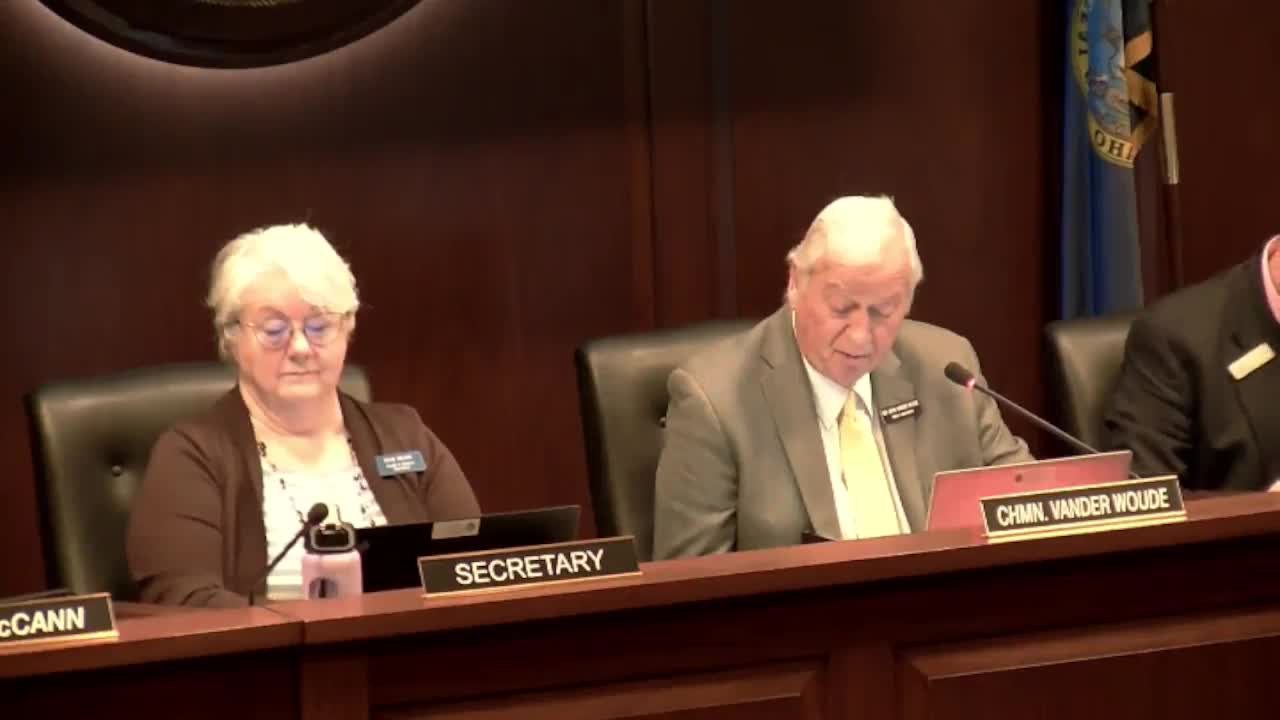
After testimony and sponsor remarks, Representative Redmond moved to send HB 243 to the floor with a due pass recommendation. The committee conducted a recorded roll call. The clerk read 15 members; the final tally was 11 in favor, 4 opposed. Representatives voting no included Representative Wheeler, Representative McCann, Representative Rubel and Representative Egbert. The committee chair announced that House Bill 243 would go to the floor with a due pass recommendation.
What the bill would change, as stated in committee
- Repeal of local preemption statute allowing municipalities to require more stringent licensing than the state (referenced as Idaho Code section 39‑11‑108). - Removal of explicit numeric ratios from statute and replacement with a provider‑written ratio policy tied to health, safety and welfare; a rule‑making process would set specific subsidy‑linked ratios later. - Clarification that certain safety standards and criminal background checks remain required; the bill’s backers repeatedly said background‑check and basic safety statutory requirements are not being removed. - Administrative changes, including a six‑month abandonment rule for incomplete applications and a two‑year license term (subject to suspension or revocation).
Next steps and outstanding questions
The committee record reflects substantive disagreement about whether the bill will expand safe access to childcare or weaken protections for children. Opponents asked for specific statutory replacement language to preserve supervision standards, director training, transportation safety and other local requirements. Supporters argued the change is necessary to expand supply and reduce duplicative local regulation. The bill now advances to the House floor, where amendments and further debate are likely.