Get Full Government Meeting Transcripts, Videos, & Alerts Forever!
Get email alerts on the Health Insurance Marketplace topic
No spam. Unsubscribe anytime.
Your Health Idaho reports record enrollment, high customer satisfaction and $44 million saved since inception
Summary
Pat Kelly, executive director, presented the exchange’s 2024 recap: record open‑enrollment results, average 120,000 enrollees in 2024 and roughly $400 million in annual federal premium tax credits; the exchange reports high Net Promoter Scores and a fiscally conservative operating model.
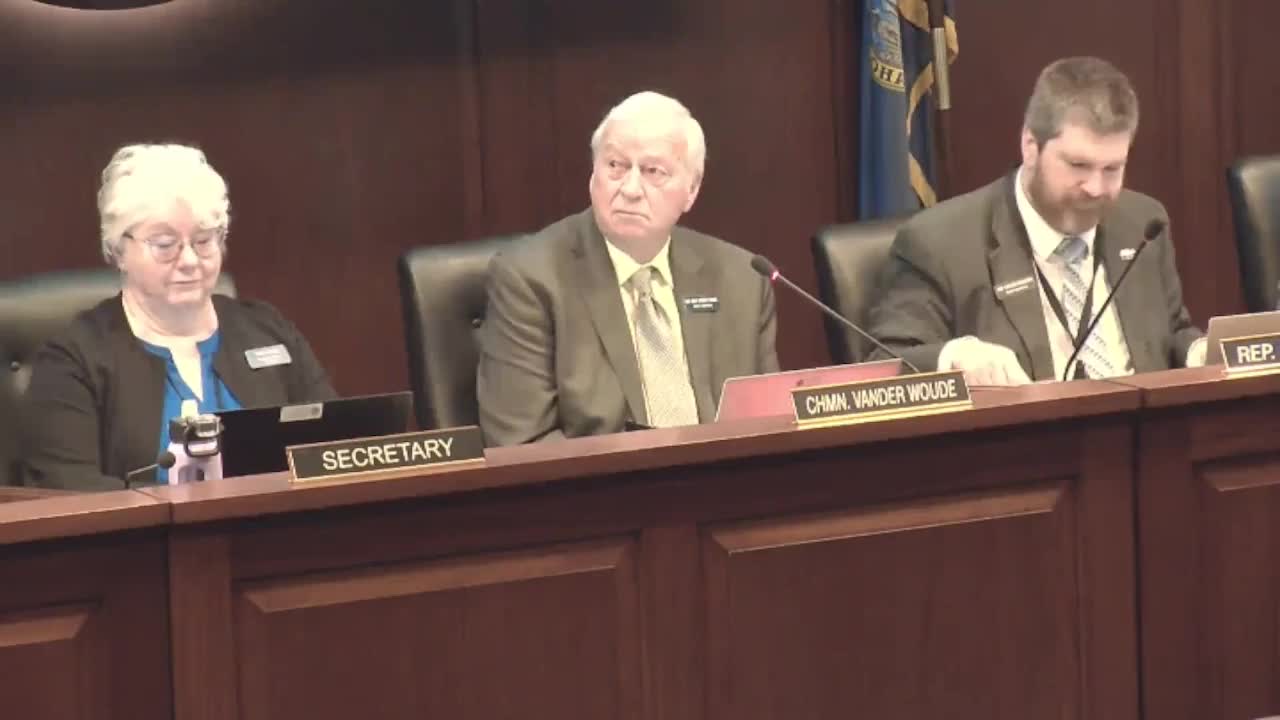
Pat Kelly, executive director of Your Health Idaho, briefed the House Health and Welfare Committee on the exchange’s 2024 activities and the 2025 open‑enrollment cycle. Kelly said the exchange finished 2024 with an average enrollment of about 120,000 Idahoans and that roughly 47% of enrollees had been with Your Health Idaho for four or more years, a sign of high retention. "We ended the year with average enrollment of 120,000 Idahoans with 47% of those individuals being enrolled with Your Health Idaho for four or more years," Kelly told the committee.
Kelly said the exchange achieved record open‑enrollment participation for 2025, with more than 139,000 Idahoans selecting a plan during the recent open‑enrollment period. He reported that more than 97% of customers had paid for coverage as of the morning of the hearing, which he called an indicator of enrollment stability.
The presentation emphasized customer experience metrics: Your Health Idaho reported an average Net Promoter Score (NPS) of 73 for 2024 and again an NPS of 73 for open enrollment 2025—scores Kelly described as "world class" and comparable to major private brands. He said investments in technology and customer service drove efficiency — 90% of enrollments were completed with self‑service tools and inbound customer inquiries fell 16% while enrollments rose 21%.
On finances, Kelly said the exchange continues a fiscally conservative model: no debt, cash reserves equal to six to nine months of operating expenses, and a capital expenditure reserve. He said the exchange’s primary revenue is an assessment fee on plans (2.49% in 2024), shifting in 2025 to an $11.75 per‑member‑per‑month fee (which he said is roughly equivalent to about 2.44% of premium in current volume). Kelly told lawmakers the exchange does not handle federal premium tax‑credit dollars; the federal government transfers those credits directly to carriers. He estimated about $400 million per year in federal tax‑credit dollars flow into Idaho to lower enrollees’ premiums.
Kelly outlined outreach and service efforts: new website and help center, bilingual customer advocates, 73 community events in 2024, 19 in‑person open‑enrollment pop‑ups for 2025, and an employer‑sponsored coverage affordability calculator. He described partnerships with more than 1,100 agents, brokers and enrollment counselors and a new program placing enrollment counselors in community health centers.
Committee members asked about average net premium and the distribution of low‑cost enrollments; Kelly said average net premium is roughly $120 per month per enrollee but that the distribution varies: about one‑third pay less than $25/month and roughly 50% pay over $100/month; 26% pay $10 or less. He said the exchange will follow up on more detailed breakdowns and any questions about benefit design (for example behavioral‑health coverage) with the Idaho Department of Insurance, which administers plan design and carrier filings.
Kelly closed by saying the exchange will continue incremental technology releases and further investments in partnerships and customer service while maintaining conservative fiscal reserves.