Get Full Government Meeting Transcripts, Videos, & Alerts Forever!
Idaho health department outlines child-welfare budget request, aims to shift children from congregate care to prevention and foster homes
Summary
Department of Health and Welfare Director Adams told a Senate committee the agency is asking for supplemental funds and a budget prioritizing child-welfare prevention, foster-family recruitment and retention to reduce costly congregate placements and out-of-state placements.
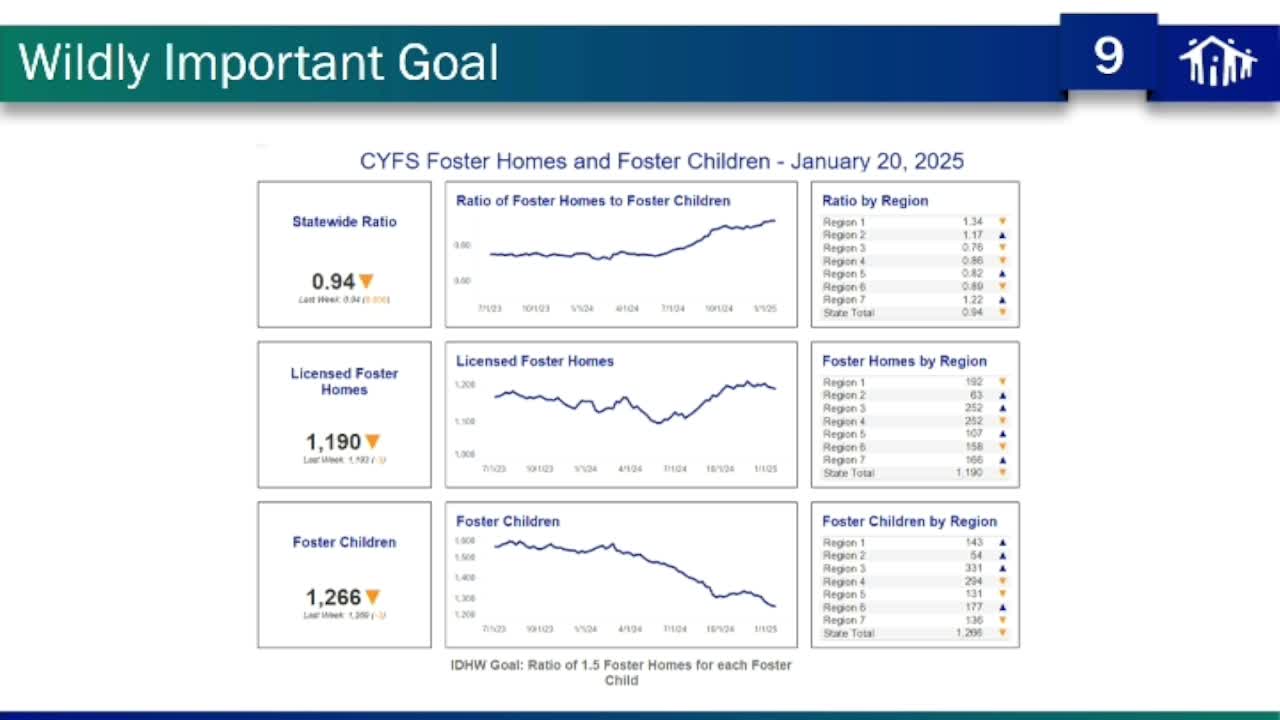
Director Adams, head of the Idaho Department of Health and Welfare, told the Senate Health and Welfare Committee that the department will seek a $14 million supplemental this year and is prioritizing child welfare in its upcoming budget to reduce the number of children placed in congregate care and out-of-state facilities.
Adams said Idaho has about 463,000 children and receives roughly 24,000 hotline reports of potential abuse or neglect a year; the department responds to about 15,800 of those and finds children safe in about 89 percent of investigations. "In 11 percent of the cases, or 1,700 times a year, the child is deemed unsafe," Adams said. He described two broad responses: prevention cases that keep children at home with services, and placement cases when children are removed and placed in settings such as foster homes, kinship care or congregate care.
The department asked legislators to allow it to focus resources on prevention and foster-family recruitment and retention to reduce costs and improve outcomes. Adams said prevention cases cost about $1.80 a day (roughly $657 a year) while some congregate care placements can now cost as much as $1,400 a day. "We want 85 percent of kids in prevention cases," Adams said, adding that prevention aligns better with both cost savings and child outcomes.
Why it matters: Adams told the committee child-welfare is an open-ended entitlement for the state — the department must care for any child committed to its custody — and placement decisions and length of stay drive the budget. The department has repeatedly requested supplementals for child…
Already have an account? Log in
Subscribe to keep reading
Unlock the rest of this article — and every article on Citizen Portal.
- Unlimited articles
- AI-powered breakdowns of topics, speakers, decisions, and budgets
- Instant alerts when your location has a new meeting
- Follow topics and more locations
- 1,000 AI Insights / month, plus AI Chat