Get Full Government Meeting Transcripts, Videos, & Alerts Forever!
Get email alerts on the Road Safety Load Securement topic
No spam. Unsubscribe anytime.
Lawmakers introduce bill to require tarps on most commercial sand and gravel loads
Summary
Representative Clay Handy introduced RS31908 to require cover/tarping for most commercial sand and gravel loads after members described increased traffic, material loss from trucks and damage to following vehicles; the committee voted to introduce the proposal after debate about costs, enforcement and exemptions.
Representative Clay Handy introduced RS31908 on behalf of trucking industry supporters, proposing a statewide requirement that commercial sand-and-gravel haulers cover loads except for specified local operations.
The bill would remove a longstanding practice that allowed some loads to remain uncovered if material sat six inches below the sideboards, Handy said, and it would exempt canal companies, irrigation districts, drainage districts and other localized operations that move product in a tight radius.
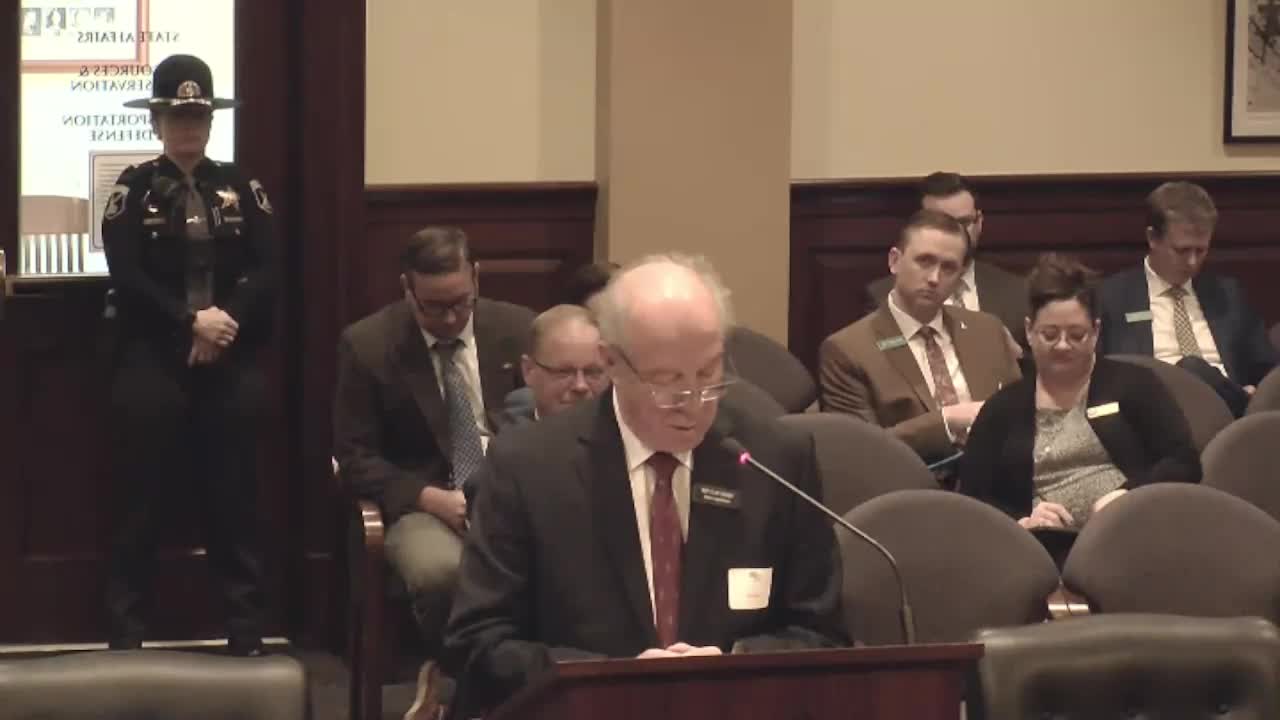
Handy (Representative, sponsor) told the committee the change responds to heavier traffic and larger-capacity hauling that has increased the amount of material escaping from trailers. "And you don't have to follow too many vehicles hauling sand and have your windshield sandblasted to realize that that would be nice if that wasn't happening," Handy said. He also said the scope of vehicles and trailers has changed over time, and that operators now often load to the top of sideboards.
Members questioned enforcement costs and small-truck operator impacts. Representative Harris noted she had looked up tarping-system prices and said the systems cost "around a thousand dollars not installed," and asked whether the issue was enforcement of existing rules rather than a new law. Handy said exemptions remain for tight-radius operations and that the committee had considered mileage or other exemptions but found them hard to enforce; he added speed and highway conditions also factor into material loss.
Representatives also raised implementation questions. Representative Clow pointed to an apparent emergency clause in the draft and a training deadline that read "no later than October 1, 2025," noting the timing created potential confusion about when enforcement could begin. Handy said the training deadline is when training would be completed and that enforcement could begin once training is provided.
Committee members also emphasized the potential cost to motorists when windshields are damaged. Representative Pohanka said some modern windshields with embedded cameras can cost about $2,000 to replace and that an insured motorist's out-of-pocket replacement could be significant.
Representative Crane moved to introduce RS31908. The committee approved the motion to introduce the bill by roll call (12 ayes, 3 no votes; recorded votes below). The motion to introduce means the proposal will be printed and considered later; the committee did not adopt the bill itself at this meeting.
Votes at introduction (roll call): Mitchell — No; Holtzclaw — not recorded on roll; Monks — Aye; Shepherd — No; Crane — Aye; Handy — Aye; Hill — Aye; Petzke — Aye; Boyle — Aye; Clow — Aye; Harris — No; Mickelson — Aye; Pohanka — Aye; Gannon — Aye; Green Morley — Aye; Chairman Palmer — Aye. Tally from roll call comments: yes 12, no 3, other/absent/not recorded 1.