Get Full Government Meeting Transcripts, Videos, & Alerts Forever!
Get email alerts on the Electronic Monitoring Residential Care topic
No spam. Unsubscribe anytime.
Committee backs bill allowing residents or families to install room cameras in residential care facilities
Summary
The Senate Health and Welfare Committee voted to send House Bill 337 to the floor with a “do pass” recommendation after extended testimony for and against electronic monitoring in residential care facilities. Supporters said cameras help detect abuse; industry witnesses warned of privacy, staffing and legal problems.
Representative Dory Healy presented House Bill 337, which would allow a resident, a resident’s guardian, or a health-care agent to authorize installation and use of an electronic monitoring device in a resident’s private room in a residential care facility and would require facilities to permit such devices.
The bill, Rep. Dory Healy said, is “optional” and intended to let “loved ones or the resident to put a camera in their room so that families can help check‑in on them.” Healy cited national statistics during her presentation about elder abuse as part of the bill’s rationale and told the committee the measure is modeled after statutes in about 10 other states.
Why it matters: Supporters said electronic monitoring can give families evidence when they suspect abuse and provide an additional oversight tool for vulnerable residents. Opponents — including multiple long‑term care administrators, nurses and industry groups — told the committee the measure, as written, raises privacy, operational and legal concerns for residents and staff.
What the bill would do: Under the draft discussed, a resident, resident guardian or health‑care agent may authorize an electronic monitoring device; the device must be installed in a location that meets facility standards and ‘‘allows facility staff to assist the residents while maintaining the privacy of the residents’ sensitive and intimate body areas.’’ The bill also specifies that the resident’s room must be private (not shared) when a device is in use.
Supporters’ arguments: Rep. Healy and family‑member advocates said cameras have uncovered abuse in other states and can be a last resort for families who cannot be present. Healy noted the measure is optional and that placement and related policies would be guided by statute and facility standards.
Opponents’ concerns: Witnesses speaking against the bill included Elizabeth Sonnichsen, deputy general counsel for Pinnacle Senior Living; Cody Bennett, regional administrator for Grace Assisted Living; Monica Heath, executive regional nurse for Grace Assisted Living; Robert Van der Merwey, executive director of the Idaho Healthcare Association; and Colter Camo, owner and licensed administrator (Grace Assisted Living). They raised multiple objections:
- Access to footage: Elizabeth Sonnichsen said the bill as drafted could prevent facilities from viewing footage that would be relevant to investigating complaints and making corrective changes. She said voluntary, written agreements between facilities and families already exist in many locations.
- Consent and capacity: Cody Bennett and others questioned how the bill defines “authorize,” especially for residents with dementia or cognitive impairment, and whether a guardian’s authorization could override a resident’s contemporaneous objections.
- Privacy and clinical care: Multiple witnesses said maintaining modesty and completing intimate or sterile procedures while a camera is fixed on a bed area will be difficult or impossible. Monica Heath said the placement and operation of cameras could impede standard care such as catheter changes or dressing wounds.
- Staffing and operations: Witnesses said continuous or potential surveillance would deter staff recruitment and retention and could increase legal costs for facilities. They also raised concerns about types of cameras, whether audio is included, use of facility Wi‑Fi versus personal networks, and the security of video streams.
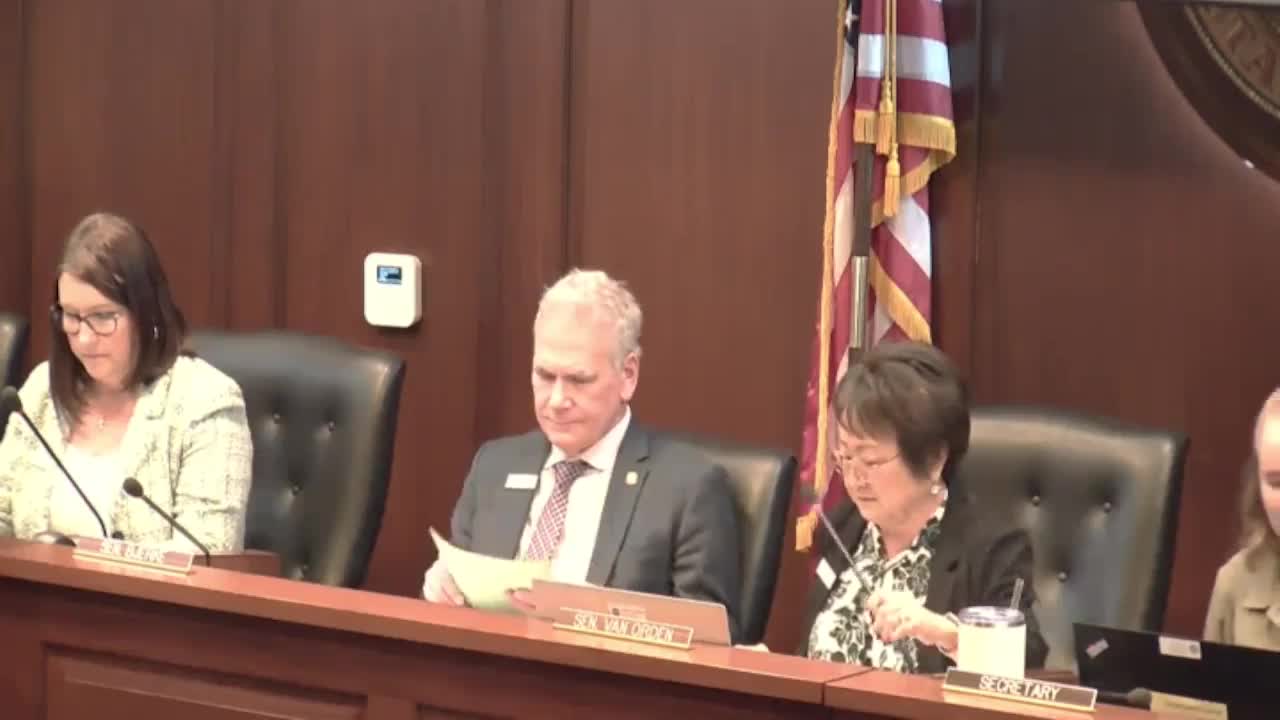
Committee action and vote: Senator Blaylock moved and Senator Kaiser seconded to send House Bill 337 to the floor with a due‑pass recommendation. The committee approved the motion. Senator Harris, Senator Shippey and Senator Wintrow recorded “no” votes; the chair announced the motion passed.
Closing remarks: Representative Healy told the committee the bill is intended to protect “our most at‑risk adults” and emphasized that the statute would leave room for facilities to create implementing policies. Opponents asked for further refinements rather than codifying broad technical and procedural requirements.
What remains unresolved: Committee discussion highlighted multiple drafting questions that were not resolved on the record, including (1) the practical meaning of ‘‘authorize’’ when a resident and guardian disagree; (2) whether facilities may view footage and under what circumstances; (3) specific limits on camera placement and movement during clinical care; and (4) technical/security specifications (audio, Wi‑Fi, encryption).