Get Full Government Meeting Transcripts, Videos, & Alerts Forever!
Get email alerts on the Education Standards Rules topic
No spam. Unsubscribe anytime.
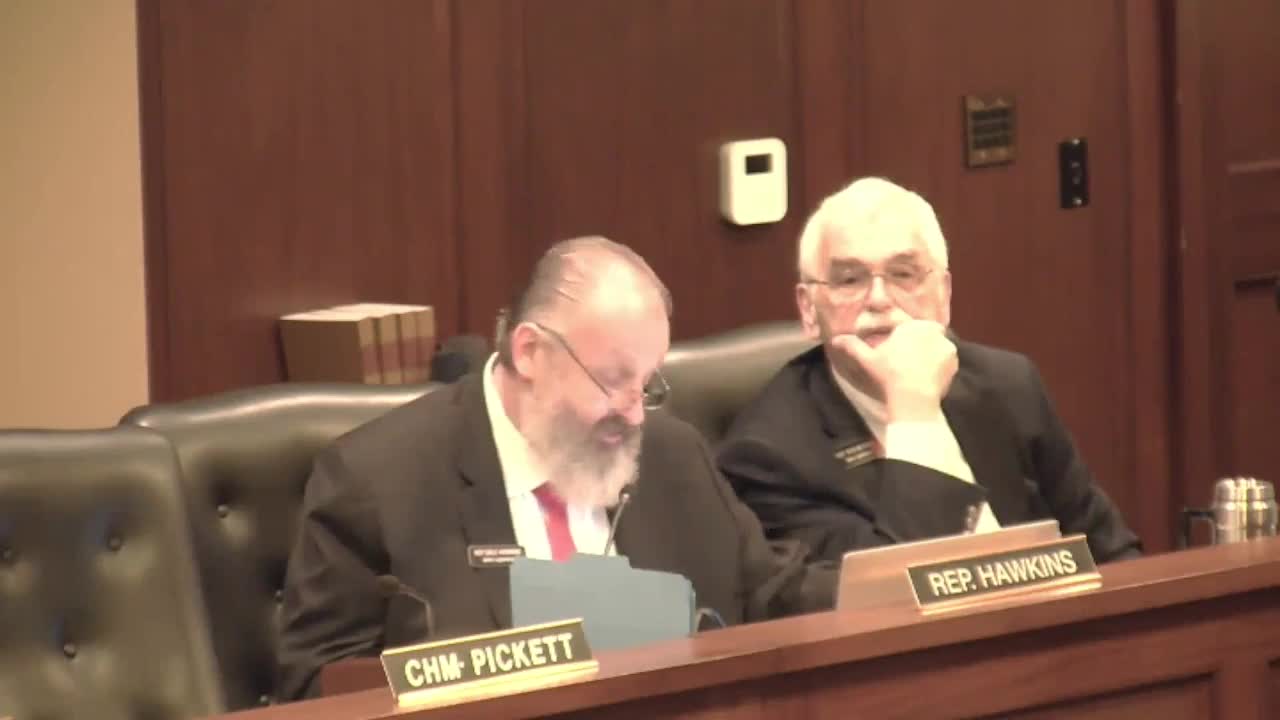
House Education committee adopts most rule updates, rejects temporary content rule and approves special‑education manual
Summary
The House Education Committee approved most proposed rule changes to content standards and the special‑education manual while rejecting one temporary content rule and preserving a one‑credit speech requirement.
The House Education Committee on March 6 took multiple actions on the State Department of Education’s rule dockets for content standards, graduation requirements and the special‑education manual.
After staff outlined the dockets, the committee voted to accept the pending rule docket 08‑0203‑401 with the exceptions the Senate had made: removal of the proposed fourth‑grade social studies update and the proposed U.S. history standards for grades 6–12 from the Idaho content standards incorporated by reference, and an exception for section 0105.01.D of the pending rule. Representative Dan Garner offered the substitute motion to concur with the Senate action; the committee approved the substitute motion by voice vote.
At the same meeting, the committee rejected temporary rule docket 802032402 by motion of Representative Clow. Committee members said rejecting the temporary rule provided definitive action on whether the temporary incorporation of the reviewed content standards should stand while the rulemaking process continues.
The committee also approved temporary docket 08‑0203‑2403, the Idaho Special Education Manual, to bring the manual into compliance with federal requirements. Greg Wilson, chief of staff at the State Department of Education, told the committee the U.S. Office of Special Education Programs had determined parts of Idaho’s existing manual required revision and that a temporary rule was promulgated to meet federal deadlines and ensure schools began the school year with compliant guidance.
Witnesses during the docket discussion urged the committee to preserve and update certain graduation‑requirement credits. Diane Bevan of the Idaho Technology Council urged the committee to “maintain the 1 credit for communication speech and add the 1 credit for digital literacy as a high school graduation requirement,” arguing digital literacy is essential to workforce readiness. “Adding digital literacy as a graduation requirement is not just a policy decision. It is an investment in Idaho's long term economic strength and the success of its students,” she said.
Samuel Lehi, representing the Idaho Freedom Foundation and the National Association of Scholars, told the committee he was encouraged by the Senate’s removal of the fourth‑grade and grades 6–12 U.S. history items and said the Department’s plan to reconvene a review committee would allow additional concerns to be addressed. He also noted remaining objections to other social studies edits, including a kindergarten holiday standard shifting “Columbus Day to Indigenous Peoples Day” and “politicized language” in fifth grade.
Committee action preserved the one‑credit speech requirement: the Senate’s rejection of eliminating the speech/communications credit remained in place and the substitute motion the committee approved did not remove that requirement. Committee members discussed procedural questions about the incorporated‑by‑reference document numbering and whether motions needed to reference specific alphabetical or numerical subsections when partially rejecting that document; Division of Financial Management staff (Lauren Smizer) clarified the incorporated document’s internal designations and advised the committee how partial rejections are recorded.
All docket motions recorded in the transcript were decided by voice vote; committee members did not request recorded roll calls for these actions. The committee approved the special‑education temporary rule to bridge operations until July 1, when corresponding pending rules will take effect if adopted.