Get Full Government Meeting Transcripts, Videos, & Alerts Forever!
Get email alerts on the Public Benefits Immigration topic
No spam. Unsubscribe anytime.
Idaho committee advances bill requiring proof of lawful presence for some state benefits
Summary
The Idaho Senate Health & Welfare Committee voted to send House Bill 135 to the floor with a “do pass” recommendation after testimony that the bill would bar certain state-funded benefits for adults who cannot show lawful presence; opponents said it risks denying services to U.S. citizen children and straining nonprofits.
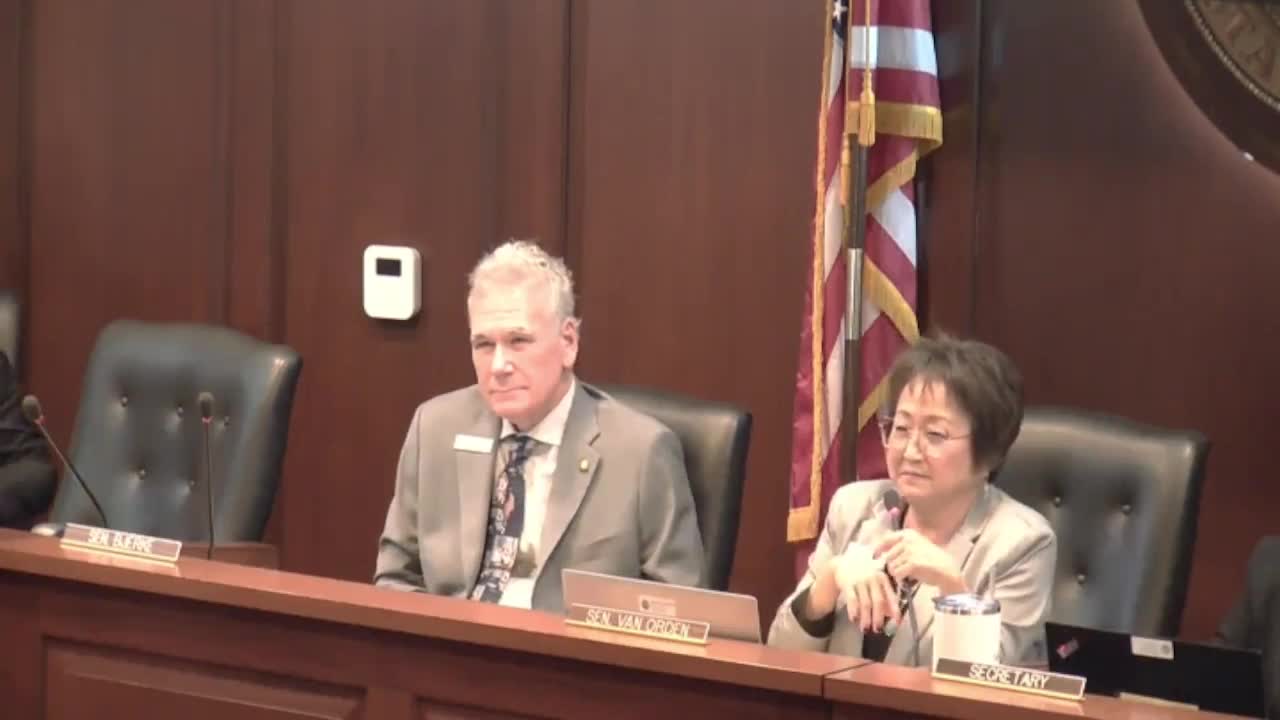
The Idaho Senate Health & Welfare Committee on March 11 voted to send House Bill 135 to the Senate floor with a “do pass” recommendation after extended testimony for and against the measure.
House Bill 135, introduced in committee by Representative-turned-presenter Senator Phil Hart, would add language to existing state statute requiring that adults show proof they are lawfully present in the United States before receiving certain state-funded public benefits. Hart and supporters said the change is intended to prevent state taxpayer dollars from funding benefits for people who cannot prove lawful presence; opponents said the bill would cut or complicate access to food assistance, prenatal and postnatal care, and other services for mixed‑status families — including U.S. citizen children.
Supporters and sponsor
Senator Phil Hart, sponsor/presenter, described the bill as “adding language to an existing statute” and said Health and Welfare would screen applicants during the department’s interview process, asking for documentation of lawful presence. Hart told the committee that emergency benefits would remain available and that Idaho taxpayers should not fund benefits for people who cannot prove lawful presence when nonstate options exist: "there's another source of funding, which is voluntary," Hart said, adding that nonprofits could continue to serve people outside state-funded programs.
Opposition and concerns
Craig Peterson, policy advocate for Idaho Voices for Children, testified the bill “interferes with the ability of children, including U.S. citizen children, to access food assistance,” and said federal SNAP rules protect citizen children of immigrant parents from being denied benefits. He urged senators to reconsider: "Denying access to basic human needs to an American citizen, let alone a child, is too great of a risk for what we are hoping to gain by passing this bill."
Randy Ford, president and CEO of the Idaho Foodbank, said HB 135 "goes beyond the federal law" and raised operational concerns about nonprofits having to collect and store additional personal information (including Social Security numbers) to determine eligibility for state‑administered programs such as the Commodity Supplemental Food Program (CSFP) and The Emergency Food Assistance Program (TEFAP). Ford warned the added barriers could overwhelm food banks and local pantries, which receive most of their supply via donations and partner networks.
Teachers, community advocates and service providers described impacts on children and families. Rachel Rojas, a teacher with experience serving undocumented families, told the committee, "This bill is not about fairness or fiscal responsibility. This is simply cruel," and said it could strip families of school and WIC‑related supports. Several other witnesses, including Rose Kimberly Vilcapoma Aranda, Ruby Mendez, Estefania Mondragon (executive director, Bolo de Idaho), Maria Jimenez and Brian Mendez Garcia (a DACA recipient and Micron employee), shared personal or programmatic examples of how access to WIC, school meals or other supports mattered to children and families.
Christian Welp, representing the Catholic Church in Idaho, said taking away prenatal care would cause harm and urged the committee to reject the bill: "When a bill comes forward that takes away prenatal care for anyone, whether they are here illegally or not, I become very concerned."
Questions from committee members focused on which benefits would be affected and how Health and Welfare would implement the documentation checks. Senator Maryanne Wintrow repeatedly asked whether exemptions created by federal law — for example, eligibility rules protecting U.S. citizen children — would be respected under the bill; witnesses and the sponsor gave differing interpretations. Senator Hart said his understanding from meetings with the department's director was that a child's U.S. birth certificate would be adequate documentation for that child.
Votes and committee action
Committee members debated several procedural motions. A substitute motion to send HB 135 to the fourteenth order for possible amendment failed in committee (the chair announced 4 ayes and 5 nays on that substitute). A subsequent main motion, moved by Senator Lenny and seconded by Senator Kaiser, to send House Bill 135 to the Senate floor with a due‑pass recommendation passed in a roll call and the bill was advanced out of committee. The committee record includes multiple senators' roll‑call statements during the vote, including several recorded “aye” votes and at least one senator indicating they reserved the right to change their vote on the floor.
Why it matters
If enacted as drafted, HB 135 would require the Department of Health and Welfare to add documentation checks for adults applying for specified state‑administered benefits. Proponents say it preserves limited taxpayer funds for Idaho residents; opponents say it would create barriers to basic health and nutrition services for children who are U.S. citizens and complicate administration for nonprofits and school programs. Witnesses warned of public‑health and practical consequences including reduced immunization uptake, increased emergency‑room use and higher demand on charitable food distribution.
Next steps
Committee members discussed the possibility of amendments to clarify whether particular programs (for example, school‑meal programs) are affected. Senator Hart said he would work with the Department of Health and Welfare on language to clarify exemptions. The bill will proceed to the full Senate for consideration.