Get Full Government Meeting Transcripts, Videos, & Alerts Forever!
Get email alerts on the Right To Farm Amendments topic
No spam. Unsubscribe anytime.
Bill would let Idaho farmers recover attorney fees and impose penalties for repeat meritless nuisance complaints
Summary
Senate Bill 1033 would add enforcement teeth to Idaho’s Right to Farm Act by permitting prevailing agricultural operators to recover reasonable attorney fees and by penalizing repeat meritless complaints filed with state agencies or local law enforcement.
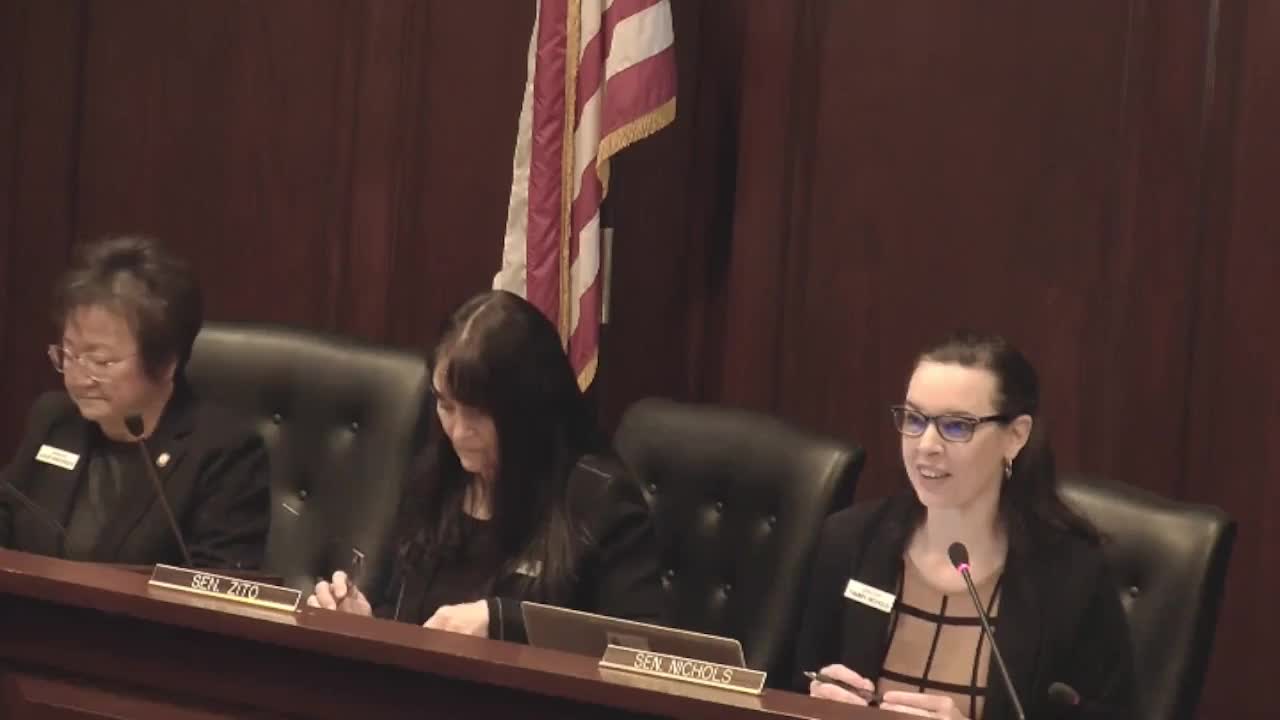
Senate Bill 1033, presented to the Idaho Senate Agricultural Committee, would allow agricultural operators who prevail in nuisance lawsuits to recover reasonable attorney fees and would impose graduated penalties for repeated meritless complaints filed with state agencies or local law enforcement.
Senator Todd Lakey (R‑District 23), sponsor of the bill, said Idaho’s Right to Farm Act (codified at Title 22, Chapter 45 of the Idaho Code) was enacted in the 1980s to shield lawfully conducted agricultural operations from nuisance litigation and complaints. “The Right to Farm Act has been around for more than 40 years,” Lakey said, and he described a growing “ag‑urban interface” that has brought more people into proximity with farming operations and, in his view, a rise in complaints over noise, dust and odors.
Two main provisions: Lakey described two practical changes. First, the bill would permit an agricultural operator who prevails in a nuisance suit to recover reasonable attorney fees and costs. Second, it would create a definition of a “meritless complaint” filed with a state agency (such as the Department of Agriculture, Department of Environmental Quality, or local sheriff) alleging a nuisance where the operator was operating lawfully under the Right to Farm Act and would attach graduated penalties: a “free” initial complaint for education; a second meritless complaint within two years would be an infraction with a $150 fine; a third meritless complaint within two years would be a $300 infraction; a fourth meritless complaint within two years would be a misdemeanor.
Supporters’ testimony: Multiple commodity and producer groups testified in support. Samantha Parrott, executive director of the Snake River Sugar Beet Growers Association, said the bill “adds some teeth” to existing protections and helps producers continue work “without undue interference.” Roger Batt testified for the Idaho Mint Growers Association and Idaho‑Eastern Oregon Seed Association and said producers are seeing confrontations as growth moves nearer to farm country. Cassidy Plumb of the Idaho Honey Industry Association told the committee Idaho has roughly 24,000 registered bee colonies and that pollinators are “essential to the success of many of our state crops.” David Lehman of the Idaho Agricultural Aviation Association described repeated nuisance complaints against aerial applicators and said previous related bills reduced some nuisance filings because education and consequences deter frivolous complaints.
Sponsor and supporters emphasized education first: Lakey and industry witnesses described the bill’s graduated penalties as part of an educational approach. The bill, Lakey said, “gives an individual one free complaint so to speak” to allow for outreach and understanding of lawful agricultural operations before penalties apply.
Outcome: A motion to send SB 1033 to the Senate floor with a do-pass recommendation was made and seconded; the committee advanced the bill by voice vote.
Next steps: SB 1033 proceeds to the Senate floor for further consideration.