Get Full Government Meeting Transcripts, Videos, & Alerts Forever!
Get email alerts on the Civics Education topic
No spam. Unsubscribe anytime.
Rep. Wisniewski introduces bill to refocus high school civics instruction and tests
Summary
Rep. Wisniewski introduced RS 32567 to require civics training in public high schools and revise test items now modeled on the U.S. naturalization test. The committee voted to introduce the proposal for further review.
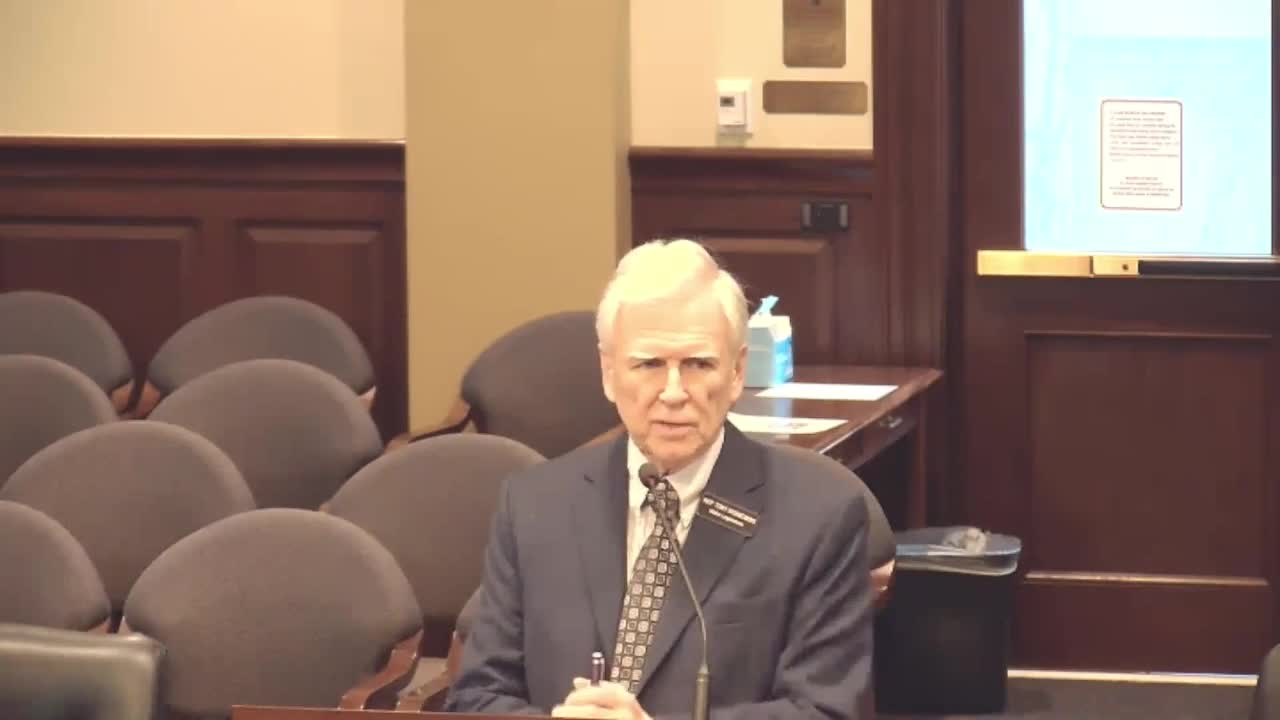
Representative Wisniewski introduced RS 32567 on the House Committee on Education agenda, describing the measure as a rewrite of civics training and test requirements for public high schools.
The bill would move several existing rules into statute and change the content of assessment items used for high school civics. "This talks about the requirements for civics training in the public high schools and also includes requirements for some of the test questions," Wisniewski said. He said current testing has relied on the naturalization test and that much of that material is "fairly of a trivial nature" that does not build understanding of government.
Why it matters: Sponsors said the proposed language seeks to shift testing and instruction away from rote factual recall—examples described included questions that ask which oceans border the United States or naming long rivers—toward content they view as more directly relevant to civic knowledge and participation.
Details: Wisniewski said the naturalization test used for new citizens requires a 60% passing score and that the bill would replace or supplement those items with questions the sponsor considers more substantive for civic education. No statutory citations were offered during the introduction and the proposal was presented as a draft rule-to-code effort rather than a final enacted text.
Committee action: Representative Hawkins moved to introduce RS 32567. The committee approved the motion by voice vote; no roll-call tally was recorded in the hearing transcript.
Next steps: Introduction sends the draft for further study and bill drafting; the transcript shows no additional committee debate and no vote on final passage at this hearing.