Get Full Government Meeting Transcripts, Videos, & Alerts Forever!
Get email alerts on the Health And Welfare Budget topic
No spam. Unsubscribe anytime.
Committee outlines health-and-welfare budget priorities for JFAC; raises pharmacy, LIHEAP and transfer questions
Summary
Members of the House Health & Welfare Committee discussed items to pass to JFAC, including Medicaid program design, moving LIHEAP and weatherization programs to an energy agency, a review of roughly $500 million in pharmacy spending, foster‑care staffing requests, and program-transfer limits for mental‑health funds.
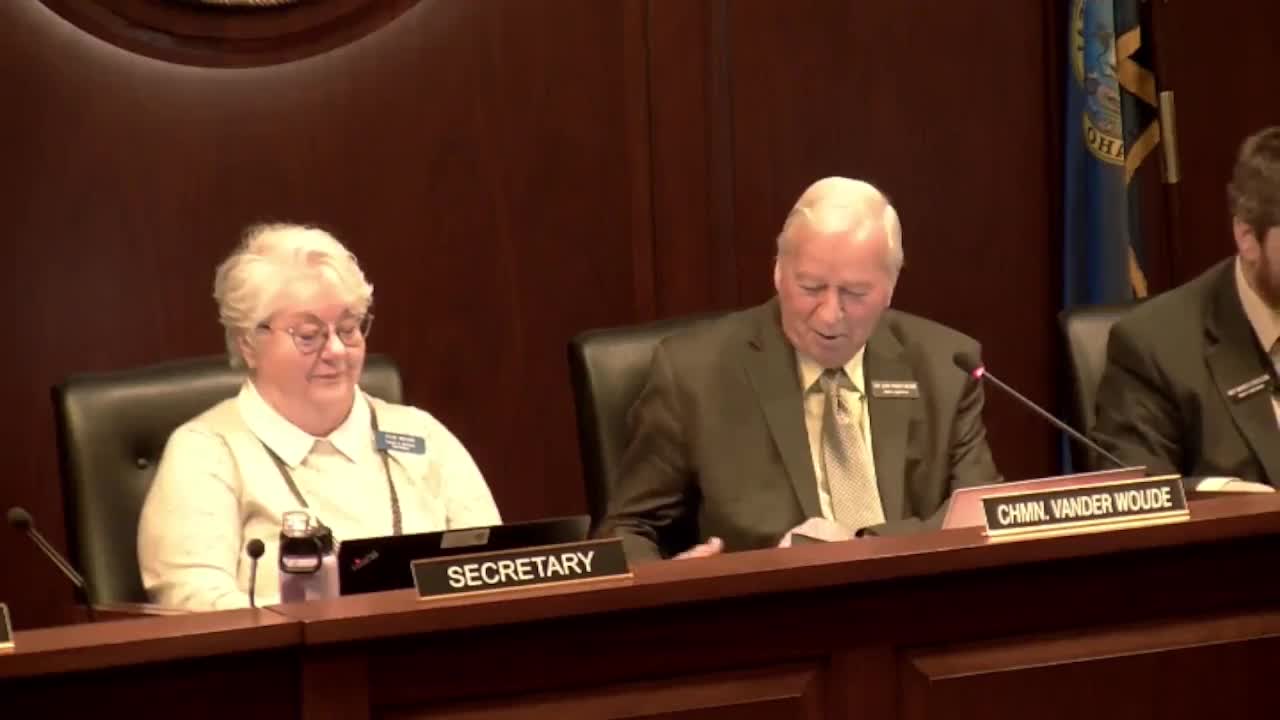
The committee held a roughly half-hour discussion to assemble recommendations to the Joint Finance‑Appropriations Committee (JFAC) on areas of the Health & Welfare budget.
Representative Kaler, who with Representative Redmond reviewed the Medicaid budget, suggested exploring expansion sideboards and possible work, volunteer or training requirements for eligibility. Kaler also proposed shifting LIHEAP (Low Income Home Energy Assistance Program) and the Weatherization Assistance Program from the Department of Health & Welfare to an energy-focused agency so public-health staff can focus on disease surveillance and vital statistics.
"There was over 500,000,000 spent in fiscal year 20 22," Kaler said when discussing pharmacy costs under Medicaid, and he urged the committee to review which drugs and patients are driving that spending.
Other members raised operational questions: Representative Bieswanger noted the department is requesting additional staff (FTEs) for foster care and said early staffing can reduce more expensive placements later. Representatives Wheeler and Thompson reported that substance‑abuse programs are managing with fewer federal dollars and that flexibility through block grants has improved efficiency. Representative Egbert, who reviewed the mental‑health budget, said the department has stricter internal transfer limitations than those in Idaho code and requested an exemption from a 10% program-transfer limitation to match code allowances.
Representative Erickson described state hospital census numbers: adolescent capacity at a western facility was cited as 16 beds (about half in use), the north facility had a census of 28 of 60 beds, and the south facility had a census of 98 of 110 beds; she said lower bed use can indicate success of outpatient and prevention services.
Representative Levitt reiterated proposals to shift LIHEAP and winterization programs to energy and criticized what he described as taxpayer‑funded advocacy by an agency director who testified previously. Committee members said the chair would collect the comments for JFAC; no binding budget decisions were made at the meeting.
The chair closed the meeting after gathering remarks and thanked members for their review. No vote was taken on a consolidated recommendation and the transcript records that materials will be reviewed before the chair appears before JFAC.