Get Full Government Meeting Transcripts, Videos, & Alerts Forever!
Get email alerts on the Education Transportation topic
No spam. Unsubscribe anytime.
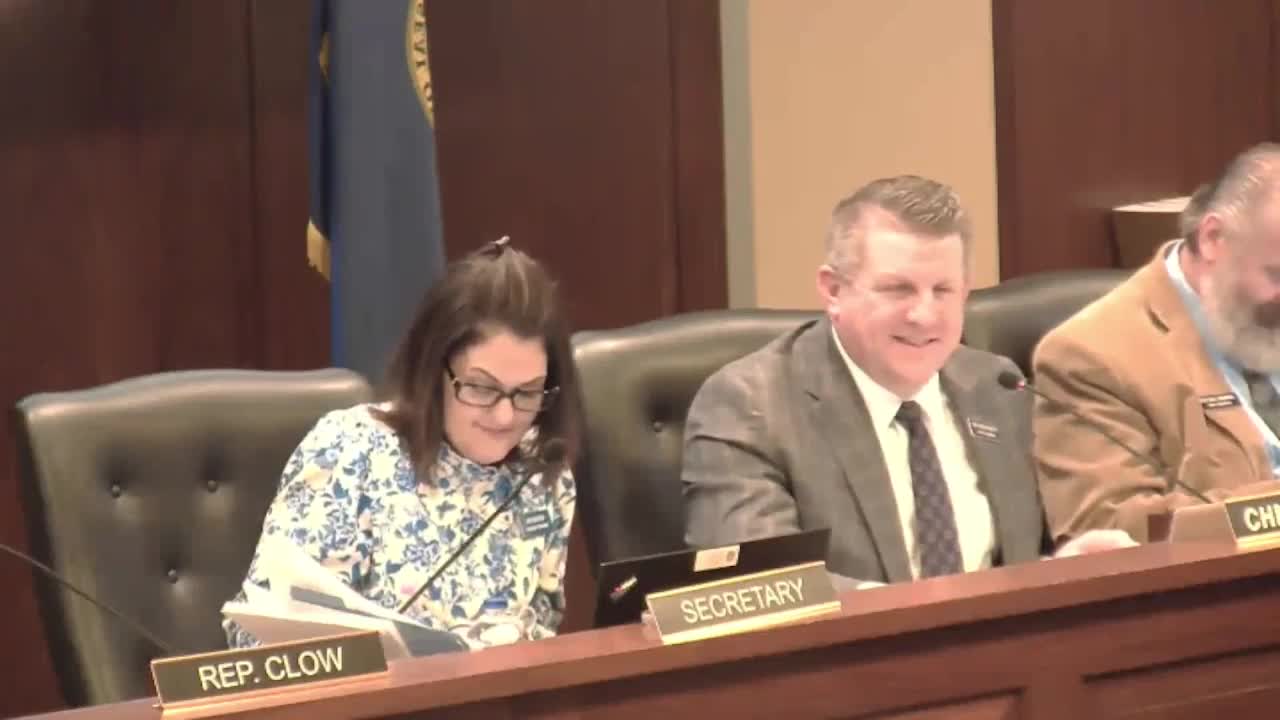
Committee advances bill letting districts use non‑yellow buses, prompting safety, funding debate
Summary
House Bill 396, which would allow school districts and charter schools to use vehicles other than traditional yellow school buses to transport students, passed the House Education Committee with a due‑pass recommendation after testimony raising safety and funding concerns.
The Idaho House Committee on Education voted to send House Bill 396 to the House floor with a due‑pass recommendation after discussion about safety standards, funding inequities and local control. Representative Dan Garner presented the bill, which the sponsor described as an effort to simplify student transportation funding and allow districts greater flexibility to use vehicles other than full‑size yellow school buses for small groups or specialized routes.
Representative Garner and Gideon Tolman, chief financial officer at the State Department of Education, told the committee the bill adds an “authorized operation” definition to align statute with current district and charter practices and to permit districts to use other vehicles — including district cars, SUVs, minivans or contracted vehicles — for some routes and trips. The sponsor said the change mirrors approaches in other states, allows local trustees to choose appropriate transport options and could reduce costs in situations where a full bus is not necessary.
Opposition focused on safety and funding. Brent Carpenter, representing Brown Bus Company and drawing on three decades of student‑transport experience, urged a no vote and said the yellow school bus is a “purpose built vehicle and the safest mode of transportation for school children,” noting federal motor vehicle safety standards and compartmentalization features that are not present on passenger vans. Lynette Dahl, representing the Boise School District, also urged a no vote, saying the bill does not address a transportation funding formula she described as “outdated and inequitable” and that short‑term savings from vans are offset by depreciation and replacement timelines.
Witnesses and legislators discussed technical details raised in testimony: a typical 84‑passenger yellow school bus can cost in the low‑to‑mid six figures while smaller type‑A school buses can cost approximately $70,000–$80,000 or more; passenger vans often come with seat belts and some districts view smaller vehicles as a practical option for small groups, though drivers, training and vehicle construction differ. Committee members noted a tension between district discretion and the need for consistent safety standards; some supported the bill as a necessary local‑control modernization, while others said additional legislative work on safety standards and transportation funding might be warranted.
Representative Sauter moved to send HB 396 to the floor with a due‑pass recommendation. The motion carried; one legislator recorded a dissenting vote. The bill will proceed to the full House for further consideration.