Get Full Government Meeting Transcripts, Videos, & Alerts Forever!
Get email alerts on the Administrative Law topic
No spam. Unsubscribe anytime.
Committee advances cleanup of Idaho administrative procedure law to Senate floor
Summary
Senators approved sending House Bill 9, a package of updates to Idaho’s Administrative Procedure Act and contested-case process, to the Senate floor with a due pass. Sponsors said the bill modernizes language, sets time limits for emergency contested-case proceedings and removes obsolete procedural references.
Senators voted to send House Bill 9, an update to Idaho’s Administrative Procedure Act (APA) contested‑case provisions, to the Senate floor with a due pass recommendation after sponsors described the measure as a modernization effort and a cleanup of archaic language.
Senator James Rucktee, sponsor, told the committee the bill brings Idaho’s contested-case procedures in line with a more recent model and makes targeted changes to improve due process. Brian Nichols, chief administrative hearing officer for the Office of Administrative Hearings, told the committee the bill updates the law from a 1961 model to the 2010 version and codifies several procedural practices.
Nichols highlighted three substantive changes: an updated standard for defaults so a default may be entered only after a party misses a case‑critical hearing rather than any procedural lapse; a new maximum of 120 days to conclude contested‑case proceedings when an agency has taken emergency action such as suspending a license; and elimination of an archaic “exceptions” process that courts and agencies no longer use.
“Agencies now have a maximum of a hundred and 20 days to complete a contested case proceeding if they initially take some kind of emergency action,” Nichols said, describing one of the bill’s due‑process protections. He also said removing references to “exceptions” will simplify appeals and reduce confusion for self‑represented litigants.
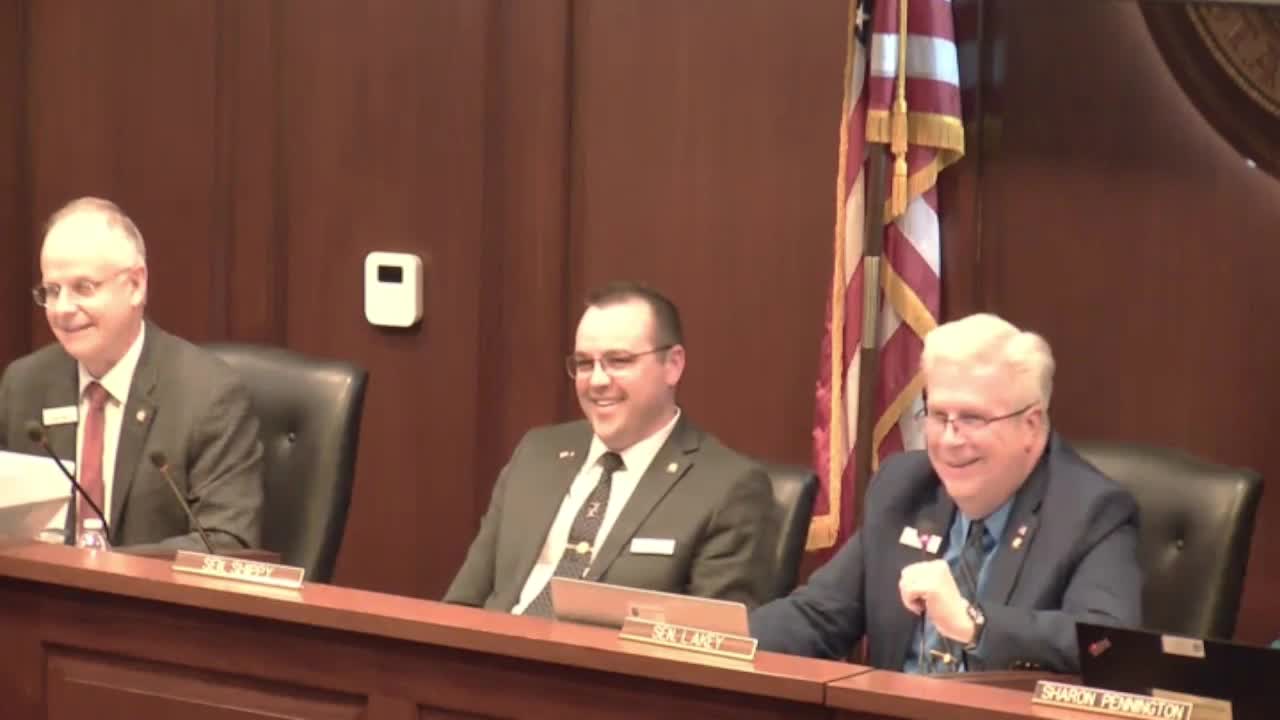
Senators asked technical questions about definitions and the bill’s relationship to prior code cleanup efforts; sponsors said the language also aligns with changes made earlier in the session. Senator Keizer moved—and Senator Shippy seconded—the motion to send the bill to the floor with a due pass. The committee approved the motion by voice vote.
Why it matters: the bill affects how Idaho administrative agencies conduct contested cases and how individual licensees and regulated parties access due process. Supporters said the changes modernize the statute, reduce procedural traps for unrepresented parties, and set timeframes for emergency agency actions.
Next steps: House Bill 9 will proceed to consideration by the full Senate.