Get Full Government Meeting Transcripts, Videos, & Alerts Forever!
Get email alerts on the Education Reproductive Health topic
No spam. Unsubscribe anytime.
House education committee advances bill requiring fetal‑development instruction in grades 5–12
Summary
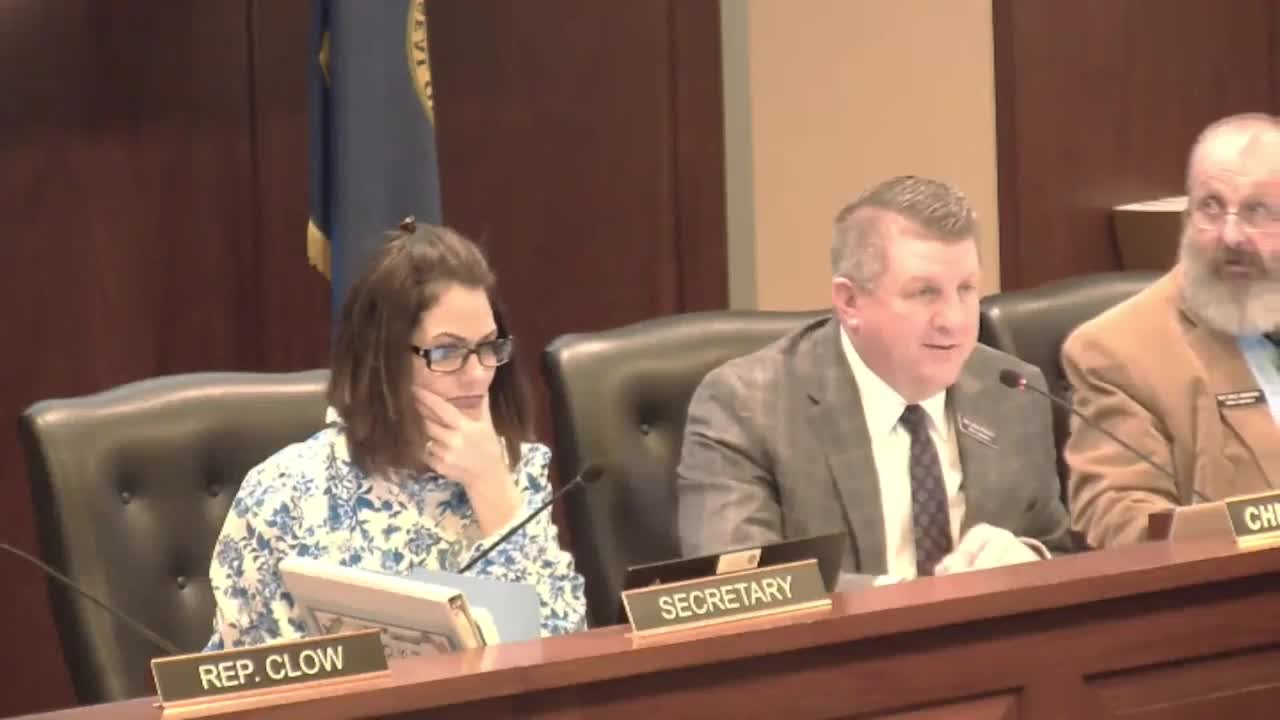
The Idaho House Committee on Education voted to send Senate Bill 1046 as amended to the House with a due‑pass recommendation after debate over whether instruction on fetal development belongs in biology or health education and how parents would exercise consent.
The Idaho House Committee on Education voted to send Senate Bill 1046 as amended to the full House with a due‑pass recommendation after a 9‑4 vote with one member absent. Representative Heather Scott (District 2) and Senate sponsor Senator Nichols presented the bill, which would add a new section to Title 33, Chapter 16 of Idaho Code (proposed 33‑16‑37) to require instruction on human growth and fetal development in grades 5 through 12 beginning in the 2025–26 school year.
Supporters told the committee the measure is intended to place fetal development material in life‑science instruction so students receive an early, scientifically framed understanding of human biology. Senator Nichols told the panel the bill would require “age‑appropriate” instruction that could include a high‑definition ultrasound video and computer‑generated animations, and she said the content would show “the development of the brain, heart and other vital organs in early fetal development and then also the process of fertilization at every stage of development.” Representative Scott said districts would choose the specific materials locally.
Opponents and several committee members pushed back on two points: whether the content belongs in biology rather than health/"family life" education, and whether parents should be able to opt their children in or out. Representative Church and others argued the state’s current family‑life and health education standards address stages of life, contraception and sexually transmitted infections and that material about fertilization could be treated as sex education that triggers parental notice or opt‑out provisions. Senator Nichols and backers responded that the bill places the content under biology and not under the family‑life section of code and that parents retain the ability to opt children out of particular instructional activities through existing local processes.
Public testimony split along similar lines. Ashley Alloway, a parent, opposed the bill, saying it would “prescribe a narrow and very specific viewpoint” and “reduce local control.” Terry Marcroft of Unplanned Good supported the measure, saying fetal development imagery “provides students with mental images for life” and that school districts would select medically accurate videos under the direction of the state superintendent’s office. Hallie Fox, a health‑care worker and medical school applicant, told the committee a commonly cited video (the “Baby Olivia” animation) contains medically inaccurate timelines for organ development and that the American College of Obstetricians and Gynecologists provides differing guidance.
Committee members also debated practical issues in the bill’s language. Representative Mathias noted one exemplar video’s timestamps do not show “every week of pregnancy” in sequence and questioned whether the statute’s language requiring weekly stages could be met by available media. Sponsors emphasized the bill does not mandate a particular clip and that districts would choose resources; other members said that open‑endedness would likely bring further disputes at the local level about which videos are appropriate.
The committee’s action was a motion to send Senate Bill 1046 as amended to the floor with a due‑pass recommendation. The motion passed by a recorded majority and will now move to the full House for consideration.