Get Full Government Meeting Transcripts, Videos, & Alerts Forever!
Get email alerts on the Breast Cancer Screening topic
No spam. Unsubscribe anytime.
House committee advances bill to require insurers to cover supplemental breast screening for high‑risk patients
Summary
The Idaho House Health and Welfare Committee voted to send House Bill 134 to the floor with a due‑pass recommendation. The bill would require most private health plans (excluding Medicaid and some self‑insured plans) to cover supplemental imaging — MRI, contrast‑enhanced mammography or ultrasound — for people identified as high risk for breast癌.
The Idaho House Health and Welfare Committee voted to send House Bill 134 to the floor with a due‑pass recommendation, a measure that would require most private health plans to cover supplemental breast‑cancer screening — including MRI, contrast‑enhanced mammography and ultrasound — for people identified as at heightened risk.
The bill’s sponsors and dozens of medical professionals and breast‑cancer survivors told the committee that supplemental imaging can detect cancers missed by standard mammography, particularly in women with dense breast tissue, and that early detection reduces both suffering and long‑term treatment costs. Representative Brooke Green, R‑Boise, who described herself as a two‑time breast‑cancer survivor, said the measure targets “persons with a heightened risk of breast cancer due to many different factors such as genetic predisposition… prior radiation therapy, or… extremely dense breast tissue.” Green said the bill would apply to private plans other than Medicaid and to insured plans that are not self‑funded and regulated differently.
“While mammograms are covered with no out of pocket costs, patients requiring follow‑up imaging face significant financial barriers,” Green said. “This bill ensures payment parity for diagnostic and supplemental breast imaging that are already necessary for certain individuals, aligning these services with routine mammograms.”
Nut graf: Supporters offered clinical and financial arguments in testimony. Breast surgeons, radiologists and technologists said MRI and other adjunct tests can detect cancers earlier in high‑risk patients; several survivors described delayed diagnoses or high out‑of‑pocket bills. An executive of a municipal self‑insured trust told the committee her plan has covered supplemental screening and said the trust has seen a decline in cancer treatment costs.
Dr. Menon, a breast surgeon who trained at MD Anderson Cancer Center and practices in Idaho, told the committee that early detection frequently avoids the more extensive surgery, chemotherapy and radiation required for advanced cancers. “An early stage breast cancer with a lumpectomy can be around $60,000 on average,” Menon said, adding that advanced treatment can cost “$250,000, half a million dollars” depending on stage and therapy. Dr. Barbara White, a fellowship‑trained breast radiologist in Meridian, said adjunct screening raises detection from about 70–80% with mammography alone to “95 percent” when supplemental tests are used for appropriate patients.
Survivors who testified described personal consequences of delayed or unaffordable supplemental imaging. Amber Mosling said she waited 10 months for diagnosis after symptoms and dense breasts produced negative mammogram and ultrasound results; she later required 16 rounds of chemotherapy and a bilateral mastectomy. Misty Tolman said an annual MRI picked up a tumor the size of a pea that would not have been seen on a routine mammogram; she said she is now thousands of dollars in medical debt.
The committee discussed fiscal impact. Representative Kaler referenced a fiscal note estimating $300,000 to $600,000 to the state health insurance plan. Representative Green acknowledged that some cost would be absorbed by payers and providers but said the higher up‑front screening cost (she cited an MRI out‑of‑pocket example of about $3,000 and a diagnostic mammogram of about $800) can be outweighed by avoiding expensive treatments — she said her own mastectomy cost $137,000. Amber Manning, executive director of IIIA (a municipal self‑insured trust), told the committee her trust covers screenings and reported a 10 percent decrease in number of cancers and a $2 million reduction in treatment costs from one year to the next in her plan’s data.
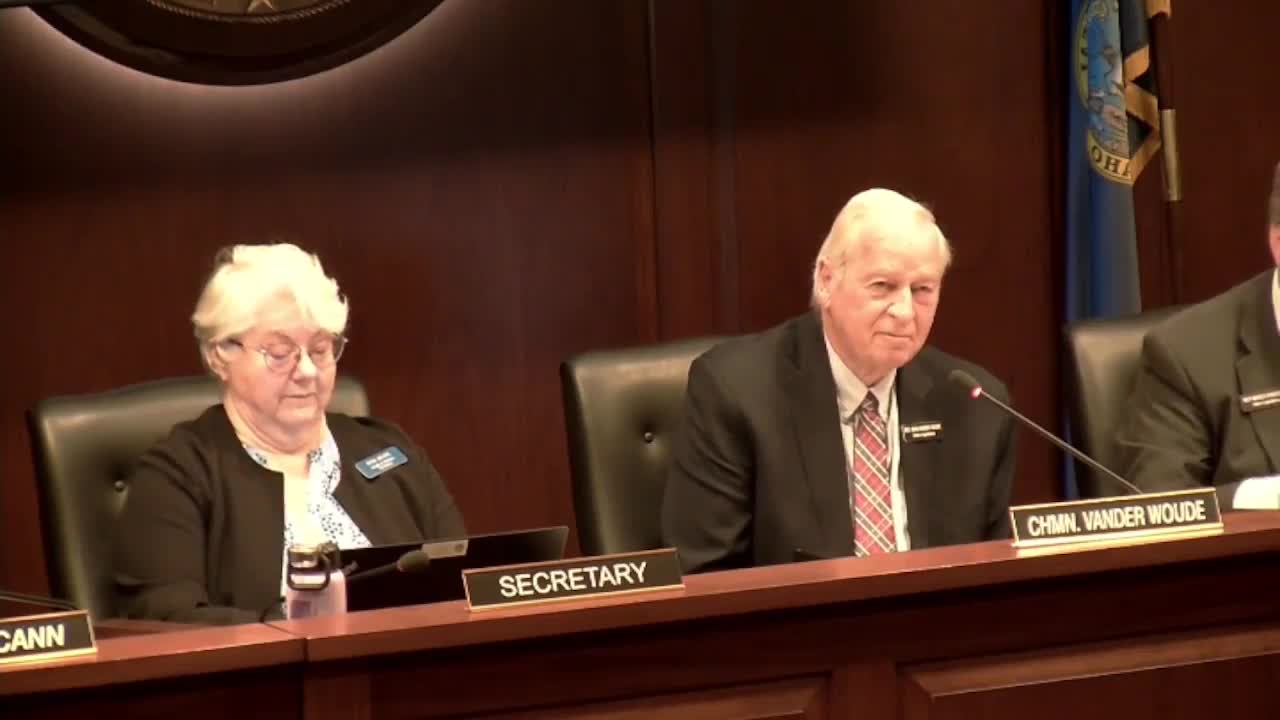
Committee members spoke both for and against the motion. Representative Redmond moved to send the bill to the floor with a due‑pass recommendation. Representative Kahler said he opposes mandates that expand requirements on private health plans and indicated he would vote no. Other members, including Representatives McCann, Bell and Edmond, spoke in favor, citing both the human and fiscal case for earlier detection. The vice chair announced the motion carried with two recorded nays; the transcript did not record the full roll‑call breakdown.
The motion’s outcome sends House Bill 134 to the full House for further consideration; committee members noted the House had a scheduled floor time that day. Supporters asked colleagues to vote the bill out of the House so that insurers would be required to provide coverage parity for clinically indicated supplemental screening when physicians determine it is necessary.
Ending: With the committee’s due‑pass recommendation, HB 134 moves to the House floor; the transcript records two nays during the committee vote but does not list the full roll call. The committee concluded business and adjourned to proceed to the legislative floor session.