Get Full Government Meeting Transcripts, Videos, & Alerts Forever!
Get email alerts on the Alyssas Law Panic Devices topic
No spam. Unsubscribe anytime.
Committee hears Alyssa’s Law testimony; bill would fund wearable panic alerts that connect to 9‑1‑1
Summary
Testimony for House Bill 3,083 focused on wearable panic‑alarm devices that link schools directly to emergency responders. Proponents including Lori Alhadeff (Alyssa’s mother) told personal stories about response times and urged passage; the bill is described as a funded non‑mandate with planned amendments and per‑school funding.
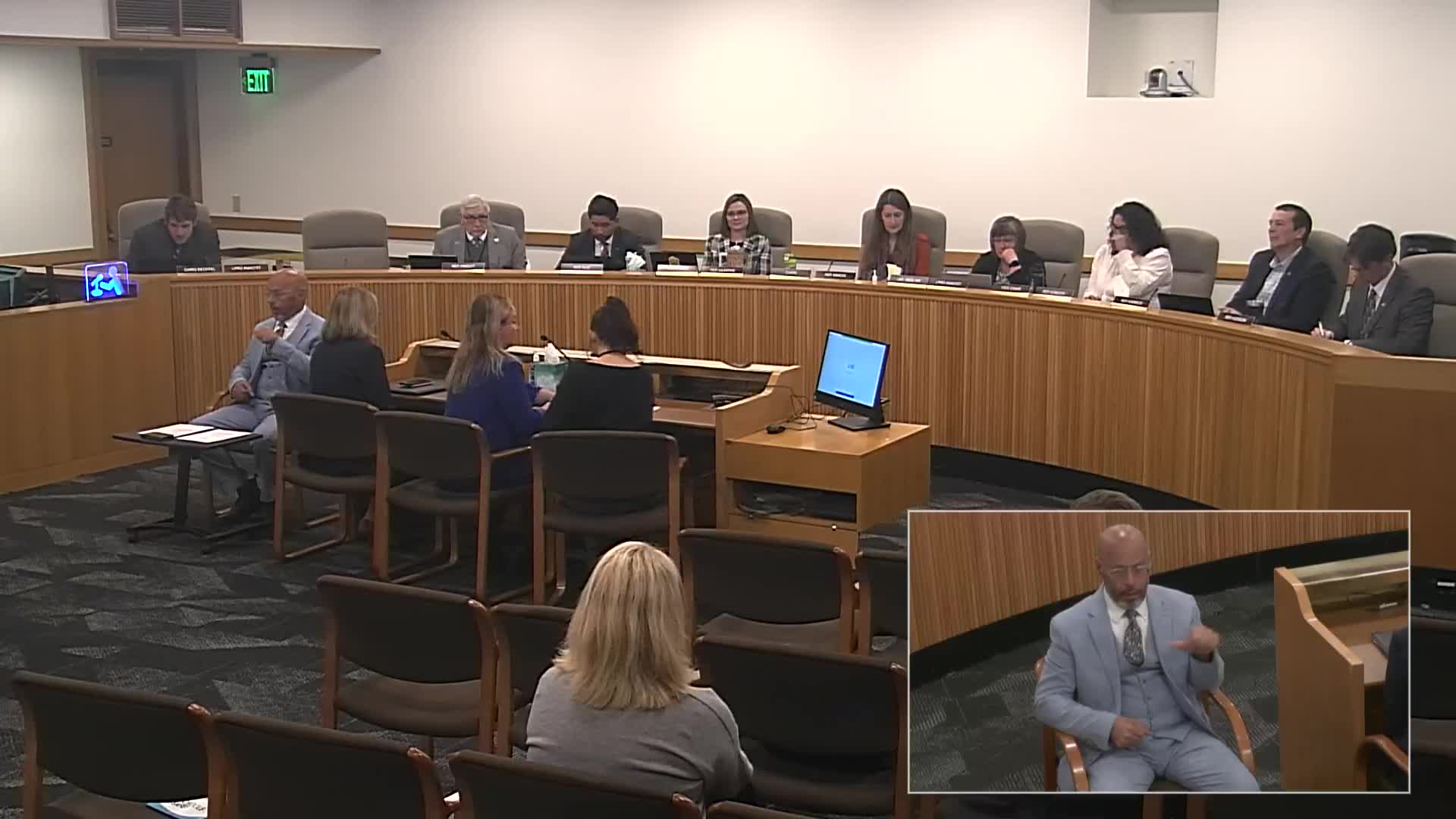
House Bill 3,083, commonly described in testimony as "Alyssa's Law," was the subject of a public hearing March 3 before the House Committee on Education. The bill would require that public kindergarten through grade‑12 schools maintain emergency safeguards and consider deploying a panic alarm system consisting of wearable panic devices capable of connecting to emergency services and integrating with 9‑1‑1 and multi‑agency response. Committee staff explained a -1 amendment would specify wearable panic alarms with geolocation that connect directly to emergency services.
Lori Alhadeff, the mother of Alyssa Alhadeff, one of the victims of the Marjory Stoneman Douglas High School shooting, described the origins of the proposal and the principle she repeatedly urged the committee to adopt: "Time equals life." Alhadeff said wearable panic systems have been used to speed emergency response in non‑shooting incidents — examples cited to the committee included a seizure, a cardiac event and nearby shootings where multisensory alerts reportedly sped campus lockdown or clinician response.
Representative Levy and Senator Broadman emphasized the bill is intended to supplement existing safety measures, not replace them. Levy told the committee the proposal is a "funded nonmandate": funding has been put into a budget note and the committee expects a per‑school allotment (Representative Levy noted a likely amendment to increase the per‑school allotment to roughly $4,000, and witness testimony said vendor pricing ranges from about $2,000 to $8,000 per school). Levy also said funds could come from the Student Success Act safety budget and CAD money; committee staff noted the bill as drafted would allow ODE rulemaking to add data elements.
Julia Salimoni, a survivor from Marjory Stoneman Douglas, and Chris Short, who testified on behalf of Motorola Solutions' school safety work, described technical features and real‑world use of panic systems. Short said modern systems integrate mobile apps, camera feeds and radio communications to provide real‑time situational data to both campus personnel and 9‑1‑1 dispatchers. He asked the committee to advance the bill and related funding measures so schools and public safety agencies can be better connected.
Testimony made clear the bill does not remove other safety layers; proponents repeatedly said the wearable panic devices are part of a layered approach that includes drills and other procedures. The staff summary also noted the bill would require 30 minutes of drills and instruction each month and would take effect July 1, 2025 if enacted as described by staff.
No opposition testimony was recorded in the hearing. Committee members asked clarifying questions about device definition, funding per school, the timeline for workforce and technical integration and how the measure would work with policies such as district cell phone bans.
The committee closed the hearing on HB 3,083 after receiving multiple personal testimonies and a technical briefing; additional drafting and a -1 amendment specifying devices that connect to 9‑1‑1 with geolocation were mentioned on the record.