Get Full Government Meeting Transcripts, Videos, & Alerts Forever!
Get email alerts on the Gubernatorial Appointment topic
No spam. Unsubscribe anytime.
Health and Welfare director outlines child-welfare focus, internal reforms ahead of confirmation vote
Summary
At a Senate Health and Welfare Committee hearing, Department of Health and Welfare Director Alex Adams described organizational changes, statutory clean-up plans and steps taken to tighten grant oversight and program integrity; the committee did not vote on his confirmation and expects to do so at a later date.
Alex Adams, director of the Idaho Department of Health and Welfare, told the Idaho Senate Health and Welfare Committee that his top priority is child welfare and described organizational and procedural changes he says are intended to improve outcomes and reduce regulatory bloat.
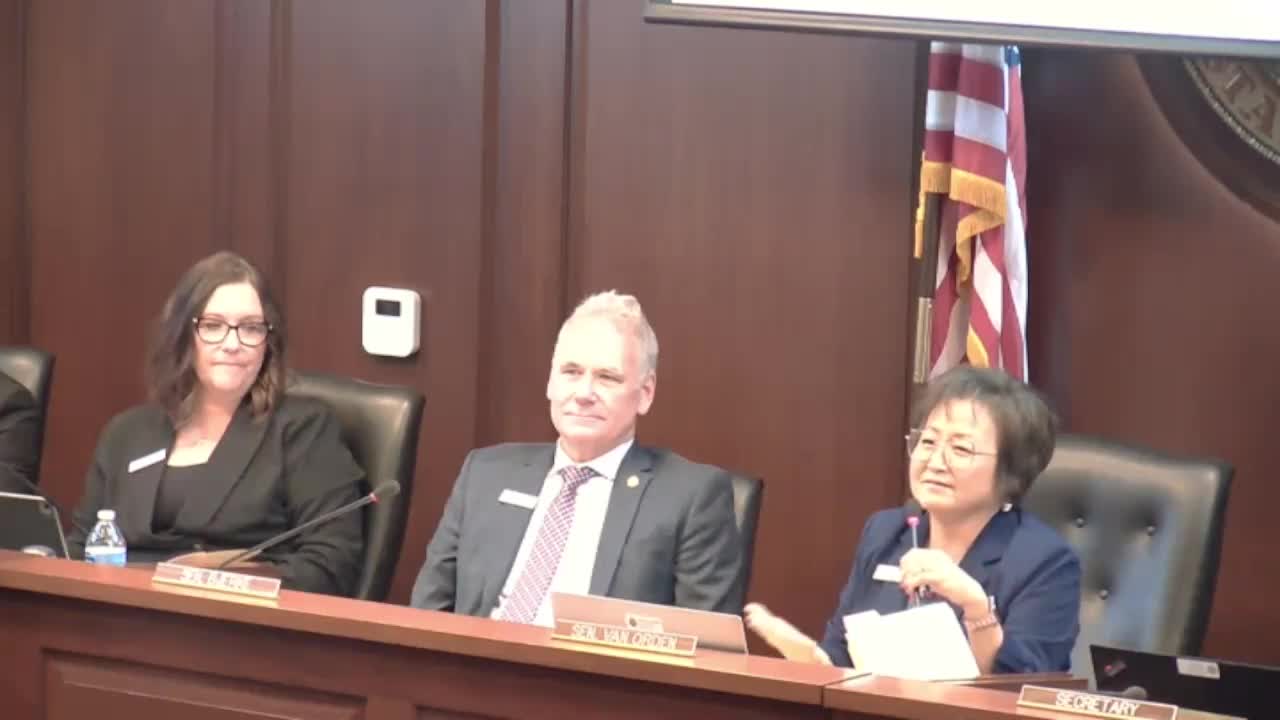
Adams spoke during a gubernatorial appointment hearing before the committee and reviewed actions taken in his first seven months as director, including restructuring, statutory and regulatory cleanup plans, and new internal controls for grants and procurement.
Adams said the department employs about 3,000 people across 74 buildings in 37 locations and administers programs ranging from hospitals and an intermediate care facility to Medicaid, food stamps, vital records and child welfare. He described his two themes for the agency as “quality over quantity” and a “laser focus on child welfare,” adding, “Less is more — results, not intentions.”
Why this matters: Health and Welfare is the state’s largest executive agency by budget and administers many safety-net programs. The director’s stated priorities — reorganizing leadership, tightening financial oversight and changing rules and statutes — would affect how services are delivered and how state and federal funds are managed.
Adams said he has moved to pare back internal rules and statutory language he judges obsolete or duplicative. He told the committee his office removed roughly 2,300 pages of internal regulations and plans to introduce legislation he described as intended to “barbecue 150 pages of statute” that include dormant committees and unfunded “zombie” grant programs. He also said the department will propose cutting roughly 200 pages of regulations this year.
On organization and budgeting, Adams said he created a more centralized approvals process he called “One Department,” requiring sign-off from the division administrator, the relevant deputy director and himself before pursuing federal grants, sponsorships, procurement or rulemaking. He also elevated the agency’s chief financial officer to report directly to him to provide earlier oversight of budget risks.
To improve internal accountability, Adams said the agency established a transparency team to improve public-records handling, updated HR conflict-of-interest rules and is creating an Office of Program Integrity (OPI) to perform internal reviews and catch problems early. He said OPI postings recently closed and the office will provide internal “boots on the ground.” He said the agency is executing a corrective-action plan tied to prior issues with the Community Partners grant program and provided staff training on federal grants.
Adams described concrete child-welfare targets and metrics. He told the committee the leadership team aims to “double the rate of foster homes relative to the number of children.” He said the department’s ratio when he started was about 0.74 foster families per 100 children entering care and that it has increased to 0.94. Adams credited a combination of recruiting more foster families and efforts to safely reduce entries into care through services that keep children with biological parents.
He highlighted adoption work as an early initiative, saying he waived department adoption fees and that the agency has recorded more than 160 adoptions since he took the role.
Adams said he and his deputy for Child, Youth and Family Services, Monty Pro, prioritized listening to foster parents and estimated they have met 100–120 foster parents in his early months. He and Monty Pro cited communication and high caseloads as recurring themes; among responses, the department has implemented 24/7 call centers for foster parents and requested budget increases to reduce caseloads.
The director answered senators’ questions about several previously reported problems at the agency, including: ineligible expenses and oversight issues in the Community Partners grant program, duplicate benefit payments reported in 2023, an audit finding that $2.5 million intended for welfare programs was used for payroll, and an internal review that alleged some reimbursements involved harm-reduction materials. Adams said he has emphasized that “the budget is a law, not a suggestion,” instituted the centralized approvals and training, and is implementing the corrective-action steps left by previous leadership.
Several senators praised Adams’s child-welfare focus. Senator Wintrow asked how he balances rapid reforms with stakeholder input; Adams said he prioritized “action plus listening,” relied on prior Office of Performance Evaluations (OPE) reports to guide early work, and used existing national models and stakeholder feedback to pare regulations. Senator Shippey, a licensed foster parent, and other members expressed support for his approach.
No confirmation vote was taken at the hearing. The committee chair said gubernatorial appointments are not voted on the day they are presented and indicated a vote would likely occur at the committee’s next meeting.