Get Full Government Meeting Transcripts, Videos, & Alerts Forever!
Get email alerts on the K12 Accountability Assessment topic
No spam. Unsubscribe anytime.
Virginia education officials outline accountability hub, regional support teams and plan for statewide assessment contract
Summary
State education officials updated the Senate Education Subcommittee on the School Performance and Support Resource Hub, proposed governor’s funds for schools preliminarily identified as off track, launch of regional support teams, and plans to extend and reopen procurement for the statewide assessment contract.
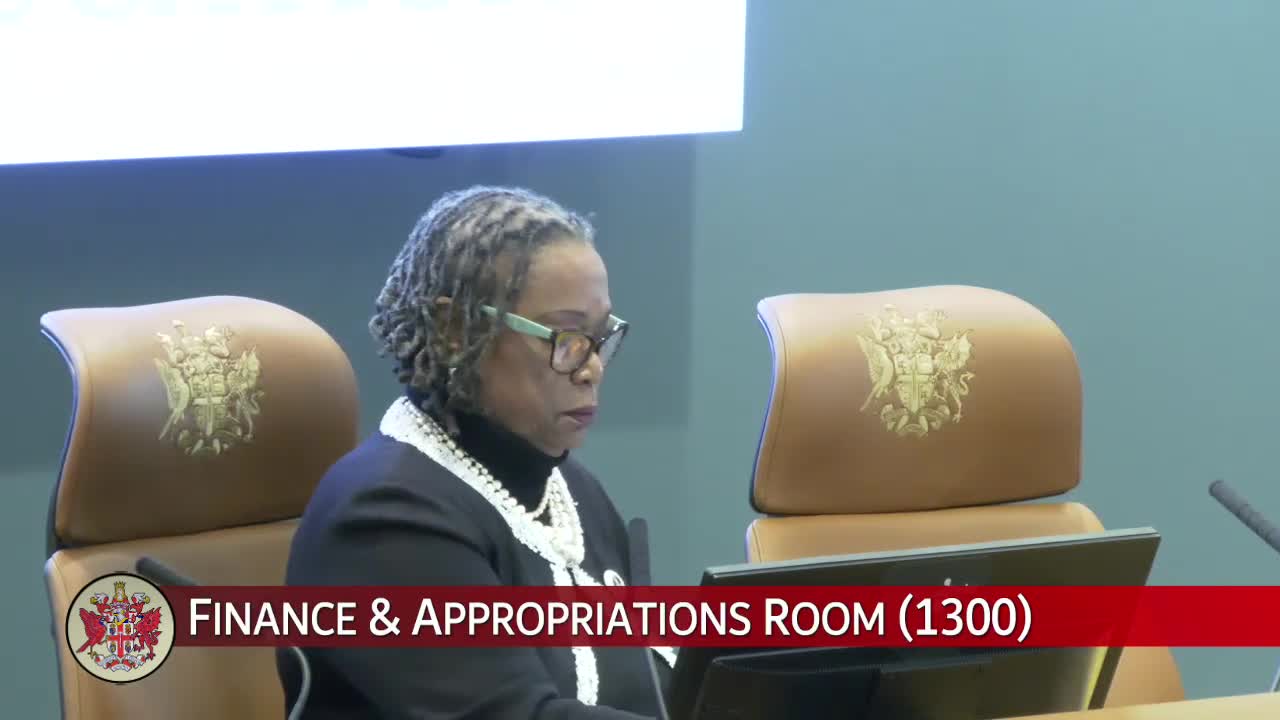
Dr. Lisa Coombs, Virginia superintendent of public instruction, told the Senate Finance and Appropriations Committee’s Education Subcommittee that the State Board of Education’s School Performance and Support Resource Hub is live and that the department is preparing technical analyses and recommendations for how the governor’s proposed funds could be used to support schools preliminarily identified as “off track” or needing intensive support.
The presentation, given Dec. 14 in Richmond, covered the department’s outreach and data work behind the new accountability framework, plans for regional school support teams, and the department’s handling of the statewide student assessment contract and an associated request-for-information process. Coombs said the U.S. Department of Education approved Virginia’s accountability framework Jan. 3, 2024, and that the performance hub launched Nov. 8 to provide community-facing data kits and training for educators and families. “Our performance hub launched on November 8th to give community members framework overviews, data tool kits, resources, both family and educators,” Coombs said.
Why it matters: The governor’s proposed budget includes one-time and ongoing funding to assist schools that the preliminary accountability data identifies as struggling. The State Board of Education will decide how to allocate any funds; the department’s role is to provide technical analyses, pilot results and data-driven recommendations.
Most of Coombs’s presentation described five topic areas the governor asked the department to advise the board about: leadership development for principals, mastery-and-growth school supports, one-time short-term grants for preliminarily identified schools, readiness supports including updated attendance and career-readiness dashboards, and suggested upgrades and pilot modules for the Virginia IEP platform following directions from the Commission on Youth. On principal support, Coombs described a mentorship pilot for 24 early-career principals in high-need schools and said department staff will brief the board on lessons from that pilot as they consider uses of proposed funds. “We want to make sure we’re scaling and providing opportunities to study some of the one-time funds,” Coombs said.
Regional support teams: Coombs said the governor’s introduced budget would fund regional support teams to provide “boots on the ground” technical assistance in reading, math and science. The department described teams in east, central and west regions that would be embedded in regions rather than centralized in Richmond to provide on-demand coaching and implementation support.
Assessment contract and procurement: Coombs also briefed the committee on the statewide assessment system. She said the department is operating under a one-year extension with its current vendor so schools will have a single assessment system for the 2025–26 academic year. Department staff told the committee the prior 18-month extension cost $82 million; the department’s estimate to extend the current vendor for a single additional year was about $57 million. The department ran an RFI in fall 2024 and said the 5-year cost estimates returned by vendors ranged roughly from $68 million to $266 million. Staff highlighted a commonly cited supplemental cost to “release items” for teacher use, which vendors estimated at roughly $1.25 million to $1.5 million per year.
Coombs described the procurement timeline as involving multiple reviews with the Virginia Information Technologies Agency (VITA), the Department of General Services and the Attorney General’s Office to comply with the Commonwealth’s high-risk contract provisions; the department aims to select a long-term vendor and contract by Dec. 2 (timeline provided to the committee). Coombs said compliance with legislatively required high-risk contract provisions is built into the extension and procurement timeline.
Questions from legislators focused on cost and contract terms. Senator Rashmi Hashmi asked for the cost of the existing contract and of the proposed extension; department staff replied that the 18-month extension was $82 million and that the anticipated one-year extension would be about $57 million. Coombs and staff emphasized that the extension is intended to preserve continuity for schools while the RFP and review process proceeds.
What’s next: The State Board of Education will consider how to use any governor-proposed funds for preliminarily identified schools; the department will continue weekly office hours with divisions and provide the board with pilot results and technical recommendations. The department intends to complete the RFP process and vendor selection in the timeline provided to legislators.
Ending: Coombs closed by offering to take questions and by reiterating the department’s focus on data-driven recommendations and support for schools under the new accountability framework.