Get Full Government Meeting Transcripts, Videos, & Alerts Forever!
Get email alerts on the Medicaid Budget And Implementation topic
No spam. Unsubscribe anytime.
JFAC hears Medicaid budget increases, implementation issues with Idaho Behavioral Health Plan
Summary
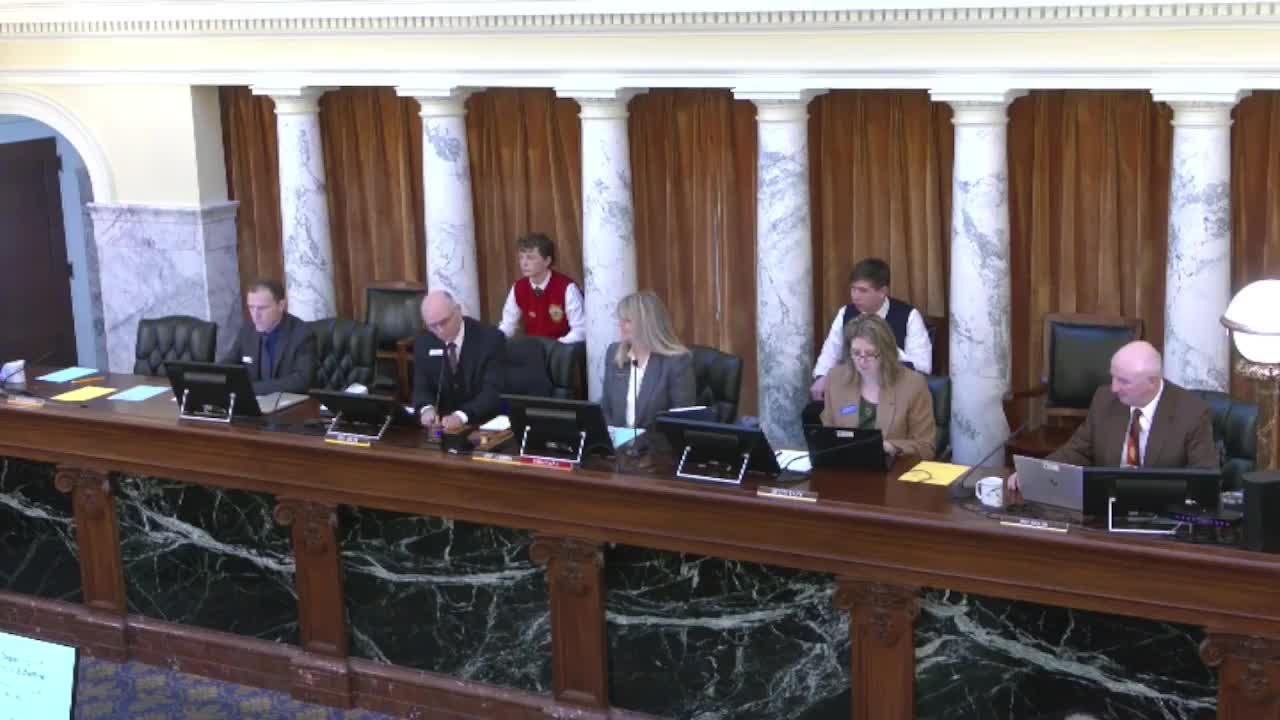
Boise — The Joint Finance-Appropriations Committee on Feb. 26 received a detailed briefing on the Division of Medicaid budget that outlined hundreds of millions of dollars in supplementals and ongoing increases and raised questions about implementation of the new Idaho Behavioral Health Plan (IBHP).
Boise — The Joint Finance-Appropriations Committee on Feb. 26 received a detailed briefing on the Division of Medicaid budget that outlined hundreds of millions of dollars in supplementals and ongoing increases and raised questions about implementation of the new Idaho Behavioral Health Plan (IBHP).
Alex Williamson, a budget and policy analyst with Legislative Services, told the committee the division’s request and the governor’s recommendations include a mix of one-time and ongoing requests tied to federal requirements, provider rate changes and system work. “This will probably feel like information overload,” Williamson said when she began the presentation.
The presentation enumerated several large items lawmakers asked about: a hospital assessment-related supplemental request of $190,000,000 for FY2025 (split on the department’s books as $77,000,000 from the hospital assessment dedicated fund and $113,000,000 federal), a capitation-rate adjustment of about $108,800,000 (one time), and a population-forecast adjustment rolling to the base of roughly $367,000,000. The department also seeks continued spending on the Medicaid Management Information System (MMIS) procurement (the state share listed as $11,700,000 and an additional federal portion of about $105,000,000), and an external quality review (EQR) supplemental around $1.3 million after recent procurements drew no bidders.
Williamson summarized program totals and use: the FY2024 appropriation for the division was about $4.56 billion, of which roughly $4.27 billion was expended; trustee and benefit payments made up over 98% of that spending. She described how participant groups drive costs differently: the basic (adults and children) population is about 51% of enrollees but accounts for about 19% of expenditures, while coordinated and enhanced plans (older adults and people with disabilities) account for roughly 20% of participants and about 57% of costs.
Committee members pressed the department on drivers of growth. Senator Hart asked whether policy bills being considered would be tracked for budget impact; Williamson said the division would monitor legislation and address changes via trailer appropriations if needed. Senator Wintrow and others reminded members that the Medicaid expansion population (coverage that began Jan. 2020 following a voter initiative) and the timing of the COVID-19 pandemic changed utilization and costs beyond actuarial forecasts such as the 2018 Milliman report.
Representative Tanner criticized the program’s cost growth and oversight, saying, “We have no levers to actually pull. We were pushed with a program that gives us as a state of Idaho 0 of any control except for just to pay it.” Director Alex Adams of the Department of Health and Welfare replied that he submitted “as close to a maintenance budget as I could submit,” declining to request new rate increases or expansions in the governor’s request; he emphasized that Medicaid is an entitlement program with eligibility and benefit rules established under federal and state law.
Adams and staff explained a recent drop in Idaho’s FMAP (federal medical assistance percentage) share shifted about $45,000,000 from federal to state funding in the budget. The department said the expansion population currently receives a 90/10 federal-state split; if that federal add-on were tapered to the traditional split (roughly 68/32), the department estimated a shift of more than $200,000,000 to the state under a hypothetical immediate change.
Lawmakers also probed implementation of the July 2024 IBHP contract with Magellan. Juliette Sharon, deputy director overseeing Medicaid, said the IBHP contract’s scope was substantially larger than prior contracts because it consolidated services previously delivered in fee-for-service and by the Division of Behavioral Health. She said additional MMIS system configurations and interface work were required after go‑live to ensure reporting and oversight and described the department’s request to cover those incurred configuration costs.
On provider payments to managed-care behavioral health contractors, Sharon said early implementation produced payment delays and provider-education and mailing issues. She said the department had imposed more than $100,000 in liquidated damages on the contractor and that corrective action plans and management letters have been used to address problems. "They are back in compliance with timeliness requirements," Sharon said, while acknowledging some providers had needed emergency help to cover payroll during earlier payment delays.
The department flagged other ongoing and technical items lawmakers asked about: a required Consumer Assessment of Healthcare Providers and Systems (CAHPS) work item of roughly $67,600 ongoing; actuary services needing an additional $1,100,000 ongoing; an ongoing $200,000 request tied to negotiating work and attorney fees stemming from the KW settlement and a planned resource-allocation tool replacement; and continued MMIS procurement funding. Williamson noted vacancy data (the division had 237.5 authorized FTEs with about 24.5 positions vacant but actively recruited) and personnel/operating costs of roughly $67,000,000 in FY2024.
On specific populations and legal questions, Adams told the committee the state spends about $10,000,000 a year on emergency Medicaid for non‑citizen emergency care, and that the federal government rejected part of Idaho’s postpartum state-plan amendment interpretation; the department appealed and had a hearing scheduled for the first week of April. Adams reported about 2,800 women had already used the extended postpartum coverage since the state implementation.
Multiple legislators asked the department to produce further detail. Senator Wintrow requested updates on how rate increases have affected direct-care workforce wages and whether the funding reaches frontline caregivers; Sharon said the department has done provider audits and follow-up cost surveys and is evaluating whether and how to require that certain funding go to direct-care staff, while balancing concerns about small business operations among providers.
Several members expressed frustration about growing Medicaid costs and sought concrete policy options to constrain spending. Director Adams said the department can implement legislative policy changes but that cuts to entitlement programs generally require policy changes (such as benefit changes or eligibility limits) that carry trade-offs. He also said the department would offer multi-scenario forecasts (baseline/optimistic/pessimistic) going forward and is publishing a monthly Medicaid transparency report showing month-to-month expenditures to give legislators earlier sightlines.
No formal committee votes were recorded during the hearing; the department’s requests were presented for consideration in upcoming budget deliberations.
The committee continued to ask for follow-up materials, including: a breakdown of postpartum benefits and out‑of‑state care questions; further detail on hospital assessment mechanics and policy options; updates on the KW litigation and resource-allocation tool work; and provider-payment timeliness reports tied to the IBHP contract. The hearing closed with the committee scheduling further budget work in the near term.