Get Full Government Meeting Transcripts, Videos, & Alerts Forever!
Get email alerts on the Foster Care Extended Eligibility topic
No spam. Unsubscribe anytime.
Senate committee backs extending voluntary foster‑care support to age 23
Summary
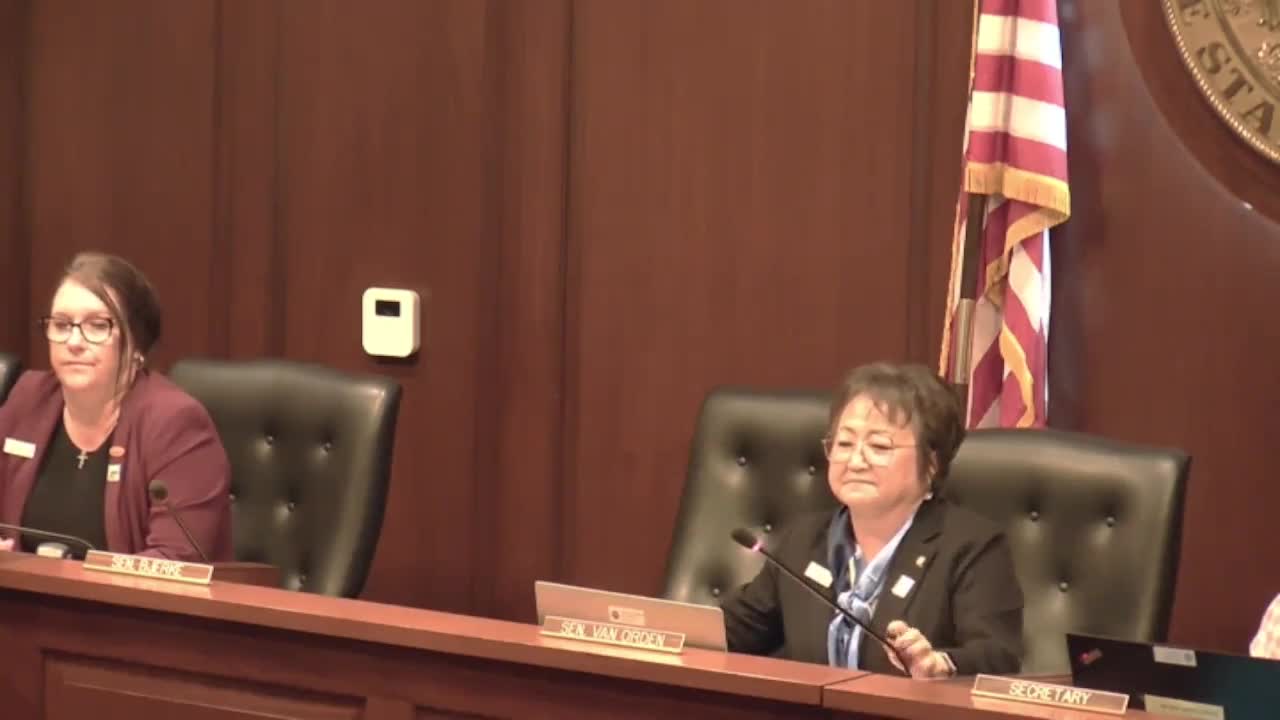
The Senate Health and Welfare Committee on Feb. 25 voted to send House Bill 245 to the Senate floor, a proposal to extend voluntary foster‑care support from age 21 to 23 and to streamline relative placement licensing.
The Senate Health and Welfare Committee on Feb. 25 voted to send House Bill 245 to the Senate floor with a due‑pass recommendation. The bill would extend voluntary eligibility for foster‑care services from age 21 to 23, streamline placement with relatives by authorizing expedited limited waivers of licensing standards, and require participants to be enrolled in an independent living or transition plan.
Senator Carl Bjerke, who introduced the bill, said extending the age provides a longer "runway" for emerging adults who entered foster care as teenagers. "Research shows that extended foster care reduces food insecurity by 21%, homelessness by 19%, and arrest by 28% while increasing employment rates and post‑secondary enrollment," Bjerke said. He told the committee the change would produce savings in public safety and corrections because keeping a person in foster care costs less per day than incarceration.
Monty Prow, deputy director for support and child welfare at the Idaho Department of Health and Welfare, told the committee the extension is voluntary and that participants must be part of an independent living or transition plan. "Those include things like how are you going to keep yourself fed? What about your job? What about your mental health status?" Prow said, describing monthly case‑manager check‑ins. He said about half of participants live with foster families and the other half in independent living arrangements; the department testified that a youth living independently could receive about $876 per month in support, while foster payments continue to go to foster parents for youth living in a foster home.
Multiple foster‑care alumni and advocates testified in favor of the bill. Ivy Smith, speaking for Idaho Voices for Children and as a former foster youth, described being prevented from moving into college dorms at 17 because the placement was not licensed and said she later had to pursue a court order to stay on campus. "House Bill 245 gives Idaho's most vulnerable youth the tools and resources that they need to thrive during their transition," Smith said. Shane Hansen of the Freedom Youth Foundation and other witnesses described programs that provide mentoring, employment pathways and financial‑literacy training; lobbyist Sarah Betweiser, president of Family Advocates, described organizational plans to expand services to older youth.
Committee members discussed program goals and limits. Senator Bjerke and department staff clarified that participation is voluntary and that participants may leave the program; Prow also cited national practice, saying several other states have extended foster care to age 23 or allow reentry up to that age. Senator Lenny and Senator Shippy expressed reservations about extending state support past 21 on philosophical grounds, but both said they were persuaded by testimony; several senators said they would monitor outcomes and asked the department to report data in the future.
Senator Harris moved and Senator Wintrow seconded the motion to send House Bill 245 to the floor with a due‑pass recommendation; the committee approved the motion by voice vote.
Why it matters: Supporters cited studies and personal testimony indicating extended foster care reduces homelessness, teen pregnancy and involvement with the criminal justice system and increases college attainment. Department testimony described program mechanics — voluntary enrollment, required transition plans, monthly case‑manager contact and a monthly support payment for youth living independently — and provided rough counts of youth currently eligible.
Votes at a glance: Committee approved sending House Bill 245 to the floor with a due‑pass recommendation (motion: "send House Bill 245 to the floor with a due pass recommendation," mover: Senator Harris; second: Senator Wintrow). The vote was taken by voice; no roll‑call tally was provided in the transcript.