Get Full Government Meeting Transcripts, Videos, & Alerts Forever!
Get email alerts on the Behavioral Health Fee Policy topic
No spam. Unsubscribe anytime.
Committee advances bill to move mental‑health fee rules into statute
Summary
The Senate Health and Welfare Committee voted to send House Bill 220 to the floor with a due‑pass recommendation. The measure transfers a dormant sliding‑scale fee schedule for mental‑health services from rule to statute, keeps a 5% income cap, and preserves a requirement that no one be denied services for inability to pay.
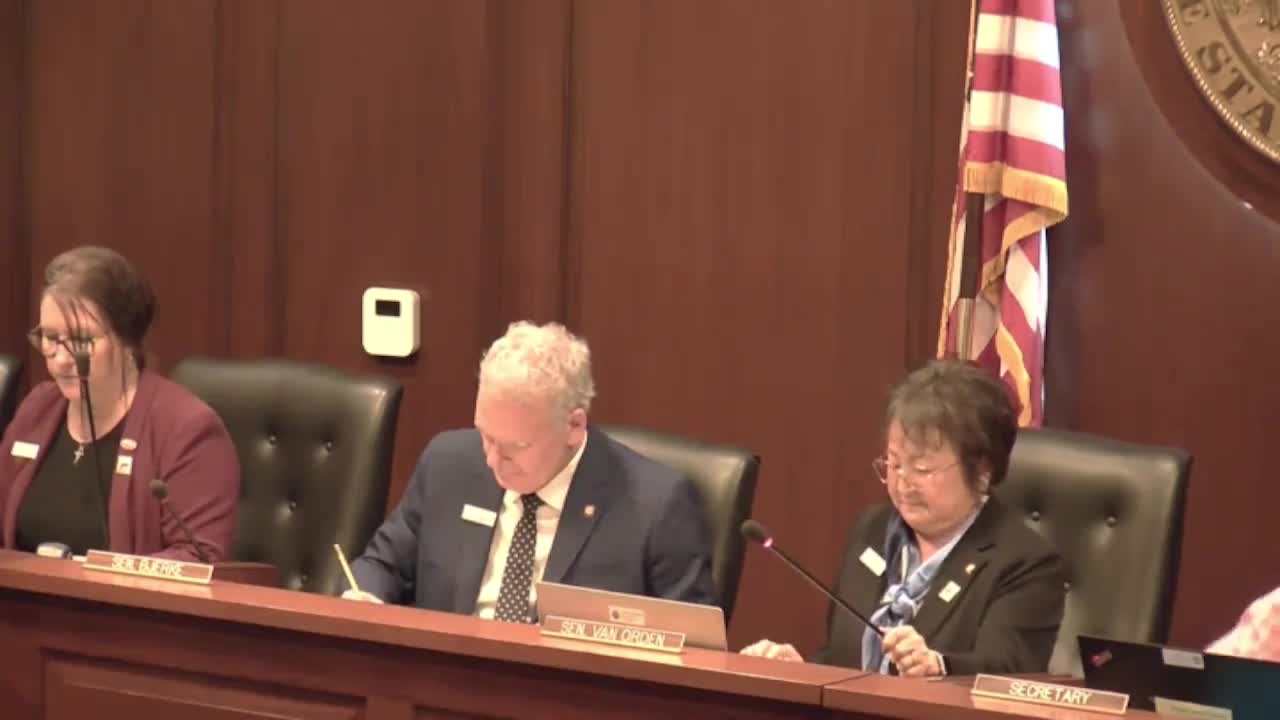
The Senate Health and Welfare Committee on Feb. 25 voted to send House Bill 220 to the Senate floor with a due‑pass recommendation. The bill moves a dormant sliding‑scale fee schedule for children’s and adults’ mental‑health services from administrative rule into statute, retains a 5% income cap, and preserves a requirement that no one be denied services for inability to pay.
The measure, presented by Jared Larson, legislative and regulatory affairs chief at the Idaho Department of Health and Welfare, was described as budget neutral and intended to make implementation easier now that the state relies on a contractor under the Magellan contract rather than providing services directly. "This bill deals with the fee schedule that . . . parents would pay based on their ability," Larson said, adding that "nobody is denied services for an inability to pay." Larson told the committee that the department has not collected payments under the sliding scale since 2020 and that retaining the 5% cap while eliminating the more complex sliding scale will make it easier for contractors to administer the policy.
Senator Melissa Wintrow said she and department staff spent time reviewing the bill and concluded the 5% cap is a better implementation than preserving the full sliding scale, and she voiced support after receiving assurances that services would not be cut off for those unable to pay. "I really appreciate going through all those details . . . and especially knowing we're not going to cut off services," Wintrow said.
Senator Blaylock moved that the committee send House Bill 220 to the floor with a due‑pass recommendation; Senator Harris seconded the motion. The committee approved the motion by voice vote.
Why it matters: Moving a fee rule into statute changes how the charge and collection terms are codified and can affect contractor administration; the department framed the change as necessary for consistent implementation under a contractor model and not as a cost increase to clients. The committee recorded the bill as budget neutral and preserved the department’s existing policy that inability to pay is not a basis for denying services.
Votes at a glance: The committee approved sending House Bill 220 to the floor with a due‑pass recommendation by voice vote (motion: "send House Bill 220 to the floor with the due pass recommendation," mover: Senator Blaylock; second: Senator Harris). The transcript does not include a roll‑call tally.